
-

-


Follow Us
-

 On Facebook
 On Flipboard

Todd Monken got hired in late January. Ten weeks of evaluation later, the new Browns head coach made a notable roster commitment on April 6, 2026: signing veteran cornerback Myles Bryant and tendering six exclusive rights free agents. Seven players. A combined estimated cost of roughly $4.2 million to $4.65 million. Most depth pieces or developmental projects competing for backup reps. That’s the headline everyone saw. The cascade of what it actually means for Cleveland’s roster, the NFL’s salary structure, and your fantasy draft board runs much deeper.
Why Monken Chose Quiet Over Loud
The mechanism here is the ERFA tender system. Players with fewer than three accrued NFL seasons and expired contracts can only re-sign with their original team at the league minimum. No negotiations. No bidding wars. Cleveland tendered Brenden Bates, Malachi Corley, Winston Reid, Rex Sunahara, Andre Szmyt, and Jamari Thrash under those exact restrictions. The franchise controls renewal at minimum cost while players hold zero market leverage. Monken inherited that tool and used it to lock the cupboard before the April 23 draft even opened the door.
Your Depth Chart Just Got Crowded

Bryant arrives in a cornerback room that already returned every starter from 2024: Denzel Ward, Tyson Campbell, Myles Harden, plus safeties Ronnie Hickman and Grant Delpit. Cleveland also added safety Daniel Thomas via free agency. Depth corners Dom Jones, D’Angelo Ross, and Tre Avery were already fighting for snaps. Bryant’s addition makes that fight uglier. A guy who recorded 77 tackles and seven passes defended for the Patriots in 2023 now competes for the fourth or fifth cornerback slot. The roster squeeze is real and immediate.
The Business Math Behind Minimum Deals
Six ERFA tenders at roughly $705,000 to $775,000 per player consume approximately $4.2 million to $4.65 million of Cleveland’s remaining $21.4 million in cap space. That leaves the Browns positioned to absorb their draft class without restructuring existing contracts. Compare that to the $49.5 million they committed to guard Zion Johnson elsewhere this offseason. Monken’s personnel commitment reveals where the real money flows: offensive line gets the vault, defensive depth gets the change jar. That allocation tells you everything about his priorities.
The Kicker Nobody Expected To Matter
Andre Szmyt converted 24 of 27 field goals in 2025. That’s 89 percent accuracy with five makes from beyond 50 yards and 14 consecutive conversions after the Week 9 bye. CBS Sports confirmed he heads into training camp as Cleveland’s clear primary kicker. Yet Szmyt sits on an ERFA tender paying league minimum with zero long-term security. An 89-percent kicker locked into a one-year deal he had no power to negotiate. Same system, different position, identical result: production doesn’t buy leverage when the CBA says you have none.
The Machine That Connects Every Ripple

The ERFA system strips market leverage from young players. The salary cap surge to a projected $301.2 million to $305.7 million gives franchises more room to stockpile cheap depth. Draft timing forces teams to commit before seeing their rookie class. These three mechanisms work together. Cap rises. Depth costs stay flat. Draft capital becomes the primary talent lever. Monken’s seven signings aren’t isolated transactions. They’re the product of a structural loop: cap growth funds star contracts, ERFA mechanics fund everything else, and the draft fills the gaps. One system. Every roster built on it.
A Former Starter Fighting For Scraps

In 2021, Myles Bryant played 75 percent of defensive snaps under Bill Belichick. By 2025 in Houston, that number collapsed to 27 percent and just 343 defensive snaps. A 48-point drop in four seasons. Pro Football Rumors noted Bryant “may still have to fight for reps in Cleveland.” A three-time All-Pac-12 selection. A Pro Football Focus top-54 cornerback ranking. Seventy-seven tackles in a single season. And now he’s fourth on a depth chart behind a younger, cheaper player named Myles Harden. The NFL discards production fast.
The Precedent Other Teams Are Watching
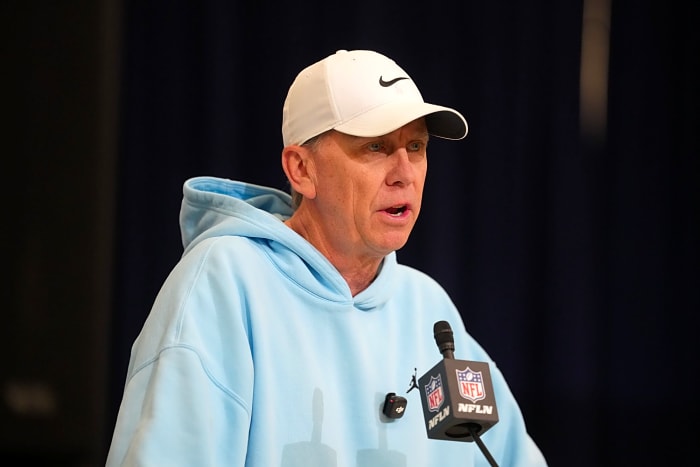
New coaches typically purge rosters. Monken kept the entire starting secondary intact and bet on continuity instead. That contradicts the standard “new broom sweeps clean” assumption that has defined NFL coaching transitions for decades. If this works, the model spreads. Budget-friendly depth retention plus draft-class infusion plus existing starter continuity becomes the template for incoming coaches league-wide. The 2026 cap increase near $305 million means more teams can replicate this exact approach without feeling the squeeze. Monken may have just written the new playbook for first-year head coaches.
Winners, Losers, And The Injury Variable

Winners: the Browns front office, which preserved flexibility and young talent without overpaying. Losers: Dom Jones, D’Angelo Ross, and Tre Avery, whose snap opportunities just shrank with Bryant’s arrival. The wild card is linebacker Winston Reid, who missed all of 2025 with a back injury after appearing in 16 games as a rookie in 2024. His ERFA tender costs almost nothing, but his health determines whether Cleveland’s linebacker depth holds or cracks. Six players locked at minimum salary with no long-term security. The franchise bets cheap. The players absorb the risk.
The Cascade Keeps Breaking
April 23 changes everything. If Cleveland drafts a cornerback in early rounds, Bryant and the depth corners face immediate cut pressure. If ERFAs underperform by midseason, Monken absorbs a “continuity failed” narrative by Week 8 and faces trade deadline scrambling. Meanwhile, the Steelers, Ravens, and Bengals counter with aggressive secondary acquisitions, creating an AFC North arms race that punishes conservative depth strategies. This cascade started with seven quiet signings on a Tuesday in April. The ripples reach the draft board, the division standings, and every roster bubble player’s mortgage payment.
Sources:
“Browns Sign CB Myles Bryant and Six Tendered Exclusive Rights Free Agents.” Cleveland Browns, 6 Apr. 2026.
“Browns Sign DB Myles Bryant.” Pro Football Rumors, 5 Apr. 2026.
“Browns’ Andre Szmyt: Coming Back to Cleveland.” CBS Sports, 2026.
“Browns Bolster O-Line, Reach Deal with Guard Zion Johnson.” ESPN, 9 Mar. 2026.
More must-reads:
- Browns HC Todd Monken responds to backlash over embarrassing misunderstanding
- New Browns HC Todd Monken addresses Myles Garrett decision amid trade rumors
- The 'Rushing-TD leaders by NFL team' quiz
Breaking News
Trending News


Customize Your Newsletter
 +
+




Get the latest news and rumors, customized to your favorite sports and teams. Emailed daily. Always free!
PRIVACY POLICY COOKIE POLICY CONTACT US
ABOUT YARDBARKER TERMS OF SERVICE


By using this site, you agree to our Terms of Service and Privacy Policy.
This site is for entertainment purposes only.
There is no gambling offered on this site.
Gambling Problem? Call 1-800-Gambler.
