
-


Follow Us

 On Facebook
 On Flipboard
 On Twitter

Packers-Bears, the rivalry that wasn’t, has come out of hibernation.
The Chicago Bears, who lead the NFC North with a 9-3 record, will visit the Green Bay Packers, who are 8-3-1, on Sunday. Two weeks later, they’ll meet again in Chicago. The division championship, and maybe even homefield advantage in the NFC playoffs, could be at stake.
Packers-Bears is the most-played series in NFL history, with the 211th matchup looming this week at Lambeau Field. However, for all the lore and nostalgia, it’s a rivalry with far more bark than bite.
A good rivalry has a long, meaningful history. A great rivalry has a long list of meaningful games.
It’s been a long time since this series has had truly meaningful games.
Until clinching a winning season by running over the Eagles on Friday, the Bears hadn’t finished with a winning season since 2018. That was the final season of the Mike McCarthy era, with Green Bay finishing 6-9-1.
The teams haven’t finished with winning records and reached the playoffs in the same season since 2010, when Green Bay beat Chicago in the NFC Championship Game at Soldier Field and won the Super Bowl.
Dating to the 2002 season, when Green Bay went 12-4 and Chicago went 4-12, the Packers and Bears went to the playoffs in the same season only twice: 2010, when Chicago was 11-5 and Green Bay was 10-6, and 2020, when Green Bay was 13-3 and Chicago was 8-8.
Simply put, it’s not called a rivalry when one team beats the other almost every time. It’s called bullying.
That doesn’t mean the team being bullied doesn’t have a burning desire to put an end to it. The Bears, having been tormented by the Packers for more than three decades, are eager to start a new chapter in the series. They’ll just do it without the cheap shots of the Forrest Gregg-era Packers, who were a punching bag for Mike Ditka’s 1980s powerhouses.
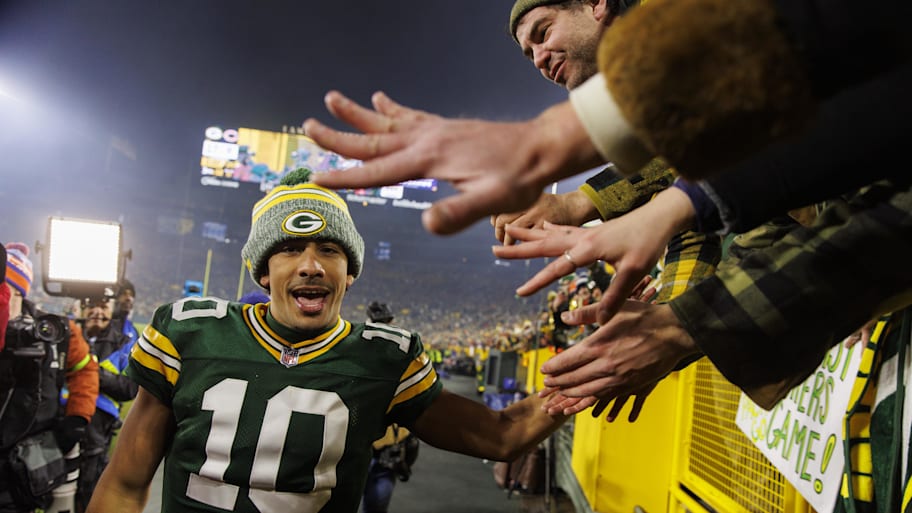
Sunday’s game could mark the beginning of a new chapter of the famed but perpetually lopsided series.
Finally, a Big Packers-Bears Game
This will definitely be the biggest game between the teams since the 2013 finale, when the Packers played at Chicago with the NFC North championship at stake. Aaron Rodgers returned from a broken collarbone and shocked the Bears with a 48-yard, game-winning touchdown pass to Randall Cobb with 38 seconds to go. The Packers won the division; the Bears were eliminated.
This game is big. The rematch two weeks later will be big.
Maybe this will be the first of a decade’s worth of big games.
The Packers are perennial contenders. With last week’s win at Detroit, they are in good shape to earn a sixth playoff berth in seven seasons under coach Matt LaFleur, despite some significant bumps in the road.
Jordan Love this season has answered most of the residual questions about his ability to be a franchise quarterback, and the trade for Micah Parsons has given them their first truly elite defensive player since Charles Woodson.
The NFL is littered with one-hit wonders – last year’s Vikings among them – but the Bears seem built to last with the young combo of coach Ben Johnson and quarterback Caleb Williams.
General manager Ryan Poles spent his money wisely by rebuilding their offensive line, with that group overwhelming the Eagles on Friday and posing a significant challenge to the Packers. There are questions about Williams, who is last in the NFL in completion percentage, but the team is rolling with nine wins in its last 10 games.
Between the Packers’ dominance of the series – LaFleur was 11-0 against Chicago until losing last year’s regular-season finale – and the Bears’ rise this season, there’s plenty of fuel headed into Sunday.
And don’t forget the match that Johnson lit when he was hired in January.
“And to be quite frank with you,” the former Lions offensive coordinator said during his opening remarks, “I kind of enjoyed beating Matt LaFleur twice a year.”
Brett Favre, Aaron Rodgers Lead Way vs. Bears
All-time, the Packers lead the series 108-96-2. Their lead rests almost entirely on the golden right arms of Brett Favre and Rodgers.
Beginning on Nov. 22, 1992, when Favre led the Packers to a 17-3 win over the Bears, the Packers own a 51-15 record in the series. The Packers won 29 of those games by at least 10 points.
Favre went 22-10 against Chicago. While Favre was great, Rodgers was otherworldly. He went 25-5 in 30 starts, including a victory in the 2010 NFC Championship Game and a loss in 2013 at Lambeau, when he suffered a broken collarbone on the opening series and was replaced by Seneca Wallace.
Rodgers threw 64 touchdowns and 12 interceptions in those games.
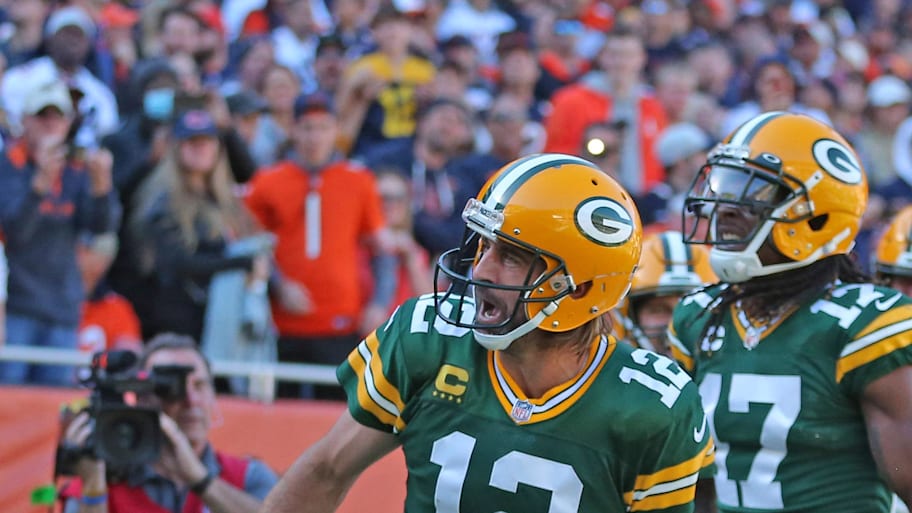
The Packers are 3-1 against the Bears during the Love era. They won 38-20 at Chicago in Love’s debut as the full-time starter in 2023 and won the rematch 17-9. Last year, they won 20-19 in Chicago, a victory saved by Karl Brooks’ blocked field goal, but lost 24-22 at Lambeau in Week 18. With Love unable to finish the game and the Bears winning on a walk-off field goal, the Bears snapped an eight-game losing streak at Lambeau.
Love has six touchdowns and one interception in those four games.
Meanwhile, the Bears have been in the quarterbacking wilderness, though they hope Williams will be the franchise compass. Since the start of the 1993 season, the Packers’ quarterbacks have thrown 124 touchdown passes with 50 interceptions and a 97.0 passer rating while the Bears’ quarterbacks have thrown 60 touchdowns with 93 interceptions and a 67.9 rating.
A Bears quarterback hasn’t posted a 100-rating game at Lambeau Field since Cade McNown in 2000.
Really, dominance has been the story throughout the history of the series. In the first four decades, the Bears were 49-26-6. During the peak of Vince Lombardi’s Glory Years run, the Packers turned the tables by going 12-3.
It’s fitting that of the 210 games in the series, these rivals have met in the playoffs only twice. Packers-Bears, for all the lore, has been all about one team kicking the snot out of the other, repeatedly, for long stretches.
Maybe, with Love and Williams at the controls, that’s about to change.
More must-reads:
- 10 best non-quarterbacks in NFL's conference championship games
- Tom Brady seemingly a harsh judge based on Fernando Mendoza comments
- The 'NFL undrafted receiving leaders' quiz
Breaking News
Trending News



Customize Your Newsletter
 +
+




Get the latest news and rumors, customized to your favorite sports and teams. Emailed daily. Always free!
PRIVACY POLICY EDITORIAL POLICY CONTACT US
ABOUT YARDBARKER TERMS OF SERVICE


Use of this website (including any and all parts and
components) constitutes your acceptance of these
Terms of Service and Privacy Policy.
This site is for entertainment purposes only.
There is no gambling offered on this site.
Gambling Problem? Call 1-800-Gambler.
