
-

-


Follow Us
-

 On Facebook
 On Flipboard

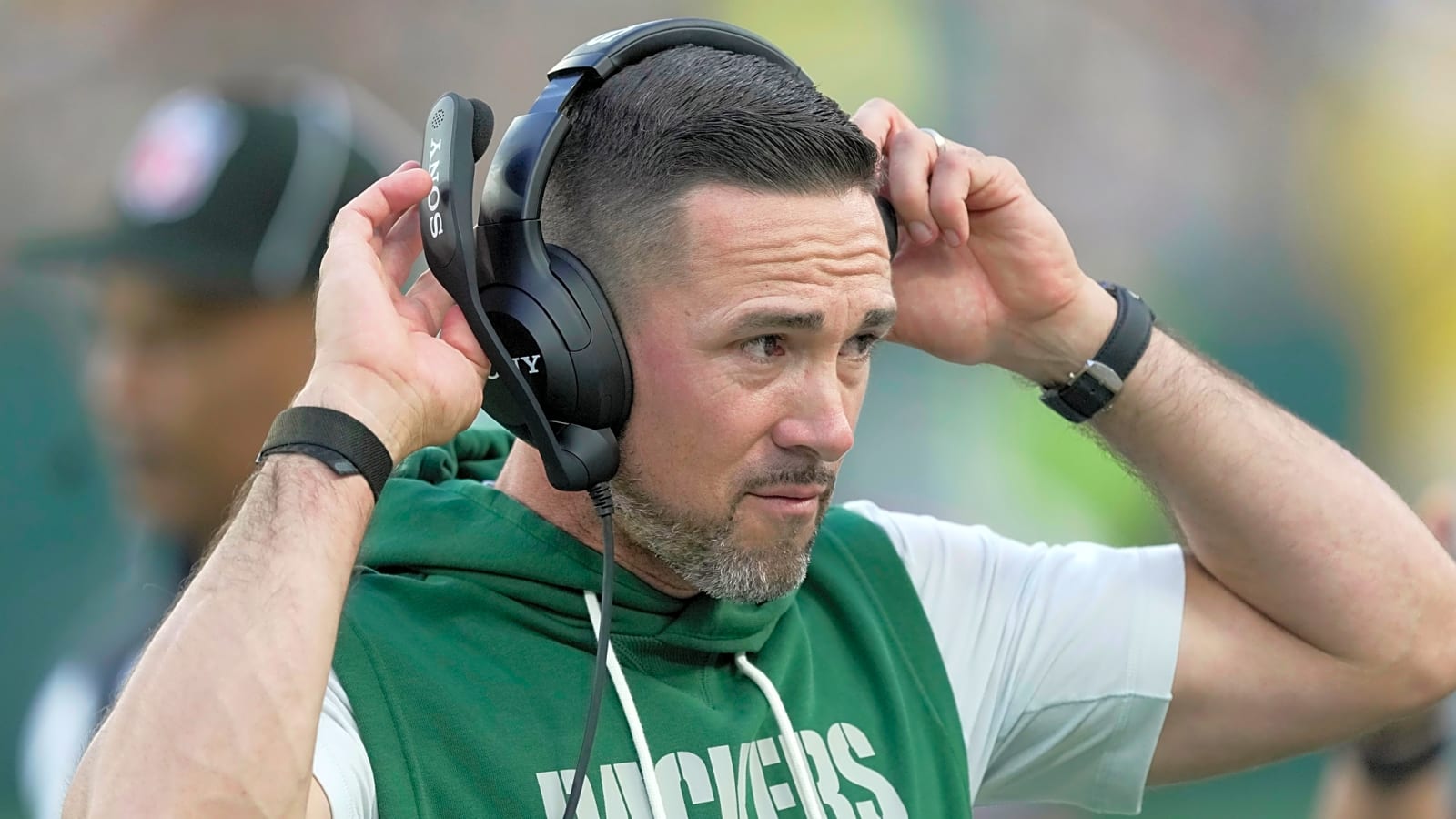
Everybody saw it coming. Since May, the Green Bay Packers knew they would open the 2026 NFL campaign in Minnesota against the Vikings. They also knew that Vikings defensive coordinator Brian Flores loves to design exotic blitz packages that place seven or eight players at the line of scrimmage and then makes the offensive players guess who’s coming and who’s dropping back into coverage. Despite this knowledge, the Packers coaching staff failed to adequately prepare the offensive line Week 1. The Packers coaching staff mishandled the offensive line and it was a major reason they lost a game they should have won.
The Packers Offensive Line Was Mishandled On So Many Levels: Choosing Starters
During the offseason, the Packers had question marks at all five starting positions. All of the five potential starters had issues with injuries and/or inexperience at their potential position.
Entering Week 1, left guard Aaron Banks and right tackle Zach Bako-Bewele were still dealing with injuries, and the Packers weren’t sure whether either of them could play and if so, could they play the entire game.
Now, Matt LaFleur and the coaching staff of the Packers had always said they wanted the five best five offensive linemen on the field. That was one reason they valued players who could play multiple positions along the line. Ultimately, however, that’s not who they started in Week 1 at either guard position.
After playing rookie Jager Burton extensively throughout the preseason, the Packers turned to Donovan Jennings as the starting left guard. Jennings had played only six offensive snaps in his NFL career prior to Sunday’s game in Minnesota.
On the right side, they turned to Jacob Monk, who had played just 57 offensive snaps in his NFL career with nearly all of them coming in last year’s regular season finale. In that game, the team was trying to rest as many starters as possible because the outcome had no impact on the Packers playoff seeding. Prior to that, the coaches were reluctant to play Monk on offense.
Making Jennings and Monk your starting guards against a blitz happy team like the Vikings was certainly putting the team at a disadvantage. Anthony Belton had more experience than Monk at right guard and Burton had gotten more reps than Jennings during training camp. These moves left the Packers vulnerable before the game even started.
A Questionable Game Plan
The Packers offense knew the Vikings would be blitzing early and often. They also knew the offensive line was shaky at best. The game plan was to try to create splash plays off the Minnesota blitzes.
In the first half, this more or less worked. But once the Vikings took the lead and the pretense of trying to run the ball was gone, the offensive line was simply overwhelmed.
It would have made sense for the LaFleur, the team’s play caller, to adjust to three-step drops, quicker releases, screen passes, and other plays that could neutralize some of the pressure the Vikings were bringing. That never happened consistently. Furthermore, in the fourth quarter of the game, the offensive line was being beaten so badly that Jordan Love had no chance to find an open receiver at any distance.
As a result, Love was sacked four times, hit 15 times and pressured consistently throughout the game, especially in the second half. The Packers led 22-10 late in the third quarter and were outscored 29-0, the rest of the game.
The Packers Offensive Line Was Mishandled On So Many Levels: A Terrible Play Call
The play that got many fans angry was LaFleur’s decision to go for it on 4th-and-1 after kicker Trey Smack kicked a field goal that would have put the Packers up eight points. LaFleur opted to take the points off the board and to go for the first down instead. The logic was a touchdown would have made it a two-score lead in the fourth quarter and more or less iced the game.
The decision to go for it was not a bad one, but the play call was terrible. The Packers went with a traditional quarterback sneak. That call played directly into the Vikings strengths and the Packers weaknesses.
Love does not have a reputation for being good at the sneak in short yardage situations. The Packers did not use the tush push to help Love. The tush push is almost impossible to stop in short yardage, which is why the Packers unsuccessfully tried to have it banned a year ago. So, LaFleur opted to run a play with an offensive line that is not good at run blocking, and a quarterback who struggles with the sneak.
A run pass option out of the spread would have played more to Love’s strengths and potentially could have kept the defense a little off-balance. Even a split-second hesitation by the defense would have been enough to gain the yard the Packers needed.
Ultimately, the Packers coaching staff did a poor job of choosing starters on the offensive line, did not adjust their game plan well in the second half and called a play on a critical fourth down that played to his team’s weaknesses and the opponent’s strengths. The result was a blown lead and division loss in a game the Packers really should have won.
More must-reads:
- 'MNF' takeaways: Chiefs reclaim AFC West bragging rights with blowout win over Broncos
- Cowboys' $100 million problem somehow got even worse in Week 1
- The 'Most yards through two NFL seasons' quiz
Breaking News
Trending News




Customize Your Newsletter
 +
+




Get the latest news and rumors, customized to your favorite sports and teams. Emailed daily. Always free!
PRIVACY POLICY COOKIE POLICY CONTACT US
ABOUT YARDBARKER TERMS OF SERVICE


By using this site, you agree to our Terms of Service and Privacy Policy.
This site is for entertainment purposes only.
There is no gambling offered on this site.
Gambling Problem? Call 1-800-Gambler.
