
-

-


Follow Us
-

 On Facebook
 On Flipboard

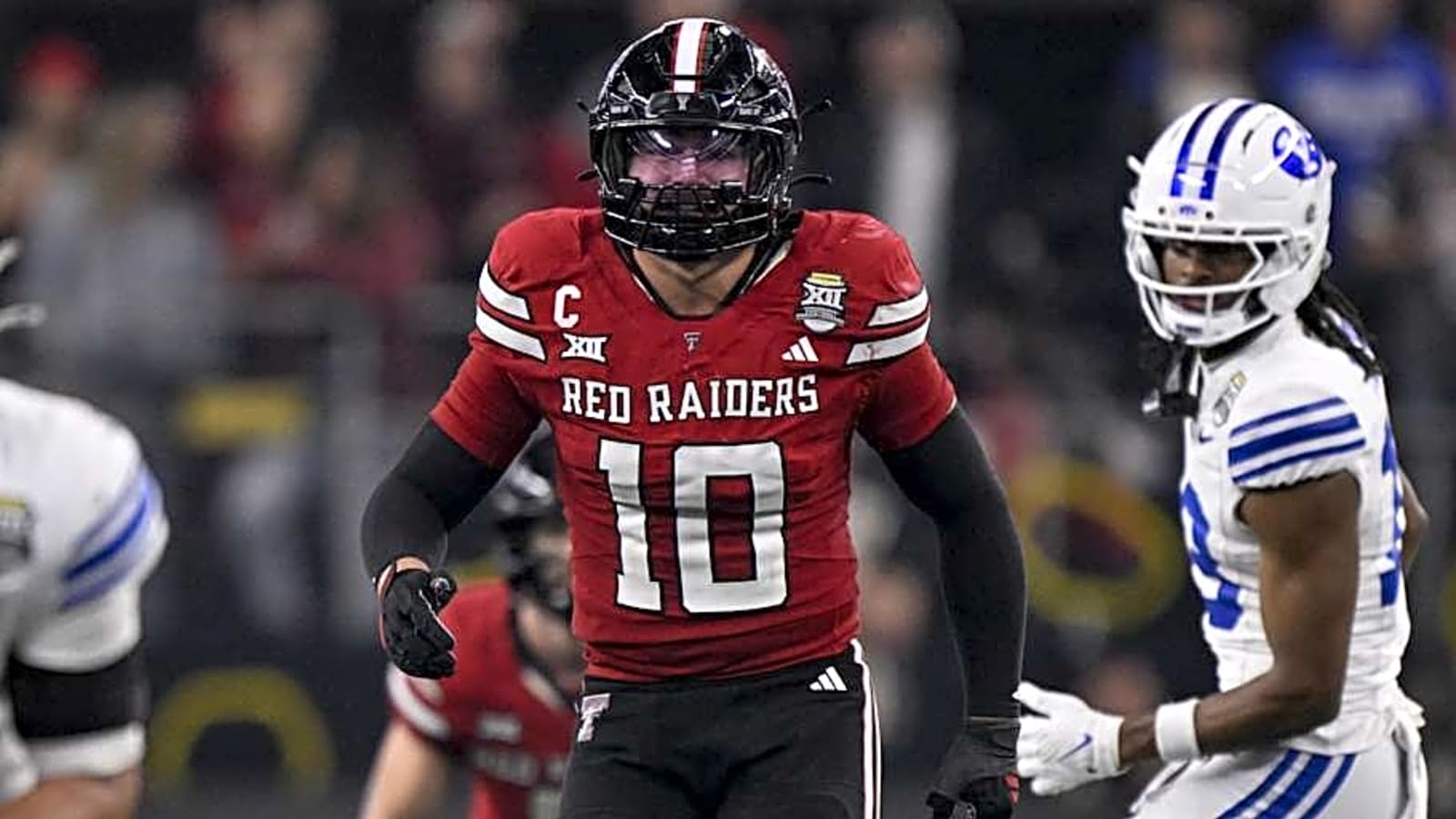
The Miami Dolphins are continuing to reshape their roster with a 13-player draft class, a group that reflects both immediate competition and long-term development as the foundation of the team takes shape.
With that in mind, it’s worth framing these rookies through a familiar lens, not as projections or guarantees, but as stylistic comparisons, established NFL players whose games mirror what these prospects already show on film.
At its core, that’s what these comps are built on: traits. Movement skills, play strength, instincts, versatility, and how a player consistently wins in different situations. Some comparisons lean on physical profile, others on role or play style, but all are rooted in the characteristics that translate from college tape to the next level.
There’s always a level of subjectivity involved. Development paths vary, and no comparison is exact. But focusing on traits helps provide context for how each rookie might fit and function within Miami’s evolving roster.
Let’s examine the NFL players these rookies most closely resemble based on their traits.
Pro Comparisons for Every Dolphins Pick
Round 1 — T Kadyn Proctor
Pro Comp: Orlando Brown Jr., Cincinnati Bengals
This one starts with the physical profile. Proctor measured in around 6-7, 352 pounds at the combine, while Brown is listed at roughly 6-8, 345 pounds; both massive tackles with rare length and a naturally overwhelming presence on the edge.
From there, the play style lines up. Like Brown, Proctor wins with length, power, and the ability to control defenders at the point of attack. He’s not built around elite twitch; instead, he relies on his frame, strength, and ability to anchor against power.
The comparison also holds in how they handle pressure. Proctor, much like Brown early in his career, can be tested by speed off the edge, but both compensate with recovery ability and the capacity to widen rush paths. Their games are built more on control than quickness, forcing defenders to win through power or perfect angles rather than pure speed. Brown has turned that play style into a multi-time Pro Bowl career, giving a clear example of how this archetype can succeed at a high level.
It’s not a perfect one-to-one, but from a traits and build standpoint, Proctor mirrors that same mold: a physically imposing tackle who can develop into a high-level starter by leaning into size, length, and control.
Round 1 — CB Chris Johnson
Pro Comp: Charvarius Ward, Indianapolis Colts
Johnson’s profile lines up closely with Ward from a size and length standpoint. Johnson checks in around 6-1 with a lean, long frame, while Ward is listed at 6-1, 196 pounds, both corners with the kind of length that shows up immediately in press and at the catch point.
Like Ward, Johnson plays with patience and controlled physicality in press, using his reach to disrupt timing without overcommitting or getting out of position early in the rep.
Both corners lean on positioning rather than relying on elite recovery speed. Johnson consistently shows he can mirror receivers, stay attached vertically, and compete at the catch point without losing control.
The similarities show up even more when the ball is in the air. Johnson has demonstrated strong ball skills and instincts, traits that have helped Ward develop into a dependable, high-level outside corner.
Round 2 — LB Jacob Rodriguez
Pro Comp: Fred Warner, San Francisco 49ers
This comp leans on play style more than physical similarities. Rodriguez, like Warner, wins with instincts, coverage intelligence, and reliable tackling, showing a natural ability to anticipate and react that allows him to play faster than he times.
Rodriguez plays with patience and discipline, rarely overcommitting, and consistently puts himself in position by trusting what he sees. He doesn’t rely on elite size or overwhelming physical traits, instead, he lets his awareness and timing do the work.
As a tackler, he brings consistency and control. He takes smart angles, stays balanced through contact, and limits missed opportunities, traits that have helped define Warner’s game at the NFL level.
Round 3 — WR Caleb Douglas
Pro Comp: Allen Lazard, free agent
Douglas brings a similar play style to Lazard, winning with size, physicality, and the ability to finish through contact rather than creating consistent separation.
Both receivers use their length, playing through defenders, shielding at the catch point, and competing in contested situations. There can be some limitations when it comes to consistently separating, but that’s not where their game is built.
Like Lazard, Douglas is comfortable working through contact, maintaining balance, and making plays in traffic. There’s also added value in his willingness to block and contribute in different ways, giving him a role as a steady, physical presence within the offense.
Round 3 — TE Will Kacmarek
Pro Comp: Marcedes Lewis
Kacmarek’s game aligns with Lewis as a tight end whose impact is built around blocking and physicality. He’s comfortable operating in-line, using his size and strength to engage defenders and help establish the edge in the run game.
Kacmarek plays with a physical mind-set, working to sustain blocks and create space rather than being featured as a primary receiving option.
In the passing game, the role is more situational. Like Lewis, he can be used underneath or in short-yardage situations, but his value comes more from reliability than volume production. Lewis has played twenty years in the league and only averaged 1.5 catches per game over that span.
Kacmarek brings that same steady, physical presence at the position as Lewis, one that helps an offense function through toughness and consistency.
Round 3 — WR Chris Bell
Pro Comp: Treylon Burks, Washington Commanders
Bell shares a similar build and play style to Burks, bringing a blend of size, strength, and movement ability that allows him to create offense in multiple ways.
Both entered the league as raw prospects, still developing the finer details of route running and overall consistency, but with clear flashes of high-end ability. Bell can create separation, especially when he’s able to build into routes and use his stride to gain leverage downfield.
That pairs with his ability to track the ball and finish through contact, making him effective both with space and in contested situations.
The comparison centers on that combination of size and functional athleticism, receivers who can stretch the field, create space, and still win physically when needed.
Bell, like Berks, will need time to develop and should have it coming off ACL surgery in December.
Round 4 — EDGE Trey Moore
Pro Comp: Baron Browning, Arizona Cardinals
Moore’s profile lines up well with Browning from a size and build standpoint. Moore is 6-2 and 245 pounds, while Browning is listed at 6-3, 240 pounds, both built as hybrid defenders with the frame to play on the edge or in space.
Moore brings speed and burst off the edge, winning with quickness and angles rather than pure power. He’s capable of closing quickly on the quarterback while still offering range to contribute away from the line of scrimmage. Like Browning, his impact comes from how quickly he can stress tackles and disrupt the backfield.
There’s also clear versatility in how he can be used, with the ability to rush the passer or operate in space, giving a defense flexibility across the front seven.
In Miami, Moore projects as a rotational piece early on, providing energy and situational pass-rush ability while carving out a role within the defense.
Round 4 — LB Kyle Louis
Pro Comp: Derrick Brooks
Louis’ play style has drawn comparisons to Brooks, as noted by former NFL executive and current ESPN analyst Louis Riddick, with the connection rooted in instincts, range, and coverage ability. He wins with how quickly he processes and reacts.
Both linebackers show a natural feel for the game, consistently putting themselves in position by reading plays early and trusting what they see. Louis moves well in space, showing the ability to flow sideline to sideline and impact plays outside the box.
Louis is comfortable dropping into coverage, reading the quarterback, and closing on the football, with the kind of timing and anticipation that allows him to disrupt passing lanes. Like Brooks, there’s a smoothness to how he operates in space, rarely looking rushed or out of position.
There’s also a similar play speed to how they operate, allowing Louis to consistently find the football and make plays throughout the field. Brooks built a career on that type of instinct-driven impact, and Louis shows flashes of that same ability to influence the game without needing to rely on size or overwhelming physical traits.
Round 5 — S Michael Taaffe
Pro Comp: Jordan Poyer, free agent
Taaffe plays a similar style to Poyer, relying on instincts, awareness, and versatility to impact the game rather than elite top-end athleticism.
From a physical standpoint, Taaffe is in a similar range, around 6-1 and just over 200 pounds, while Poyer is listed at 6 feet, 203 pounds, both built as well-rounded safeties rather than true size outliers.
Speed-wise, neither player is defined by elite straight-line burst. Instead, both rely on how quickly they process, trigger, and close on the football.
Like Poyer, his value comes from doing multiple things well: providing stability, intelligence, and physicality across the defense.
Round 5 — WR Kevin Coleman Jr.
Pro Comp: Elijah Moore, Philadelphia Eagles
Coleman’s game aligns with Moore in how he creates separation with quickness and change of direction. He’s at his best working underneath and in space, where his ability to get in and out of breaks allows him to consistently create openings.
From a physical standpoint, the two are very similar. Coleman is around 5-11 and roughly 185–190 pounds, while Moore is listed at 5-10, 178 pounds, both utilized as compact, quick-twitch slot
Speed-wise, neither relies solely on straight-line vertical speed. Instead, both win with short-area burst, acceleration, and the ability to change direction quickly, which shows up in how they separate and create after the catch.
Coleman mirrors Moore in how he creates space quickly and turns short touches into explosive plays.
Round 5 — TE Seydou Traore
Pro comp: Gerald Everett, free agent
Traore’s game aligns with Everett as a receiving tight end who wins with movement ability and versatility rather than traditional in-line play.
From a physical standpoint, both are listed at 6-3, with Traore around 235 pounds and Everett at 240 pounds, each functioning more like athletic, move tight ends than traditional Y-types.
Like Everett, Traore is most dangerous when he’s allowed to operate in space, where he can turn upfield and create after the catch.
There’s also a similar versatility in how they can be deployed, with the ability to move around the formation and stress matchups against linebackers and safeties.
Traore is still a developmental prospect, with his impact likely coming as he continues to refine the details of the position.
Round 6 — G DJ Campbell
Pro Comp: Gabe Jackson, free agent
Campbell’s profile is built around experience and interior strength, bringing over 40 career starts and a sturdy base that shows up snap to snap.
From a physical standpoint, both are listed at 6-3, with Campbell around 320 pounds and Jackson at 315 pounds.
He’s at his best when he can settle into a rep and use his strength to hold his ground or generate push inside. The inconsistencies come with technique. His hands can drift high, which limits his ability to sustain, and there are reps where he’ll overreach and lose balance.
Movement in space can also be a challenge, particularly when he has to adjust or redirect.
Jackson made a career out of a similar style, doing his best work inside, playing through contact, and relying on strength and stability over movement.
Campbell brings that same type of interior presence, with the foundation already in place and the details still developing.
Round 7 — EDGE Max Llewelyn
Pro Comp: DeShawn Williams, free agent
Llewelyn’s game aligns with Williams as a long interior defender who wins with hand usage, activity, and effort rather than raw power or elite burst.
From a physical standpoint, both are in a similar range. Llewelyn is around 6-3, 290 pounds, while Williams is listed at 6-1, 292 pounds.
Llewellyn uses his length effectively to keep blockers off his frame and work into the pocket, showing the ability to disrupt with extension and flashes of pass-rush moves like a spin when he gets into rhythm.
There’s some fluidity to how he moves, but also similar limitations.
Williams , an undrafted player, built a role by staying active and disruptive in short stretches, and Llewelyn projects along those same lines as a rotational interior piece who can provide flashes while continuing to develop.
More must-reads:
- Panthers' major Bryce Young decision is huge milestone for QB after early struggles
- Concerning update emerges on Broncos QB Bo Nix
- The 'No.2-overall NFL Draft picks' quiz
Breaking News
Trending News






Customize Your Newsletter
 +
+




Get the latest news and rumors, customized to your favorite sports and teams. Emailed daily. Always free!
PRIVACY POLICY COOKIE POLICY CONTACT US
ABOUT YARDBARKER TERMS OF SERVICE


By using this site, you agree to our Terms of Service and Privacy Policy.
This site is for entertainment purposes only.
There is no gambling offered on this site.
Gambling Problem? Call 1-800-Gambler.
