
-

-


Follow Us
-

 On Facebook
 On Flipboard

The 2026 NFL Draft wrapped on April 25 in Pittsburgh, and before the confetti settled on the North Shore, Seattle’s front office was already working the phones. GM John Schneider had his undrafted free agent board locked and loaded. Seven names. Seven contracts. Seven players who never heard their names called across seven rounds and 257 picks. While other franchises were still sorting their draft-day paperwork, the Seahawks deployed a pre-built UDFA strategy with surgical speed. The roster additions covered defensive line, edge, linebacker, receiver, and tight end, filling gaps the draft itself left open.
Schneider’s Post-Draft Playbook
The pressure on Schneider heading into this offseason was real. Seattle needed depth at multiple positions, and the draft only stretches so far. Every pick carries risk. Every miss compounds. So the Seahawks treated the undrafted market as an extension of draft night, not an afterthought. They had evaluations completed before the final round ended, roster spots pre-calculated, and signing authority aligned for immediate execution. That kind of organizational readiness separates franchises that build depth from franchises that hope for it. Seven signings in the first wave suggests conviction, not scrambling.
The Super Bowl LX Context Nobody’s Mentioning
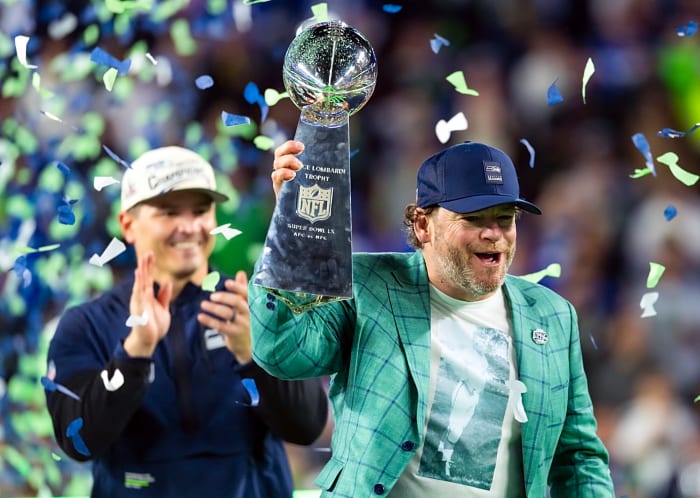
Seattle is the reigning Super Bowl LX champion, which reframes every roster decision this spring. Schneider has publicly tied the draft and UDFA cycle to the attitude he wants carried into title defense, telling ESPN the plan was to reinject the Super Bowl winning roster with a certain edge. Defending champions rarely add seven undrafted rookies with urgency, because their locker rooms are considered set. Seattle’s approach signals that Schneider does not trust complacency to defend a ring. That is a philosophy worth watching across the full season.
The Myth of Draft-Night Dominance Meets Roster Math

Most fans assume the draft is where NFL rosters get built, and that belief is comfortable and mostly wrong. The undrafted market opens simultaneously to all 32 teams, and the talent pool runs deep with players who slipped through seven rounds for reasons that have nothing to do with ability. The Seahawks understand this, and they acted on it before competitors finished their coffee. The catch is that Seattle also had less room to work with than most rivals, which shaped the size of the class as much as the philosophy did.
Why Seattle’s Class Is Smaller Than Most
Seattle entered the draft with 75 players already under contract, added eight draft picks, and therefore had very limited headroom beneath the 90-player offseason cap. Over the Cap’s pre-draft projection estimated the Ravens had roughly 22 UDFA slots available, the Chargers about 18, and the Raiders about 14. Seattle’s seven is not purely a quality over volume mantra, it is also arithmetic. Once you understand the math, the class looks disciplined rather than thin. The Seahawks filled every slot they had with a specific positional target.
The Seven Who Got the Call

Lance Mason, tight end from Wisconsin. Devean Deal, linebacker. Uso Seumalo, defensive tackle from Kansas State. Aidan Hubbard and Marvin Jones Jr., both edge rushers. Michael Briscoe and Levi Wentz, wide receivers. That breakdown tells the story. One tight end, one linebacker, one defensive tackle, two pass rushers, and two pass catchers. Schneider did not scatter resources randomly across the roster. He loaded up where the draft left holes, and doubling up at edge rusher signals a defensive front that needed reinforcement yesterday.
The Aidan Hubbard File
Hubbard, the Northwestern edge, is the signing Yahoo Sports singled out as the headline name of Seattle’s UDFA haul. Local Seahawks coverage framed him as a potential UDFA steal within days of signing. He arrives at a position where Seattle did not spend a single 2026 draft pick, which is the cleanest path to playing time any undrafted rookie can hope for. Rotational edge snaps in a championship defense are not handed out, but they are available. Hubbard is the one UDFA whose name will surface first if injuries hit the front.
The Hidden Advantage of Speed
Every team has legal access to the same UDFA pool at the same time. That is the rule, but the reality operates differently. Teams with slower evaluation pipelines, unclear positional priorities, or front office bottlenecks lose players to faster moving organizations within the same legal window. The Seahawks came with a shopping list, and while competitors were still sorting UDFA tiers, Seattle had already finalized seven agreements. The ones who arrive knowing exactly what they want fill their plates first. Decisiveness is its own draft pick.
The Doug Baldwin Precedent
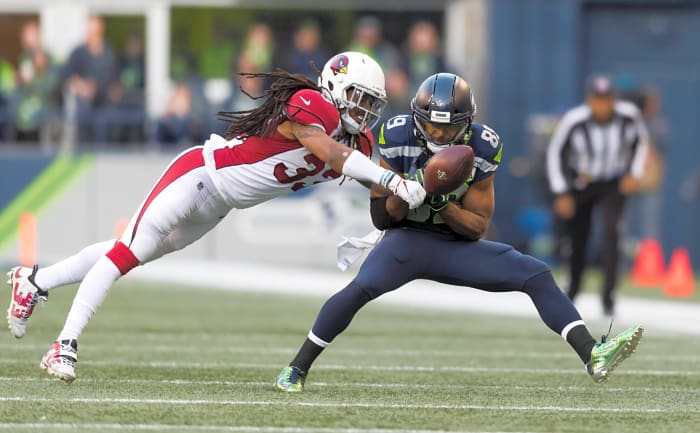
Seattle’s history with undrafted players is the reason this class deserves attention rather than a footnote. Doug Baldwin went undrafted in 2011, started in two Super Bowls, and retired as a franchise receiving leader. More recently, Jake Bobo signed as a UDFA and carved out a rotational role. The Seahawks have a documented pattern of turning overlooked receivers and defenders into contributors, which directly affects how fans should read Briscoe, Wentz, and Hubbard. Precedent is not prediction, but it raises the floor on expectations. The franchise has earned the benefit of the doubt.
What the Numbers Reveal

The 2026 draft featured 257 picks across seven rounds, which means hundreds of college players went unselected. The Seahawks cherry picked seven from that pool, a figure shaped by the limited roster space Seattle had after eight draft selections. Other teams signed larger UDFA classes, but volume alone means nothing, because what matters is hit rate. Seattle’s targeted approach, doubling up at edge rusher and receiver, suggests Schneider prioritized competition at specific positions. Fewer signings with higher conviction at each position takes more confidence than grabbing everyone available.
The Ripple Through the Roster

Seven new bodies means seven new competitions in training camp. Every incumbent at edge, defensive tackle, tight end, linebacker, and receiver just got a wake up call. These UDFAs arrive on minimal contracts, preserving salary cap flexibility for midseason acquisitions if injuries strike, and that financial math matters. Seattle can develop these prospects at a fraction of what a drafted player costs, and if even two make the 53 man roster the return on investment dwarfs the outlay. The veterans who assumed their spots were safe now have to prove it all over again.
Who’s Actually at Risk
The draft and UDFA wave produced specific names on the wrong end of the depth chart. Post draft analysis flagged cornerback Nehemiah Pritchett, guard Anthony Bradford, and running back Emanuel Wilson as incumbents whose jobs got meaningfully harder this spring. Those are not random demotions, they are the direct downstream effect of Seattle adding competition at every level. Camp cuts are always personal, and these are the names most likely to become headlines in late August. Knowing who is fighting for a jersey is how fans separate surface coverage from real roster understanding.
A New Rule, Not an Exception
Schneider is treating UDFA acquisition as a parallel draft strategy rather than a cleanup operation. The positional targeting mirrors the same analytical rigor applied to first round selections, and edge rushers Hubbard and Jones Jr. were not afterthoughts. They were pre identified targets pursued with draft night urgency. Once you see that the UDFA market rewards preparation identically to the draft itself, every team’s post draft behavior becomes a scouting report on its front office. Seattle’s behavior reads like an organization that trusts its evaluation process completely.
What to Watch at Rookie Minicamp

Rookie minicamp opened the weekend following the draft, which is the first real stage where these seven players become something other than names on a tracker. Hubbard has the clearest runway at edge because Seattle did not draft the position. Briscoe and Wentz face the steepest climb because the receiver room already includes Jaxon Smith Njigba and significant draft capital. Seumalo’s path runs through a defensive tackle depth chart that will not yield reps easily. Anchor your viewing to those three storylines and the class will tell you what it is.
The Real Story Most Fans Will Miss
The draft gets the prime time coverage while the UDFA market gets a footnote, but the franchises that win consistently treat both with equal intensity. Seattle’s seven player haul, executed with pre draft evaluation readiness and immediate post draft deployment, reveals a front office operating at a tempo most competitors cannot match inside the same legal window. The person who understands this watches training camp differently, because the real roster battles started the moment Schneider picked up the phone. Bet on Hubbard being the first of these seven names to show up on a regular season depth chart by September.
Which of the seven do you think actually makes the 53 man roster in September, Hubbard, Seumalo, or someone nobody is talking about yet, and which incumbent are you most worried about losing their spot?
Sources:
Seattle Seahawks. “Seahawks Sign Seven Undrafted Rookie Free Agents.” Seahawks.com, May 1, 2026.
Boyle, John. “Seahawks Confirm 7 Undrafted Free Agent Signings.” Yahoo Sports, May 1, 2026.
The Athletic Staff. “Seahawks Undrafted Free Agents: Who Has the Best Chance to Make the Roster.” The New York Times / The Athletic, April 29, 2026.
NFL.com Staff. “Undrafted Free-Agent Signings Tracker: Every Team’s UDFAs After the 2026 NFL Draft.” NFL.com, April 24, 2026.
Fitzgerald, Jason. “Estimating the Number of 2026 UDFAs for Each Team.” Over the Cap, April 19, 2026.
ESPN Staff. “Inside the Seahawks’ Strategy to Draft Competitors.” ESPN, May 1, 2026.
More must-reads:
- Texans owner Cal McNair offers new update on uncertain future of C.J. Stroud
- 'I just go out there and do my job': Eagles' DeVonta Smith locked in amid A.J. Brown rumors
- The 'No.2-overall NFL Draft picks' quiz
Breaking News
Trending News



Customize Your Newsletter
 +
+




Get the latest news and rumors, customized to your favorite sports and teams. Emailed daily. Always free!
PRIVACY POLICY COOKIE POLICY CONTACT US
ABOUT YARDBARKER TERMS OF SERVICE


By using this site, you agree to our Terms of Service and Privacy Policy.
This site is for entertainment purposes only.
There is no gambling offered on this site.
Gambling Problem? Call 1-800-Gambler.
