
-

-


Follow Us
-

 On Facebook
 On Flipboard


Confetti from Super Bowl LX had barely swept off the field. Cam Akers stood on that stage in February 2026, a champion for the second time in his career, elevated from the practice squad specifically for the biggest game in football. The Seahawks wanted him there. They announced his championship pedigree, activated his roster spot, and put him in uniform under the brightest lights the sport offers. Roughly eleven weeks later, Seattle cut him loose with a single sentence.
The Statement That Said Everything
“Released to free up roster space.” That was the official line from Seattle after drafting eight players, pushing the roster to 82. No tribute. No thank-you press conference. Just arithmetic. Akers had signed a reserve/future contract shortly after hoisting the Lombardi Trophy. The Seahawks kept him just long enough for the draft to render him unnecessary. Two rings on his fingers and a pink slip in his inbox before May.
A Body That Kept Coming Back
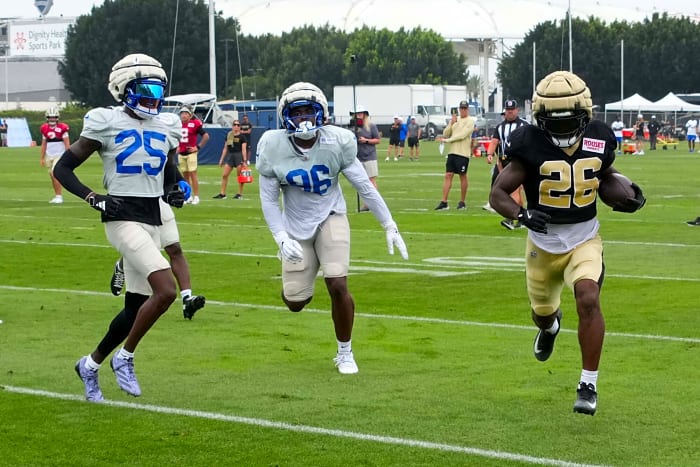
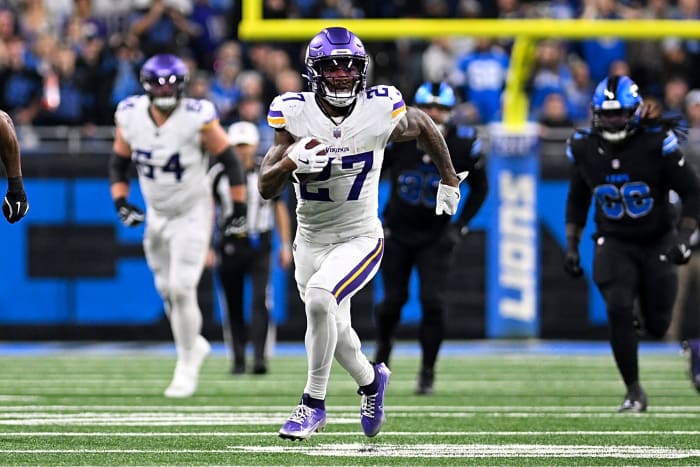
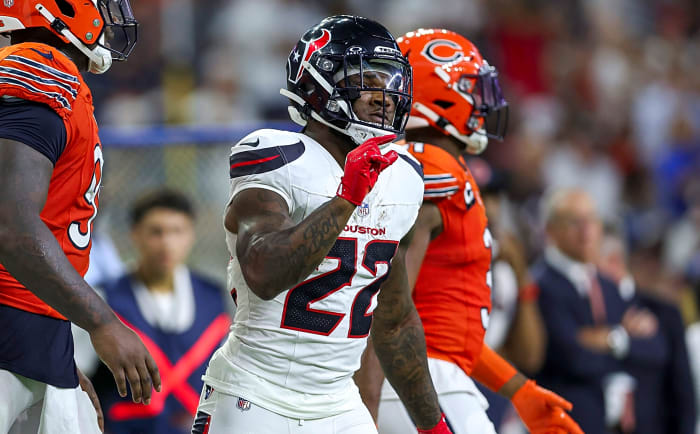
Most people assumed a guy with two Super Bowl rings earned some loyalty. Akers certainly earned the right to believe that. He tore his Achilles in 2021 and returned in roughly six months, far faster than the typical 9 to 12 month recovery timeline. He won Super Bowl LVI with the Rams. Then he tore the other Achilles in 2023 with the Vikings. Came back again. Played for the Texans. Landed in Seattle. Survived two career threatening injuries. But surviving draft weekend proved impossible.
A Handful of Snaps and a Farewell

The Seahawks elevated Akers from the practice squad for Super Bowl LX. His regular season body of work with Seattle was minimal. He appeared in three games, with his most notable contribution coming on special teams, where he returned two kicks for 54 yards in a December win over Carolina. That was the full body of work Seattle deemed championship worthy. Then Jadarian Price went No. 32 overall, and Akers’ fate was sealed before the commissioner finished reading the name. The elevation was a tactical placeholder, not a commitment. The ring was real. The roster spot was borrowed.
The Machine Behind the Math

Kenneth Walker III left Seattle for Kansas City on a three year, $45 million deal. Zach Charbonnet tore his ACL in January 2026. That created a temporary hole. Akers helped fill it after being signed to the practice squad in November following an injury to George Holani. Then the draft filled it permanently. First round picks carry guaranteed money and multi year roster protection. Reserve/future contracts carry nothing. Akers was the emergency patch. Price was the renovation. One gets a ceremony. The other gets a Monday phone call and a cleared locker.
What a Reserve/Future Contract Actually Buys
Reserve/future contracts are the NFL’s version of a handshake with a fine print disclaimer. They can only be signed by players who were not on an active roster at the end of the previous season, which means every reserve/future signee starts the new league year as a question mark. There is no signing bonus. There is no guaranteed money. The team carries the player into offseason programs and training camp and retains full release rights at any point before the season starts. For veterans like Akers, it is a foot in the door. For teams, it is a zero risk option on a familiar body. The moment a draft pick or a better free agent arrives, that option expires.
The Numbers Nobody Mentions

In his 2020 rookie season with the Rams, Akers rushed for 625 yards in 13 games. By 2025, his on field role had shrunk to a handful of appearances split between Minnesota and Seattle. His original four year rookie contract, as the No. 52 overall pick, totaled roughly $6.17 million. By the end, he played on practice squad minimums. The career arc of a second round pick reduced to emergency depth, and the Seahawks still had six running backs under contract without him.
The Super Bowl Elevation Rulebook

NFL rules allow teams to elevate up to two practice squad players for any game day, postseason included, without those players automatically converting to the active roster. After the elevation, the player reverts to the practice squad unless the team chooses to sign him permanently. That mechanism is why a Super Bowl elevation, while meaningful on a resume, carries no contractual weight the next morning. Seattle used the rule as designed. Akers suited up, played his snaps, collected his ring, and went back to being a practice squad signee with a reserve/future deal. The league office keeps the ceremony short by design.
Who Gets Cut Next
Akers wasn’t the only practice squad player elevated for Super Bowl LX. Velus Jones Jr. got the same call. He remains on the roster, for now, but faces the same calculus every veteran depth piece confronts after April. Draft picks need spots. The Seahawks carry Charbonnet, Holani, McIntosh, Wright, Wilson, and Price at running back. That leaves zero margin. Every team that elevated practice squad players for the postseason now faces the same cold question Seattle already answered.
Seattle’s Running Back Room, Ranked

Zach Charbonnet is the presumptive lead back once he clears his ACL rehab, backed by the timeline and touches that come with being a former second round investment. Jadarian Price arrives with first round draft capital and a guaranteed multi year deal, which functionally locks him into a featured role regardless of camp performance. Kenny McIntosh and George Holani occupy the short yardage and rotational tiers, with Holani coming off the injury that created Akers’ window in the first place. Jacardia Wright and Emanuel Wilson round out the room as camp bodies with special teams value. Six names, six contracts, and no room for a seventh with a reserve/future deal and two Achilles scars.
The New Rule Nobody Voted On
Here is what Akers’ release actually proves. Practice squad elevation to a Super Bowl generates zero retention leverage. None. A player can overcome two Achilles tears, win championships with two franchises, and still rank below an unproven rookie on the organizational priority list. Draft capital creates non negotiable commitment. Championship pedigree creates a nice story for the team website. Once you see that distinction, every April roster move across the league reads differently. This was never an exception. It was always the system.
Other Teams Facing the Same Math
Seattle is not the only franchise that turned to practice squad veterans during the postseason run. Every team that elevated a depth player for a playoff game now carries the same April decision on its desk. Draft rooms produced 257 new contracts across the league this week. Practice squad veterans on reserve/future deals carry none of that protection. The math plays out the same way in every building. The only variable is whether the front office issues the release Monday morning or lets the player report to minicamp before the conversation happens.
The Free Agent Market Awaits

Akers is 26 and turns 27 this summer, and he needs his next NFL opportunity. The veteran running back market is brutal in any year. Two Achilles tears on the medical file make it worse. His best case scenario is a training camp invite, a prove it deal, and another practice squad. His worst case is early retirement. If he lands somewhere competitive and produces, Seattle looks foolish for choosing a rookie over a proven survivor. That vindication window closes fast.
Landing Spots That Actually Make Sense

Three landing spots make immediate sense on paper. Any team with a thin RB2 depth chart and a coordinator familiar with the Rams’ outside zone scheme becomes a natural fit, given where Akers had his most productive work. Teams carrying a rookie starter who need a veteran body to absorb camp reps and locker room questions offer another path. Finally, any franchise with an injury situation similar to Seattle’s January ACL hole could see Akers as the same emergency patch Seattle once did. The call likely comes from a team with a problem to solve, not a plan to build around him.
Rings Don’t Clear Waivers

The Seahawks promoted Cam Akers’ championship experience to justify his Super Bowl elevation, then used draft efficiency to justify his removal. Both decisions made organizational sense. Both were true simultaneously. That is the part most fans miss. Loyalty and efficiency aren’t competing values in the modern NFL. Efficiency won that argument years ago. Akers walked away with two rings and zero job security, and every depth player watching now understands exactly what a practice squad Super Bowl elevation is worth come April. The next veteran to find out will know by May.
Did Seattle make the right call choosing a rookie over a two-time champion, or did they just hand a division rival a free vindication story? Tell us in the comments.
Sources:
Seattle Seahawks, “Seahawks Release RB Cam Akers,” seahawks.com, April 27, 2026.
Tim Booth, “Seahawks release running back Cam Akers,” The Associated Press, April 27, 2026.
Bob Condotta, “Seahawks release veteran running back Cam Akers,” The Seattle Times, April 27, 2026.
Connor Benintendi, “Seahawks Release Veteran RB After NFL Draft,” Sports Illustrated, April 27, 2026.
Seattle Seahawks, “2026 Transactions,” seahawks.com, accessed April 29, 2026.
Ethan Hullihen, “Seahawks’ Cam Akers: Elevated for Super Bowl LX,” CBS Sports, February 6, 2026.
More must-reads:
- Joe Burrow's worrying admission could spoil Bengals' positive start
- Deshaun Watson takes curious shot at media, discusses facing Bucs' Baker Mayfield in revenge spot
- The '10K-yard, 80-TD NFL receivers' quiz
Breaking News
Trending News



Customize Your Newsletter
 +
+




Get the latest news and rumors, customized to your favorite sports and teams. Emailed daily. Always free!
PRIVACY POLICY COOKIE POLICY CONTACT US
ABOUT YARDBARKER TERMS OF SERVICE


By using this site, you agree to our Terms of Service and Privacy Policy.
This site is for entertainment purposes only.
There is no gambling offered on this site.
Gambling Problem? Call 1-800-Gambler.
