
-

-


Follow Us
-

 On Facebook
 On Flipboard

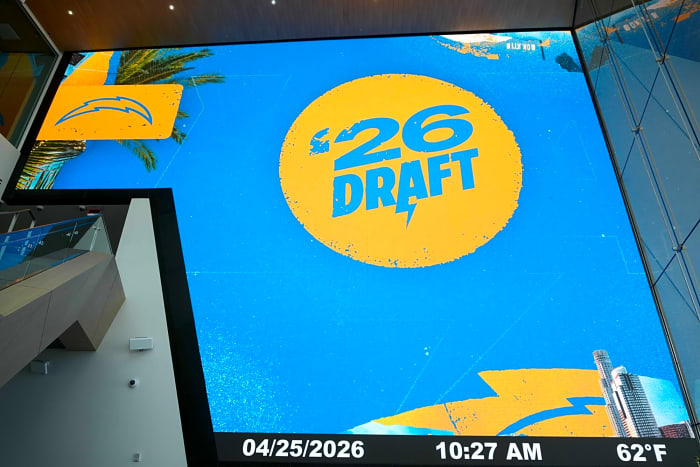
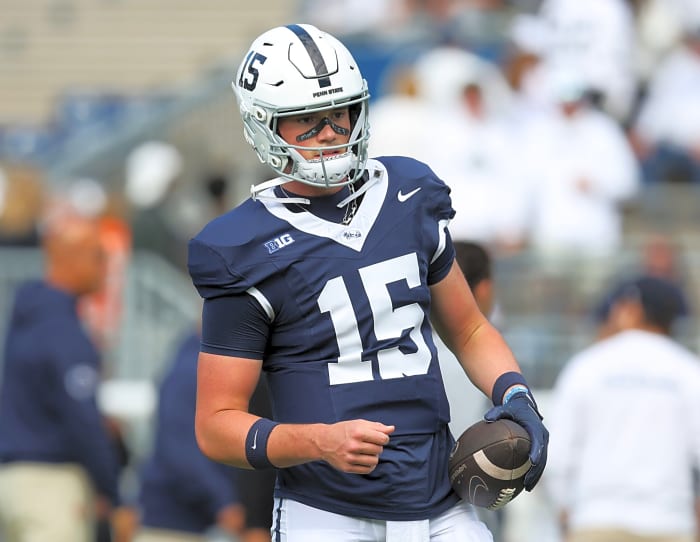
The 2026 NFL Draft drew a record 805,000 fans to Pittsburgh over three days. Somewhere in that crowd, a Penn State quarterback waited. Not in the green room. Not on the first-round stage. Drew Allar sat through 75 picks after Fernando Mendoza went No. 1 overall to the Las Vegas Raiders. Three other quarterbacks heard their names before his. A Hall of Famer watching from a studio believed every single team that passed made a mistake. The Steelers finally called at No. 76, and the argument started immediately.
The Voice Behind the Hype
Kurt Warner, two-time NFL MVP and Pro Football Hall of Famer, delivered the verdict on his “Kurt’s QB Insider” series. “The talent jumps off the screen when you watch this guy throw,” Warner said. “He is a natural, gifted thrower. There is not a throw on the football field that this guy can’t make.” Warner ranked Allar above Mendoza, above Ty Simpson, above every arm in the 2026 class. That kind of endorsement from a quarterback who lived the position at its highest level carries real weight in Pittsburgh.
The Waldman Verdict
Draft analyst Matt Waldman delivered the counterweight to Warner’s hype, describing Allar as closer to “a low-tier free agent who would not be offered a futures deal” on talent alone. Waldman flagged coverage reading, game management, and decision speed as repeated failure points on tape. Two respected evaluators. Two opposite conclusions. The space between them is the entire reason Allar sat until pick 76.
What the Market Saw Instead
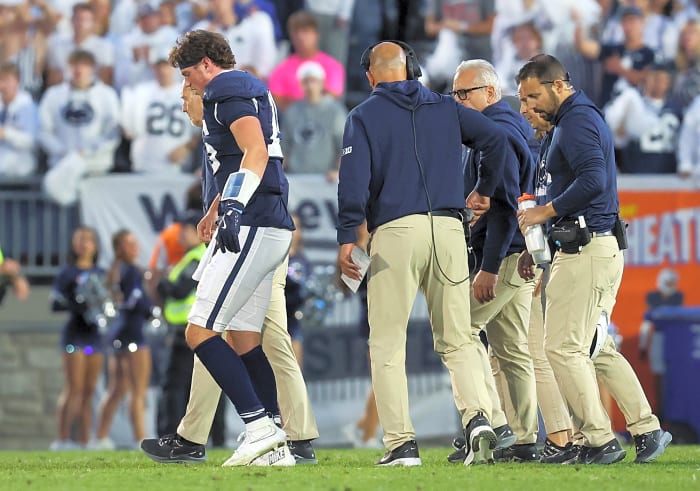
Before his leg injury on October 11, 2025, against Northwestern, Allar projected as a late-first or early Day 2 pick. After surgery and months of rehab, he threw at the combine ahead of schedule. Positive medical news. Strong arm. And teams still let him fall. His college numbers told a complicated story of 7,402 career passing yards, 61 passing touchdowns, 13 interceptions, and a 63.2% completion rate that ranks as the best in Penn State program history. Recovery speed could not erase what the tape showed under pressure.
The Top-10 Problem
The single number that explains the 75-pick slide lives in games against elite competition. Allar’s production against ranked opponents dropped sharply in completion percentage, yards per attempt, and touchdown to interception ratio compared to his overall numbers. Thirty-one front offices weighted those games heavier than the box score aggregate. Warner watched throws. Scouts watched situations. The situations lost.
Two Coordinators, Four Seasons
Allar played for multiple offensive coordinators across his Penn State career, operating in schemes that asked different things of him from year to year. Supporters read that history as evidence he was never optimized. Critics read it as evidence he never adapted. The Steelers, installing a new offense under head coach Mike McCarthy, are betting the first reading is closer to the truth.
The Big If

Warner called Allar “the most gifted thrower in this entire class, even ahead of Mendoza and Simpson.” Then came two words that changed everything. “Big if.” Can he control that arm. Can he become consistently accurate. Warner laid out conditions tied to accuracy, ball placement, decision making, and pre-snap blitz recognition. Most quarterbacks master one or two at a time. Mendoza went first overall. Simpson went in the first round. Allar went 76th. The arm was never the question. The brain was.
Why Arms Don’t Set the Price
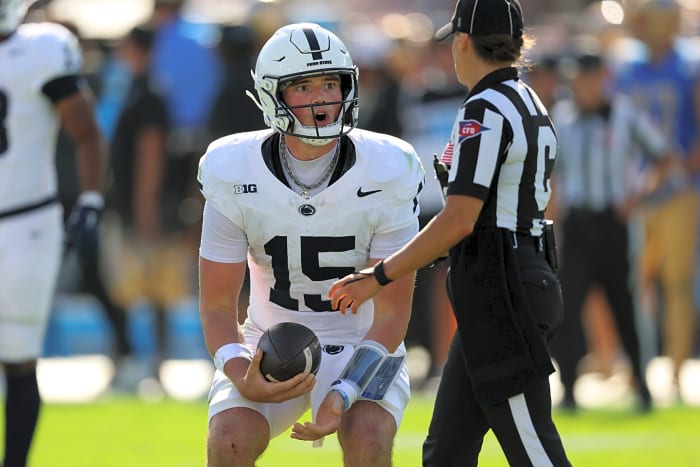
NFL draft boards operate on a hidden weighting system fans rarely see. Arm talent is one variable. Decision making consistency, accuracy under pressure, and durability carry heavier multipliers. Waldman’s report flagged Allar’s tendency to fixate on primary targets and struggle reading complex coverages. Thirty-one teams watched the same throws Warner praised and priced in the misses instead. That 75-pick gap between Allar and Mendoza represents institutional risk management overriding individual brilliance.
The Backup With Upside Label

First round quarterbacks historically become long term NFL starters at far higher rates than quarterbacks drafted on Day 2 or later, where success rates drop sharply. Allar, a third round pick, entered the league facing long historical odds for quarterbacks drafted at his slot. Bleacher Report listed Allar as the No. 4 quarterback and No. 104 overall player on its April 6 big board, describing him as “a naturally gifted quarterback with a high upside and ceiling” who still needs “a lot of development” before leading an NFL franchise. Not franchise savior language. Backup with upside language. Warner sees a diamond. The data sees long odds.
The Quarterback Room Gets Crowded
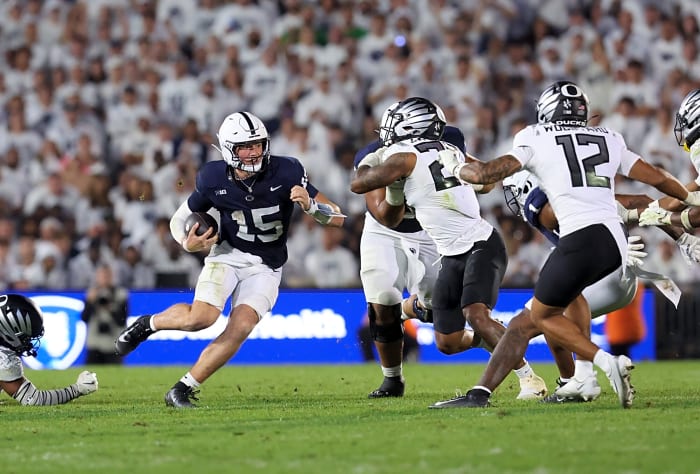
Pittsburgh now carries four quarterbacks. Aaron Rodgers, on whom the Steelers placed a rare UFA tender, second year Will Howard, veteran Mason Rudolph, and Allar. That four tier depth chart creates immediate competition. Howard, drafted in 2025 and groomed as a possible long term option, now sits with a younger, higher ceiling prospect behind him. Nobody expects Allar to play right away. Everybody expects him to loom.
McCarthy’s Actual Mandate
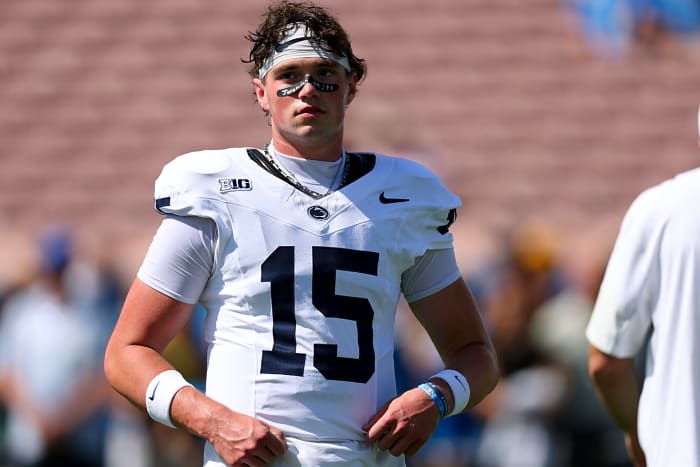
The pick cannot be read in isolation from the coaching change. Pittsburgh’s interview process prioritized a head coach capable of developing young quarterbacks, and McCarthy arrived with that profile front and center. Allar is the first real test of whether that hiring rationale produces anything more than a press conference talking point. The quarterback was drafted into the philosophy, not just the roster.
Pittsburgh’s Long Quarterback Search

The Steelers have spent nearly two decades without drafting and developing a long term franchise quarterback of their own. Recent years produced draft investments at the position that never reached starter status in Pittsburgh. Allar walks into a building that has been looking for an answer longer than most of its current roster has been alive. The institutional pressure is quieter than the Warner hype, and heavier.
First Penn State QB a Steeler Ever Drafted
Allar joined the Steelers as the Penn State quarterback Pittsburgh selected in Round 3 of the 2026 NFL Draft. That historical footnote matters because it signals something bigger. The Steelers bet on a development philosophy, not just a player. McCarthy’s coaching staff, in his first Pittsburgh draft, views Allar as a long term development project. Warner advocates for patient development windows for young quarterbacks. Once you see it, the pick was never about 2026.
The Fantasy Football Read

Fantasy leagues are already pricing Allar as a mid round rookie pick after the Steelers’ third round selection, treating him as a stash rather than a 2026 contributor. Dynasty managers watching Howard’s stock sink are reading the same signals Pittsburgh front office executives are sending. The fantasy market rarely moves first on these questions. It is moving now.
The Clock Nobody Mentions

Rodgers cannot bridge forever. Howard’s contract timeline runs parallel to Allar’s. If Allar proves Warner correct within two to three years, Howard’s long term value evaporates. If Allar fails, the Steelers burned a third round pick during a window when contending mattered. Warner’s “couple years” language creates a specific evaluation date. By 2028, either the market’s skepticism or Warner’s conviction gets vindicated.
The Bet Pittsburgh Made
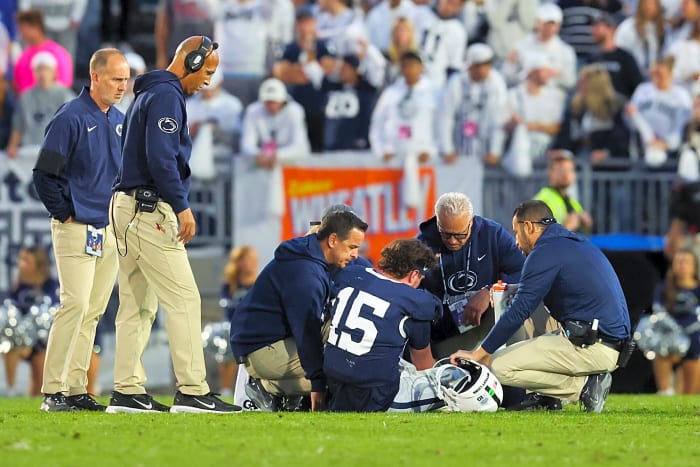
Every team in the league saw the same arm. Warner saw it. Scouts saw it. Thirty one front offices priced in the risk and passed. Pittsburgh grabbed the discount at No. 76. The real story here is not whether a Hall of Famer spotted hidden talent. The talent was never hidden. The real story is whether one coaching staff can fix what 75 picks worth of NFL evaluators decided could not be fixed. If Allar’s brain catches up to his arm, Steelers fans own the best bar argument in football for the next decade.
So tell us in the comments, is Kurt Warner seeing the next Steelers franchise quarterback, or is Matt Waldman seeing the next name on Pittsburgh’s long list of quarterback misses?
Sources:
Pittsburgh Steelers. “QB Drew Allar, Round 3, Overall Pick 76.” Steelers.com, April 24, 2026.
NFL.com. “2026 NFL Draft: Steelers Select Penn State QB Drew Allar in Round 3.” NFL.com, April 24, 2026.
ESPN. “Raiders Take Fernando Mendoza With No. 1 Pick in NFL Draft.” ESPN.com, April 23, 2026.
Sports Illustrated. “Steelers’ Drew Allar Gets Hall of Fame Endorsement From Kurt Warner.” SI.com, May 2, 2026.
Steelers Wire, USA Today. “NFL Draft Analyst Matt Waldman’s Scathing Evaluation of Steelers QB Drew Allar.” USAToday.com, May 3, 2026.
The New York Times. “Pittsburgh Breaks NFL Draft Attendance Record With Crowd of 805,000.” The Athletic, April 25, 2026.
More must-reads:
- Patriots have reportedly made massive Mike Vrabel decision amid Dianna Russini controversy
- Browns have reportedly made Brendan Sorsby decision amid Shedeur Sanders, Deshaun Watson competition
- The 'NBA scoring champions' quiz
Breaking News
Trending News


Customize Your Newsletter
 +
+




Get the latest news and rumors, customized to your favorite sports and teams. Emailed daily. Always free!
PRIVACY POLICY COOKIE POLICY CONTACT US
ABOUT YARDBARKER TERMS OF SERVICE


By using this site, you agree to our Terms of Service and Privacy Policy.
This site is for entertainment purposes only.
There is no gambling offered on this site.
Gambling Problem? Call 1-800-Gambler.
