
-

-


Follow Us
-

 On Facebook
 On Flipboard
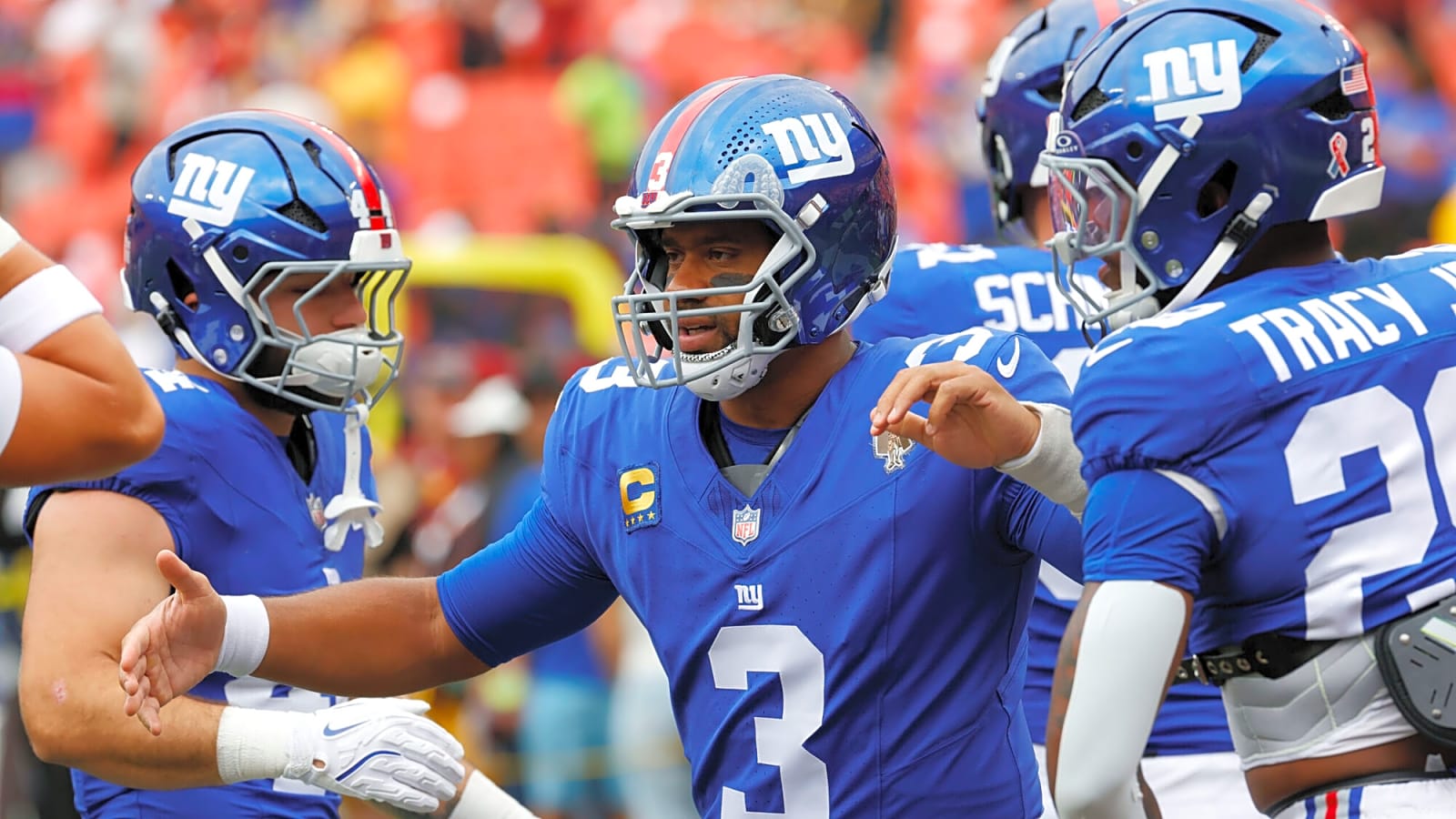
A 10-time Pro Bowler with a Super Bowl ring, a career passer rating among the top five in NFL history, and 121 regular-season wins sat waiting for his phone to ring. Nobody called. Russell Wilson, 37, remained unsigned heading into 2026, his résumé collecting dust while teams chased younger, cheaper arms. Then a former teammate-turned-broadcaster grabbed a microphone and said what front offices had been whispering for months. The words landed like a public execution nobody asked for but everybody watched.
The Weight of What He Built
Wilson’s peak wasn’t just good. It was historically fast. Analysts note he reached early-career win milestones quicker than any quarterback before him, racking up nine straight winning seasons in Seattle. His 1,024 career rushing attempts and 5,462 rushing yards placed him among the greatest dual-threat quarterbacks ever. Two Super Bowl appearances. One championship. A $10.5 million guaranteed deal with the Giants in 2025 suggested somebody still believed. That belief lasted exactly three games before New York benched him for rookie Jaxson Dart.
The Fall Nobody Predicted

Most fans assumed a Hall of Fame quarterback could never be humiliated like this. Wilson went 0-3 as New York’s starter, completing 69 of 119 passes for 831 yards with three touchdowns and three interceptions. The Giants didn’t just bench him. They made him a healthy scratch, listed as an emergency quarterback only. NBC Sports pointed out that Hall of Fame candidates almost never become healthy scratches while healthy. Wilson later revealed he’d been hiding a grade-two hamstring tear, secretly rehabbing at the Dallas Mavericks’ facility.
“It’s Over With, Man”

Aqib Talib won Super Bowl 50 with Denver. Earned five Pro Bowls across 12 seasons. Then he walked away and built a broadcasting career with NFL on Fox and Amazon’s Thursday Night Football. So when Talib looked into a camera and said, “Do your TV thing, Russ. It’s over with, man,” that wasn’t a hot take from a talking head. That was a champion who already chose the exit telling another champion the door is open. And closing behind him.
The System That Decides for You

Denver paid Wilson a fortune, then paid $85 million in dead cap money just to make him disappear. ESPN called it “previously uncharted NFL waters.” That $53 million hit in 2024 and $32 million in 2025 didn’t buy a single snap. It bought freedom from a mistake. The salary cap doesn’t care about legacy. It punishes teams for loyalty to aging quarterbacks, and it rewards the ones ruthless enough to cut bait and start a rookie on a fraction of the cost.
The Numbers Denver Paid to Forget

Wilson went 11-19 as Denver’s starter. That record-breaking $85 million dead cap charge works out to roughly $7.7 million per Broncos win. By 2026, Denver’s books finally cleared his ghost, giving them cap flexibility for the first time since the trade. Meanwhile, the Giants spent $10.5 million guaranteed for three starts and a healthy scratch. Two franchises, two massive checks, zero playoff wins. The NFL’s most expensive quarterback experiment produced nothing but cautionary spreadsheets.
The Ripple Hitting Every Aging Quarterback

Wilson’s collapse didn’t just damage Wilson. Every mid-30s quarterback watching this saga saw his own bargaining power shrink. Teams now have a playbook: bench the veteran, start the rookie, absorb the dead money, move on. The Giants replaced Wilson with a first-round pick after three weeks. Other front offices noticed. If a 10-time Pro Bowler can be scratched and discarded this fast, the leverage for any aging passer just evaporated. Wilson’s fall rewrote the market for everyone behind him.
The New Rule for Legends

This isn’t an exception. Denver’s willingness to absorb historic dead money and New York’s choice to scratch a decorated veteran created a template. Cap math, rookie contracts, and a booming sports media market now converge to push legends out faster than ever. CBS reportedly entered “deep discussions” with Wilson about a studio analyst role. Once you see it, Talib’s blunt advice stops sounding cruel. The spreadsheet and the studio suit now decide when heroes exit, not the heroes themselves.
Wilson Says He Won’t Blink

Wilson told CBS Sports, “I’m not blinking. I know what I’m capable of.” He changed agents, hiring David Mulugheta to chase a 15th NFL season. But the Jets offered him a backup role behind Geno Smith, and Wilson admitted he’s “trying to figure out what the next best thing is for me to do.” That sentence tells the whole story. A quarterback who once commanded franchises now weighs clipboard duty against a broadcast chair. If he picks wrong, every future highlight reel ends with an asterisk.
The Choice That Defines the Legacy
If Wilson takes the CBS deal, he joins Talib on the other side of the camera, and the narrative shifts to a graceful pivot. If he chases one more season and fails on national television, the Hall of Fame debate becomes a referendum on stubbornness. OutKick already called his Giants demotion a “massive fall from grace.” Wilson’s camp may try to shape the story through media, podcasts, or documentaries emphasizing Seattle’s glory years. But the system has already voted. The only open question is whether Wilson heard it. Should Russell Wilson hang up the cleats and take the CBS chair, or does he still have one more comeback left in him? Drop your verdict in the comments.
More must-reads:
- Sports doctor shares worrisome take on Malik Nabers injury
- New information emerges about potential A.J. Brown trade
- The 'NFL's active 1K-rushers' quiz
Breaking News
Trending News



Customize Your Newsletter
 +
+




Get the latest news and rumors, customized to your favorite sports and teams. Emailed daily. Always free!
PRIVACY POLICY COOKIE POLICY CONTACT US
ABOUT YARDBARKER TERMS OF SERVICE


By using this site, you agree to our Terms of Service and Privacy Policy.
This site is for entertainment purposes only.
There is no gambling offered on this site.
Gambling Problem? Call 1-800-Gambler.
