
-

-


Follow Us
-

 On Facebook
 On Flipboard

The NFL’s wealth hierarchy has quietly become a quarterback monopoly. Nine of the ten richest players in the league play the same position, and the gap between them and everyone else keeps growing. But the real story isn’t who’s on the list, it’s the surprises buried inside the rankings: the champion who left money on the table, the man whose record-breaking deal became average within seasons, and the quarterback whose “biggest” number isn’t even money he’s actually earned yet. Here are the ten richest NFL players in 2026, counted down so the most surprising twists land last.
10. The Mega-Deal Floor: Joe Burrow and Lamar Jackson
The youngest names on this list got here by signing extensions that reset the market before they’d hit their primes. Joe Burrow and Lamar Jackson inked deals that landed them among the league’s highest earners on annual value alone. What’s notable is how routine that’s become. A contract that would have been historic a decade ago is now simply the cost of keeping a franchise quarterback. They represent the floor, not the ceiling, and the floor keeps rising.
9. The Quietest Fortune in Football: Kirk Cousins

Kirk Cousins built one of the largest career earnings totals in NFL history without an MVP, without a Super Bowl run, and largely without the spotlight. He did it by leveraging the franchise tag and back-to-back fully guaranteed contracts that turned middling team results into elite personal paydays. His presence near the top of the money list is the first real surprise: career earnings track contract leverage, not championships or accolades. Cousins mastered the leverage. The rings never came.
8. The Ceiling-Setter Who Got Passed: Patrick Mahomes

Patrick Mahomes signed a 10-year, $450 million extension with Kansas City, the largest contract in NFL history at the time. Then the surprise: within seasons, other quarterbacks blew past his annual average while Mahomes stayed locked into his long-term deal. He broke the market, and every negotiation since has used his contract as the starting point. He set the ceiling, then watched the league treat it as the floor. The biggest deal ever became, by annual value, almost ordinary.
7. Wealth Without the Wins, Again: Russell Wilson and the Veteran Tier
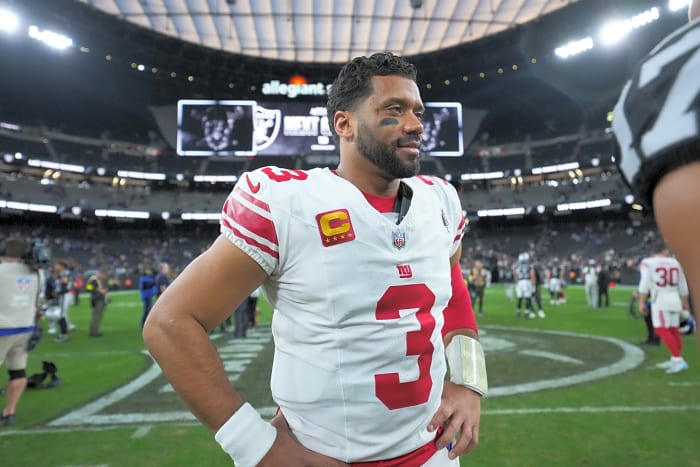
The middle of this list reinforces an uncomfortable pattern. Veteran quarterbacks who bounced between teams still stacked enormous totals, because once a player enters the franchise-QB pay tier, the money compounds regardless of where their career goes. Their rankings have little to do with recent on-field results. The surprise isn’t that they earned a lot. It’s that sustained team success was never required to do it.
6. The Cap-Hit Vise: How One Salary Squeezes 52 Others
Every name climbing this list carries a hidden cost. The salary cap forces teams to pour a large slice of their entire payroll into one player, leaving 52 other roster spots to split the rest. Quarterback salaries have roughly tripled over the past decade while the cap has grown at a fraction of that rate. The math creates a vise: teams paying elite quarterbacks field cheaper rosters everywhere else. The richest players got rich precisely because the sport’s economics demand it.
5. What It Costs Everyone Else
Here’s the twist fans rarely see. Every franchise-quarterback mega-deal sends ripple effects through the locker room. Veteran defenders get released. Pro Bowl linemen hit free agency because their team can’t afford to re-sign them. The richest players on this list built their fortunes while teammates took pay cuts or walked away. Kansas City kept Mahomes and watched key contributors leave for bigger paydays elsewhere, year after year. One player’s wealth comes directly from another player’s opportunity.
4. The Greatest Winner Earned the Least: Tom Brady

Tom Brady retired with seven Super Bowl rings and roughly $332 million in career earnings, the greatest winner in league history sitting well below the top of the money list. The surprise is the inversion of everything fans assume: Brady won the most and earned less than quarterbacks who won far less. He famously took below-market deals to keep New England’s roster competitive. Brady chose rings. The math shows exactly what that choice cost him on paper.
3. The $418 Million That Isn’t What It Looks Like: Aaron Rodgers

Aaron Rodgers ranks second on the all-time list at roughly $396 million in career earnings, with his current Steelers deal pushing his potential lifetime earnings toward $418 million. Here’s the catch that trips up almost everyone: that $418 million is what he could earn, not what he has earned. For years Rodgers held the all-time top spot, until a modest one-year Pittsburgh deal and a rival’s restructured contract quietly knocked him to No. 2. Four MVPs, two decades of leverage, and he still got passed.
2. The New Record That’s Already Half-Spent on the Future: The Path to $500 Million

The most jarring part of the 2026 money list isn’t the current leader. It’s how fast the record is moving. The top earner is now projected to become the first player in NFL history to clear $500 million in career pay if he finishes his current contract. A number that sounded impossible a few years ago is now a near-certainty. Today’s record-setting totals are tomorrow’s baseline, and no owner, agent, or salary cap formula has figured out how to slow it down.
1. The Man Who Quietly Passed Them All: Matthew Stafford
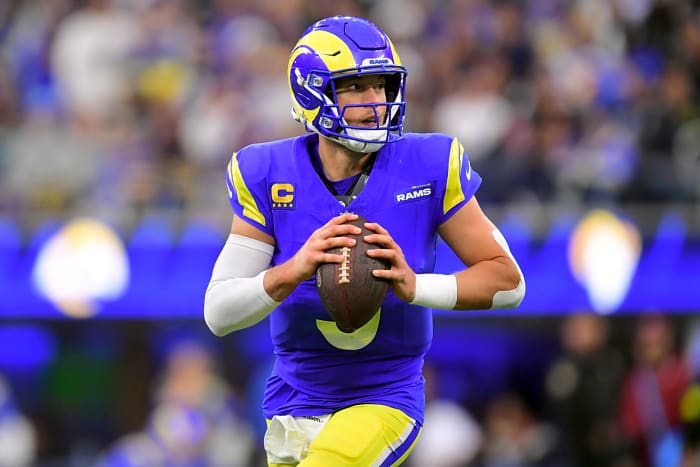
Matthew Stafford sits atop the NFL’s all-time earnings list at roughly $408 million in total career compensation, and almost nobody saw it coming. He never carried Brady’s rings or Rodgers’ MVP collection, yet he out-earned both through longevity, a 2025 MVP season, and the leverage of being a franchise quarterback in a quarterback-driven market. His total spans every contract from Detroit to Los Angeles. The richest player in football isn’t the most decorated or the most famous. He’s the one who lasted, restructured, and quietly cashed more checks than anyone in NFL history.
More must-reads:
- Vikings' Kevin O’Connell responds to controversial J.J. McCarthy comments about Kyler Murray
- Packers betting big on Christian Watson with lucrative extension
- The 'Most 1,400-yard NFL seasons' quiz
Breaking News
Trending News


Customize Your Newsletter
 +
+




Get the latest news and rumors, customized to your favorite sports and teams. Emailed daily. Always free!
PRIVACY POLICY COOKIE POLICY CONTACT US
ABOUT YARDBARKER TERMS OF SERVICE


By using this site, you agree to our Terms of Service and Privacy Policy.
This site is for entertainment purposes only.
There is no gambling offered on this site.
Gambling Problem? Call 1-800-Gambler.
