
-

-


Follow Us
-

 On Facebook
 On Flipboard
The Draft Grades the “Experts” are Giving the Dolphins
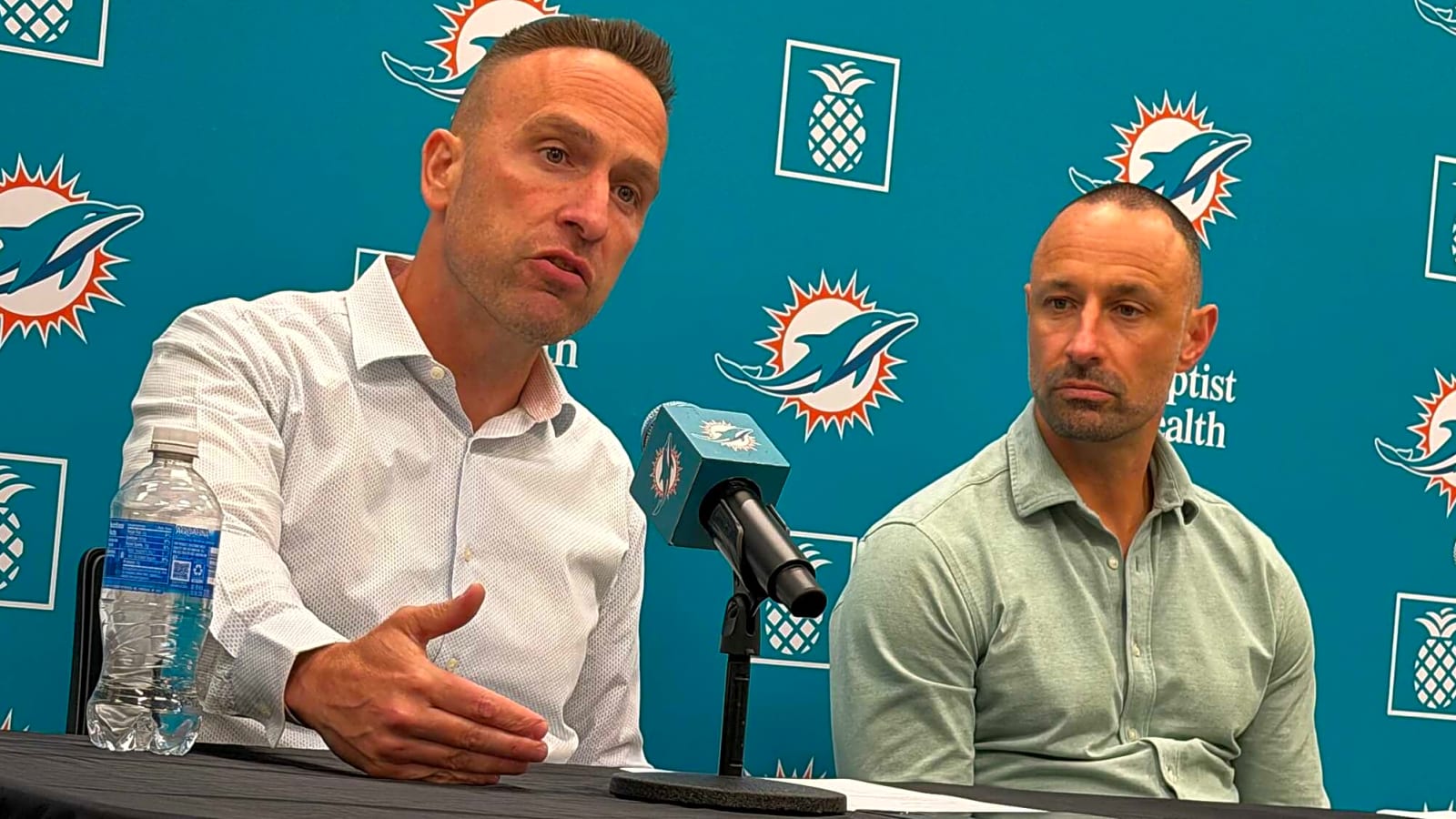
The 2026 NFL Draft is in the books, and now all of the outlets are releasing their draft grades. Yes, we know grades immediately after the draft are kind of silly, as nothing has happened yet. But it is a right of passage to see draft grades after the draft.
So, take them for what they are and don’t overreact to them if they are overly positive or negative.
Mel Kiper Jr. Gives Miami a B
Mel said, “I ran out of room adding needs to my list. This roster needed everything. Everything. And as such, no one really knew which of their weak positions they’d hit at No. 11 and No. 30. Of course, the latter pick came over from Denver when the Dolphins traded Jaylen Waddle. Coupled with releasing Tyreek Hill, that pushed WR to the top of the needs list.
Neither of those first-rounders went that direction, which might cause some problems for new quarterback Malik Willis. But Miami added Kadyn Proctor at No. 12 after a one-slot trade back netted two fifth-rounders. He has the experience (40 starts) and quickness out of his set to handle the right tackle position. Incumbent Austin Jackson missed 11 games last season, and Larry Borom left in free agency. The Dolphins had to do something there, and Proctor has been a buzzy name over the past two months. He played exclusively left tackle at Alabama, but I’m confident he can flip to the right side based on the agility I see on tape. Proctor might not be catching passes for Willis like a receiver at 11 would have — or maybe he will? — but he’s going to help the Dolphins’ new quarterback even so.
The next pick came after a slight trade up, moving up three spots to No. 27 at the cost of moving from No. 90 to No. 138 later in the draft. With 13 picks on hand at that point in the draft, that’s 100 percent worth it — especially to land Chris Johnson, who I bumped up to CB3 in the class. The Dolphins’ cornerback room was in shambles, and Johnson immediately brings his ball skills (six interceptions and 16 pass breakups over the past three seasons) to the starting lineup.
But what about receiver? Caleb Douglas was a reach (No. 148 overall going 75th) and Chris Bell is coming off a torn ACL. Granted, Bell has first-round level talent when healthy, and he can produce over the middle, downfield and after the catch. But I didn’t see enough done to the WR room. Malik Washington and Jalen Tolbert are still the WR1 and WR2 on this roster, respectively. That’s an issue.
I’m a big fan of Jacob Rodriguez, and Kyle Louis is a baller who will line up all over the place and make plays. Miami ultimately made 13 picks, and a lot of these players are going to see the field in 2026, whether they’re ready or not.”
PFF Gives Miami a B+
PFF said: “Highest-graded pick (2025): LB Jacob Rodriguez, Texas Tech Red Raiders (93)
Proctor: The Dolphins have a near-clean slate with needs across the board, and they chose to address the trenches early with a massive addition up front (6-foot-7, 350-plus pounds). Proctor is a three-year starter at left tackle for Alabama and is coming off a career-best 86.1 PFF grade in 2025. It remains to be seen where he will slot into the Dolphins’ offensive line, but he raises the talent level of the group up front for Miami.
Johnson: The Dolphins’ secondary was one of the league’s worst units entering the 2026 season, regardless of position. Johnson was one of the bigger risers in the pre-draft process, coming off a 2025 season at San Diego State in which he earned an elite 92.4 PFF coverage grade and allowed a passer rating of just 16.1 on passes into his coverage.
Rodriguez: Rodriguez has elite football IQ but lacks the physical tools to match. His instincts keep him in position, though his limited range and power cap his ceiling.
Douglas: Douglas has the height and length to project as an NFL “X” receiver. However, concerns with his long speed and hands make it difficult to envision a consistent contributing role. He will need to add strength across the board to stick on a roster as a boundary receiver.
Kacmarek: Kacmarek is a 6-foot-6, 258-pound tight end who ranks No. 383 on PFF’s Big Board, bringing strong size and athletic traits with height and weight in the 84th and 89th percentiles, along with an 86th-percentile vertical jump and 73rd-percentile broad jump. His receiving role was limited in 2025 at Ohio State, as he caught 15 of 17 targets for 168 yards and two touchdowns, averaging 5.7 yards after the catch per reception. He went 1-for-2 in contested situations and generated a 147.1 passer rating when targeted. He also offers value as a blocker, as he earned a 72.2 pass-blocking grade in 2025 and has posted run-blocking grades above 69.0 in each of the past three seasons.
Bell: Bell offers an impressive blend of size — particularly weight — and explosiveness as a WR2 in a vertical offense. Some tightness in his lateral movements limits his ability to win with nuanced route-running, but when kept on vertical or horizontal routes, he can generate separation on deep routes and create yards after the catch on shorter touches.
Moore: Moore was deployed all over the field at Texas, flashing as an effective blitzer with a 78.8 PFF pass-rush grade driven by his athleticism. However, his slight frame presents challenges projecting to either edge defender or linebacker, and his struggles in coverage — including a 50.6 PFF grade in 2025 — could limit him to a more specialized pass-rushing role.
Louis: Louis is an undersized linebacker who projects best as a versatile space defender. In the right role, he can be an impact nickel player thanks to his explosiveness and coverage ability.
Taaffe: Taaffe wins with intelligence and anticipation rather than physical traits. His size and athletic limitations mean he will need to earn his role through consistency and awareness.
Coleman: Coleman’s smaller frame likely limits him to a primary slot role at the next level. His ball skills and efficiency provide value, as he posted a 53.7% career contested-catch rate and averaged 6.1 yards after the catch per reception, while maintaining a low drop rate. Those traits give him a chance to carve out a role in a receiving corps.
Traore: Traore entered college with just one season of high school experience and began his career at Arkansas State before moving to Mississippi State. His role remained limited in that offense, with fewer than 400 receiving yards in each of the past two seasons, but his athletic traits stand out. He ranked in the 90th percentile at the position in separation rate against single coverage across that span.
Campbell: Campbell’s arm length, ability to get off the ball and pass-protection reliability — allowing just four sacks over the past two seasons — provide a foundation for an opportunity at the next level. However, his technique will need refinement to sustain a long-term role.”
Chad Reuter of NFL.com Gives Miami a B
Analysis:
- The Dolphins first traded down, surrendering the chance to draft star safety Caleb Downs at No. 11 in exchange for two fifth-round picks from the Cowboys, then added Proctor’s massive build and strength to the offensive line with the 12th overall choice. Next, the Dolphins traded up, sending San Francisco the first-round pick gained from dealing Jaylen Waddle to Denver for the chance to select Johnson, one of my favorite defenders in the draft due to his speed, smooth movement and ball skills. Miami added Rodriguez, an ultra-athletic gamer and the best player available, at No. 43, then grabbed two receivers in the third round: Douglas, a downfield threat, and Bell, an A.J. Brown-type receiver coming off a knee injury.
- Moore moved from the edge at UTSA to the second level with Texas, raising questions about how his size and length might translate, but Miami picked him as an edge over several other worthy prospects. Louis and Taafee will be effective nickel defenders at linebacker and safety and should provide special teams help, as well. Traore’s move from England to the U.S. to play football is a great story, but his athleticism is what will help Miami’s tight end depth chart.”
More must-reads:
- Winners, losers from Day 3 of NFL Draft: Steelers make feel-good pick, Diego Pavia goes undrafted
- John Harbaugh shares update on Odell Beckham Jr. and Giants
- The 'No.2-overall NFL Draft picks' quiz
Breaking News
Trending News




Customize Your Newsletter
 +
+




Get the latest news and rumors, customized to your favorite sports and teams. Emailed daily. Always free!
PRIVACY POLICY COOKIE POLICY CONTACT US
ABOUT YARDBARKER TERMS OF SERVICE


By using this site, you agree to our Terms of Service and Privacy Policy.
This site is for entertainment purposes only.
There is no gambling offered on this site.
Gambling Problem? Call 1-800-Gambler.
