
-


Follow Us

 On Facebook
 On Flipboard
 On Twitter

After over a decade of unsustainable results, something had to change within the New York Giants organization.
The Giants Way, a decades-old formula that had resulted in five Super Bowl berths and four championships, was no longer working. The further the team got from the George Young/Bill Parcells trees, the more it seemed to struggle, whether it was finding the right players, cycling through four different coaching staffs, fighting injuries to keep players, and, most of all, disappointing the loyal fan base.
That something is the advent of the John Harbaugh era.
Harbaugh, as is being revealed in several media interviews that have chronicled his first month in his new job, show that gone is the old “Giants Way,” replaced by some newer, more modern ideas that have led to success, not just in Baltimore, but with other teams, such as Kansas City, that have practiced some of the same principles.
Let’s get into those changes and what they potentially mean for the Giants organization moving forward.
Reporting Structure
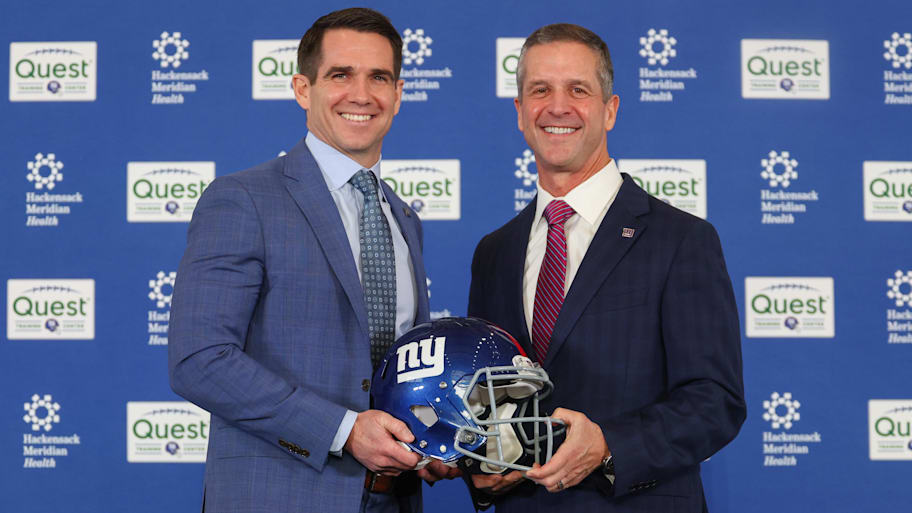
One of the key details that needed to be worked out before Harbaugh would sign his new deal with the Giants was the reporting structure.
Under the old “Giants Way,” the head coach always reported directly to the general manager, who in turn had final say over the roster’s composition. That structure famously created clashes with past head coaches–Parcells, for instance, famously questioned why he wasn’t allowed to “buy the groceries” despite being expected to make the meal.
There was also a reported power struggle toward the end of head coach Tom Coughlin’s tenure with then-general manager Jerry Reese, which led to Coughlin resigning, and then to a decade-plus of revolving head coaches.
Harbaugh, before agreeing to sign on the dotted line, did not want to become the latest Giants head coach to report to a general manager, something his pedigree gave him the right to demand.
“I explained to (Giants team president) John (Mara) why it was important for me,” Harbaugh told Ian O’Connor of The Athletic.
“I agreed with him that it doesn’t really matter how we operate, but it did matter to me. I already had that (direct report to ownership) in Baltimore. It wasn’t new. I wasn’t comfortable not being that way.”
In the end, Mara, who badly wanted Harbaugh to rescue the family business, gave Harbaugh what he wanted, which was a direct reporting line to him rather than to Schoen, the hope being the return of glory for a franchise that had long lost its way.
The Dawn Aponte Hire
The Giants' ownership has been loyal to a fault for years, both an admirable and dangerous characteristic. Admirable in that such loyalty rarely exists in business, let alone in a $10+ billion franchise, and dangerous because people who are deemed “lifers” can lose their fastball without fear of having to pay the consequences.
Such appeared to be the case with longtime executive and salary cap manager Kevin Abrams. Hired by Eenie Accorsi to manage the team’s salary cap, which, at the time, the concept of the salary cap was in its infancy, Abrams, for several years, did well in his duties.
But then things started to change. Abrams, who held the assistant general manager title for over 20 years, suddenly wanted to branch out into other areas such as personnel and scouting.
As was learned during the inside look provided by Hard Knocks a couple of offseasons ago, some of the contract management stuff was being passed down to others in the organization.
With the Giants salary cap of late not being in the best of shape–despit the anticipated bump in the cap the team still needs to trim some fat off the roster.
That includes the possibility of them cutting either inside linebacker Bobby Okereke and/or starting left guard Jon Runyan, Jr., Abrams was let go, replaced by Dawn Aponte, who has vast experience with cap management and whose responsibilities as announced by the team mirror those held by Abrams.
With one notable exception. Aponte will report directly to Harbaugh, as O’Connor revealed, rather than to Schoen, the general manager.
This change in reporting structure, combined with the lack of a known contract extension for Schoen, has some wondering whether his role will eventually be phased out.
Yes, ownership said all the right things about Schoen and all the young talent assembled, and yes, a large part of the problem was the coaching, or rather the lack thereof.
But from the outside looking in, it sure does seem that between the salary cap/player contracts being shifted under Harbaugh’s supervision, to the head coach also being shifted to ownership, Schoen’s power within the organization has been so watered down to where it’s fair to wonder if the owners are just going to let him play out the string of what’s left on his contract before an announcement comes that he’s “moving on” once the deal concludes.
Building a Player-Friendly System
Every head coach who comes into the building talks about building a system that accentuates the players' strengths. But at the end of the day, just about every head coach also comes in with a predetermined way of what he wants the system to look like, leaving things up to the assistant coaches to find the skill sets within the players that will make the system work.
Harbaugh undoubtedly comes in with ideas about what he wants to see in terms of the football aspect–he’d be foolish not to have a preliminary idea of what works and what doesn’t based on experience.
But he doesn’t sound as “married” to a particular system as some other prior head coaches of this team might have been.
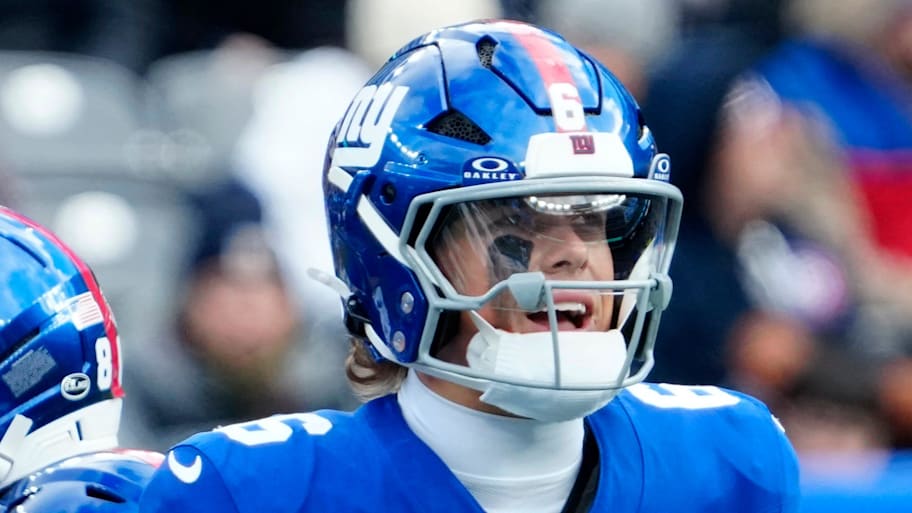
“There’s principles and principles, and there’s methods,” Harbaugh told Mike Francesa. So, a system in the sense of a scheme in terms of like the way we teach techniques, those kinds of things, that’s a method. Okay? That’s changeable. That’s for the players. Like, we want to build an offense around Jaxson Dart. That’s where it starts.
“And then from there, the rest of the players. Same thing with the defense. We have a defensive belief system. We have a structure. We have a way of calling defenses. But the defenses we call, the way we teach them, it’s going to be based on the guys. We got a front; we’re going to start with our front. It starts up front on both sides. That defensive front is going to be where we begin, and we work from there.”
In other words, gone are the days when player acquisitions have to fit a specific system, an approach the Giants have at times taken in the past that ended up biting them when the coaches who specified specific skillsets moved on for one reason or another–see Wink Martindale/Deonte Banks as a recent example.
This acquisition of players for specific systems is a big reason the Giants have seemingly looked like a team starting from scratch and failing to build a core foundation.
With a shift toward greater versatility and a greater willingness to adapt systems to talent, the Giants can hopefully begin to solidify a foundation on which they can add to year after year.
What happens next with the NY Giants? Find out! Follow and like us on Facebook. Visit our YouTube channel for the latest videos. Want to send a question in for our mailbag? Send it here.
More must-reads:
- Raiders' coaching move could signal team's Maxx Crosby intentions
- Report: Jaguars to make significant change to Travis Hunter's role
- The 'Super Bowl winning coaches' quiz
Breaking News
Trending News

Customize Your Newsletter
 +
+




Get the latest news and rumors, customized to your favorite sports and teams. Emailed daily. Always free!
PRIVACY POLICY COOKIE POLICY CONTACT US
ABOUT YARDBARKER TERMS OF SERVICE


By using this site, you agree to our Terms of Service and Privacy Policy.
This site is for entertainment purposes only.
There is no gambling offered on this site.
Gambling Problem? Call 1-800-Gambler.
