
-

-


Follow Us
-

 On Facebook
 On Flipboard
One of the best Wild Card rounds in recent memory has come and gone. A wild and exciting regular-season has oozed into the playoffs. While the outcomes of the games are not so surprising, the manner and quality in which these matches took place led to some great entertainment. Signal-callers are a big part of the reason why, and teams saw the faces of their franchise sling the rock to the best of their abilities. How did each QB do this week? Let’s take a look.
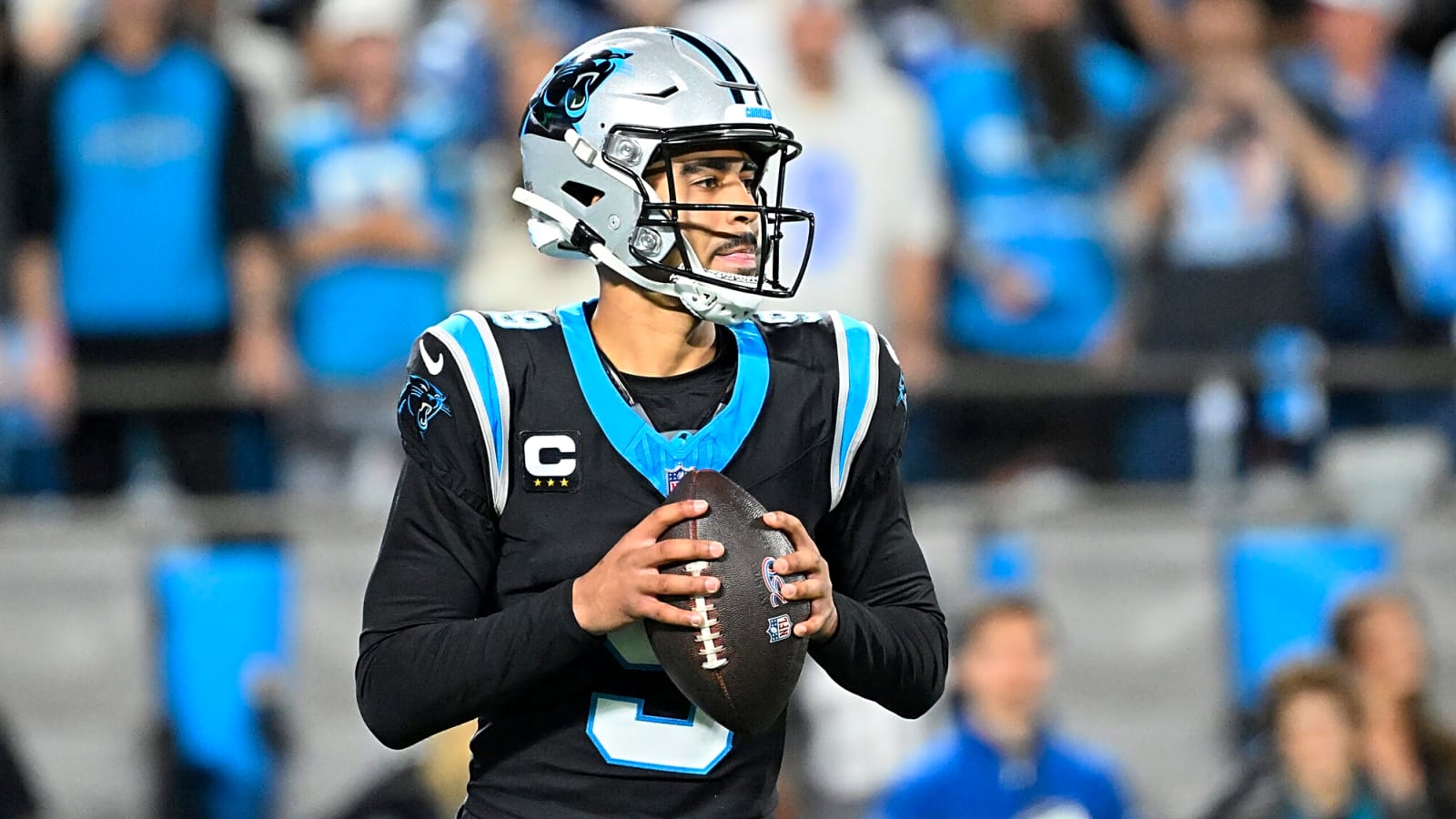
Bryce Young: A-
In a valiant effort, Young led the otherwise run-heavy Panthers offense to 295 pass-yards. In spite of a disheartening first quarter that concluded with a (debatably not his fault) pick, he kept his chin up. Eventually, he controlled the attack and scored what could have been the game winner. Couple his performance with a drop on fourth down, there’s an argument to be had that Young did enough to secure the victory.
Matthew Stafford: A
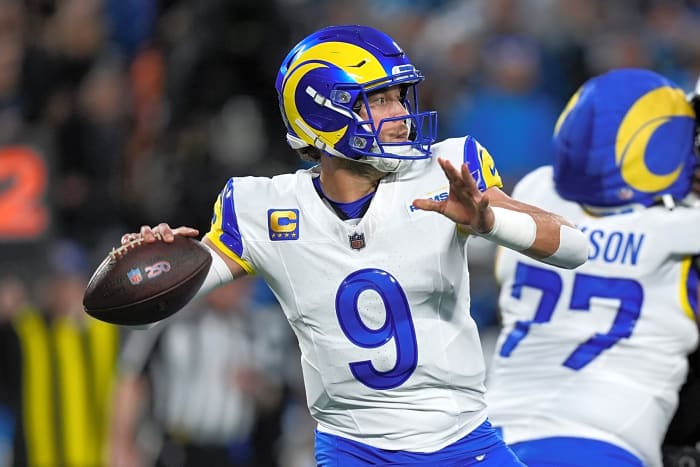
There was some inconsistency at certain points during the game, but Stafford took over and displayed his MVP caliber play. His one interception did sting, as it was a tide changing play that allowed Carolina to take the lead. However, in the final two drives Stafford willed his squad to the victory. He was on-point, on-time and quite frankly on fire. His placement on the pass to Colby Parkinson was one of the best throws of the year in the biggest moment possible.
Caleb Williams: B+
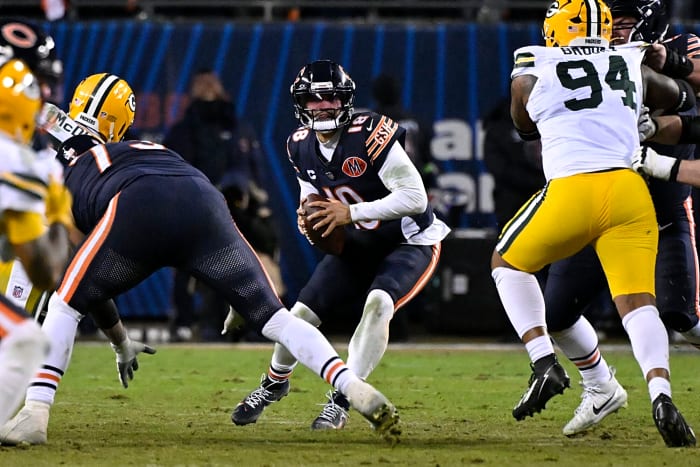
In typical 2025 Chicago Bears fashion, the offense was faltering in the first half. Williams missed throws and reads that varied from being because of receiver errors or his own inaccurasy. The fourth quarter was where the fireworks show began. Williams turned up the heat and threw dimes in and out of structure. While Ben Johnson was calling a great game in his own right, it’s because of Williams that the plays were working so well. He’s shining bright for Chicago, and they could potentially go on a deep run.
Jordan Love: A-
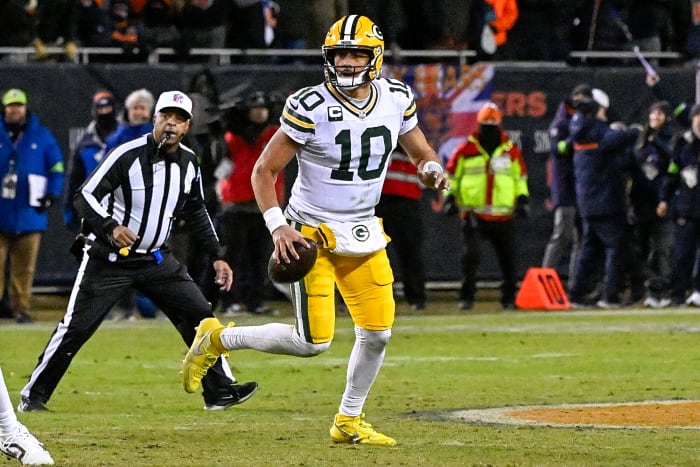
The Packers logged six yards on the ground in the second half. That stat alone shows why their chances of victory were doomed, and yet Jordan Love still managed to muster up some potential game winning-drives. He was in rhythm for most of the contest, and was ultimately let down by a litany of drops and a missed field goal.
Trevor Lawrence: B
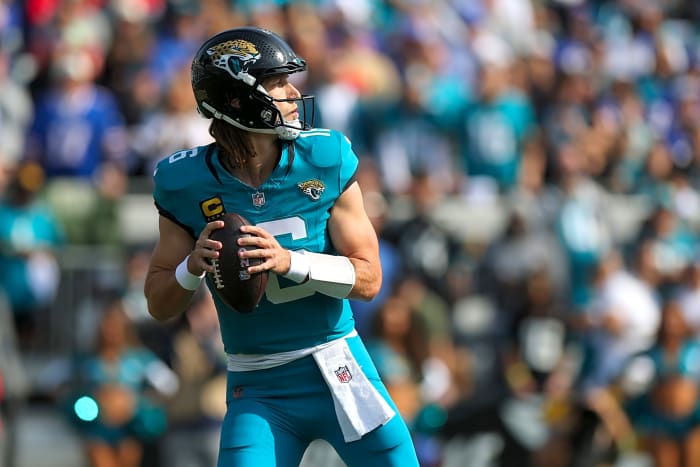
It seemed at first like the playoff nerves were getting to Lawrence. The Jags came out flat and shaky, and their signal-caller’s hot streak appeared to have gone dim. After sounding it out though Lawrence picked himself up and made the necessary throws. The avoidance of the run-game was puzzling, and it made the offense, and by extension Lawrence, one-dimensional and predictable. It wasn’t a terrible performance, but the throws he did miss were magnified due to the stakes at hand.
Buffalo Bills: A+
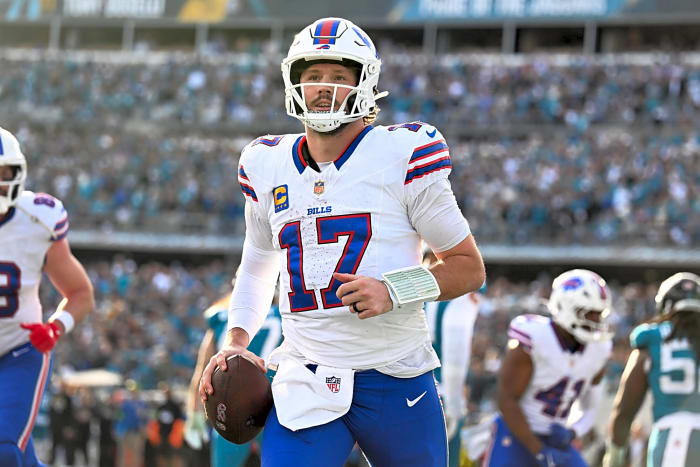
Buffalo’s offense lost the strength on strength battle in the ground game. James Cook was continuously met in his tracks, putting Buffalo’s season in jeopardy. That’s when Allen donned the cape. Worn and beaten down, Allen moved the ball forwards on the ground and through the air, scoring three total touchdowns. His efforts on fourth down were especially crucial, as his larger frame allowed forth and short situations to be trivial.
Jalen Hurts: C
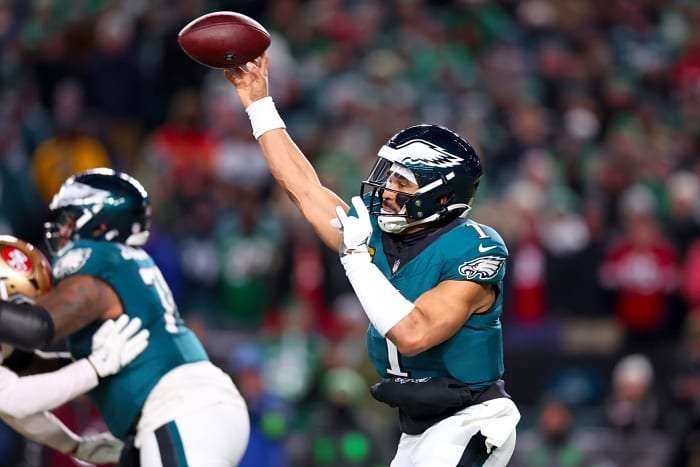
The offensive issues which haunted Philadelphia throughout the year culminated in the disaster that was Sunday. Jalen Hurts spearheads the problems, as his decision-making was off-kilter the entire afternoon. His receivers, particularly his supposed number one target AJ Brown, didn’t do him any favors either, as critical drops stymied longer drives. Furthermore, the head-scratching play calling dug the hole further for the Eagles. Regardless, Hurts still had opportunities to succeed, and simply didn’t deliver.
Brock Purdy: C
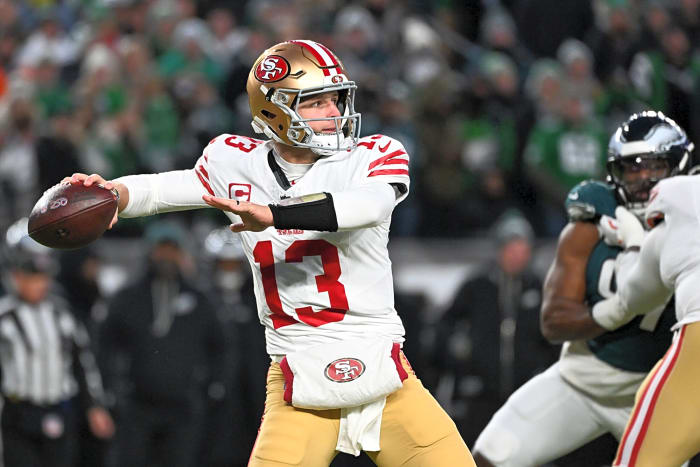
Both offenses in this game struggled to go blow-for-blow with their respective defenses. Following the initial touchdown drive that saw Demarcus Robinson turn back the clock, scoring was few and far between. Santa Clara’s man under center produced a pair of interceptions and three-and-outs and even an additional fumble. What’s key though is he bended but didn’t break, and led the team to the game-winning score.
Drake Maye: C+
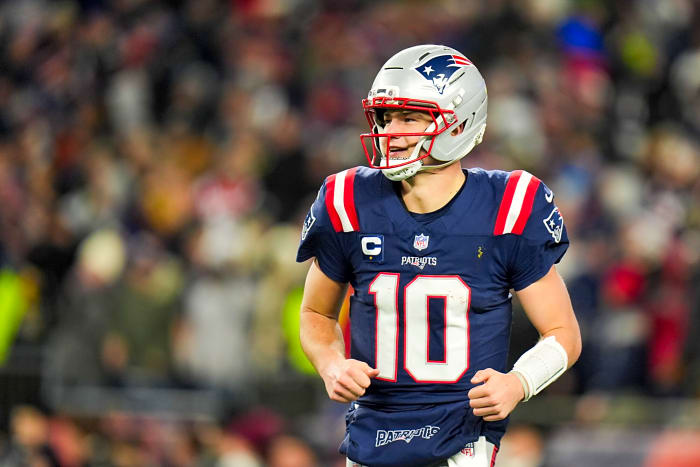
Drake Maye’s first playoff game saw him rein in the superhuman play and instead ride the wave of the defense. His interception and fumble could be cause for concern, but he was able to rally and do enough to take home the win. He put the nail in the coffin in the final quarter with a 28-yard strike to Hunter Henry, ending LA’s season.
Justin Herbert: D
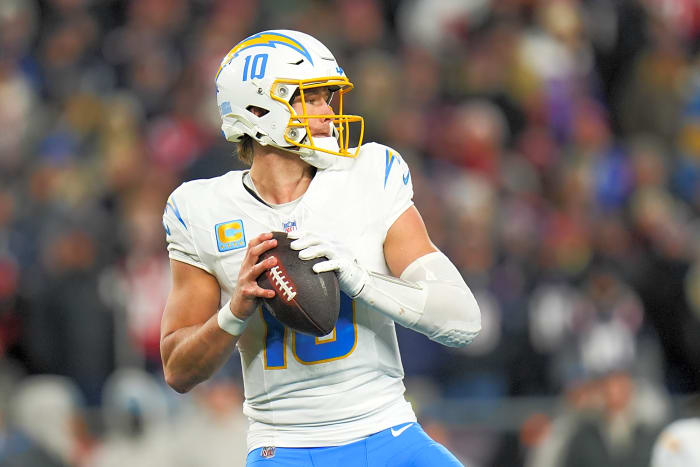
The ripple effects of LA’s offensive ineptitude have led to Justin Herbert’s play seeing a major decline. There was no cohesion and zero rhythm, with Herbert being unable to make simple reads or throws. He refused to keep his eyes downfield, and was panicking throughout. There’s a chance that coaching gave him a few pointers regarding how to counter the onslaught of Patriots rushers. However, it simply led to Herbert leaving plenty of meat on the bone, and ultimately dooming the season.
Aaron Rodgers: D+
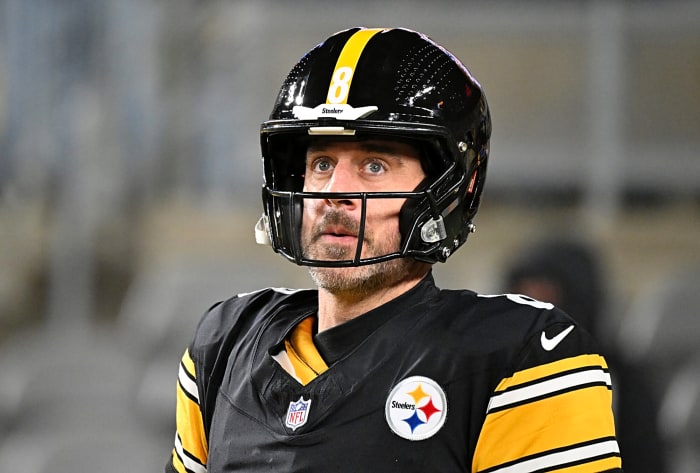
A very unfortunate ending for an NFL legend. It seemed hopeless for Pittsburgh’s inefficient offense to get much done against Houston’s top-flight defense. Even though the win was up for grabs for nearly three-and-a-half quarters, the Steelers never gave any glimpses or signs of a potential surge that could break their playoff loss streak. Instead, Rodgers was unable to handle the constant pressure coming his way, and potentially saw his final pass ever get picked off and taken the other way for a score.
CJ Stroud: B-
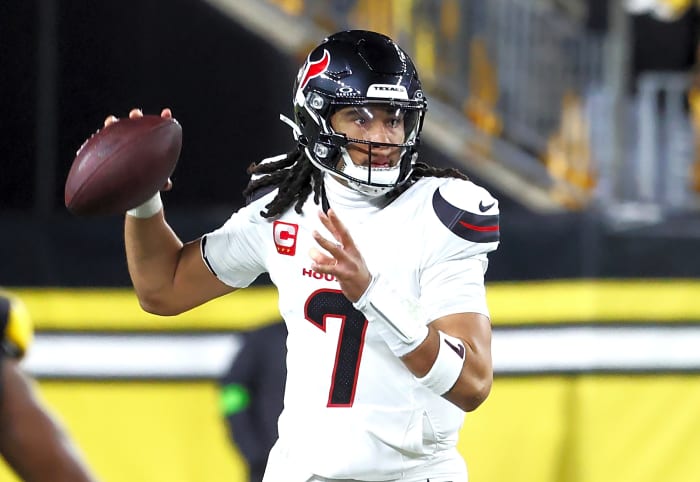
The discussion surrounding Stroud is that he once again was bailed out by his defense. Do not be mistaken, Houston’s third year QB did make some poor decisions at the worst possible times. However, what’s gotten lost in the shuffle is the amount of difficult passes that he connected on with open receivers. The very few explosive plays that the Texans gained on offense, which ultimately allowed them to maintain momentum, were largely thanks to Stroud’s arm. Could he have had a better performance? Sure. Regardless, it was not as bad as the three turnovers make it out to be.
More must-reads:
- Raiders avoid Fernando Mendoza drama ahead of training camp
- Rams' Sean McVay shares update on possible Aaron Donald return
- The 'NFL yards-per-catch leaders' quiz
Breaking News
Trending News


Customize Your Newsletter
 +
+




Get the latest news and rumors, customized to your favorite sports and teams. Emailed daily. Always free!
PRIVACY POLICY COOKIE POLICY CONTACT US
ABOUT YARDBARKER TERMS OF SERVICE


By using this site, you agree to our Terms of Service and Privacy Policy.
This site is for entertainment purposes only.
There is no gambling offered on this site.
Gambling Problem? Call 1-800-Gambler.
