
-

-


Follow Us
-

 On Facebook
 On Flipboard


The 2026 Eastern Conference Final has all the ingredients of a classic playoff series. The Carolina Hurricanes enter the matchup as one of the NHL’s deepest and most structured teams, while the Montreal Canadiens continue their surprising postseason run behind a rising young core and confident offensive play.
Carolina’s playoff experience, defensive discipline, and relentless forecheck have made them one of the toughest teams to play against throughout the postseason. Meanwhile, Montreal has emerged as the Cinderella story of the Stanley Cup Playoffs, knocking off elite competition with speed, creativity, and fearless play from its younger stars.
The Eastern Conference Final also features fascinating individual battles across the ice. Montreal’s top offensive players are producing at a high level at the perfect time, while Carolina continues to rely on waves of young talent that can dominate possession and create scoring chances in every situation. In goal, veteran experience clashes with emerging confidence as two netminders look to steal games under the bright lights of the conference final.
With a trip to the Stanley Cup Final on the line, expect intensity, physicality, and momentum swings throughout what could become one of the defining playoff matchups of the 2026 NHL postseason.
Alex Newhook, Nick Suzuki Driving Canadiens Offense

The Canadiens would not be in the Eastern Conference Final without the offensive leadership of Nick Suzuki and the breakout playoff performance of Alex Newhook. Both forwards have elevated their game throughout the postseason and are giving Montreal legitimate scoring depth against elite opponents.
Suzuki continues to prove why he is one of the league’s most complete young centers. His ability to control pace, create scoring chances, and contribute defensively has been critical during Montreal’s playoff run. Beyond the stat sheet, Suzuki’s calmness under pressure has helped stabilize a relatively young Canadiens roster in difficult playoff moments.
One of the biggest improvements in Suzuki’s game has been his confidence attacking off the rush. The Montreal captain has consistently found open ice through the neutral zone and forced defenders into difficult decisions, resulting in 12 points through 14 GP. Carolina’s defensive structure will present a major challenge, but Suzuki’s hockey IQ gives Montreal a player capable of adjusting during a series.
Newhook, meanwhile, has become one of the breakout stars of the postseason\, and looks to continue that success in the Eastern Conference Final. The 25-year-old’s speed has created matchup problems for opposing defenses, especially when attacking wide and generating chances off transition opportunities. The Hurricanes typically limit odd-man rushes better than almost any team in hockey, meaning Newhook’s ability to capitalize on limited space could determine how competitive the series becomes.
The Canadiens are also receiving offensive support from throughout the lineup, but Suzuki and Newhook remain the engines driving the attack. Their chemistry has improved throughout the playoffs, particularly on quick puck movement entering the offensive zone, which will be imperative in the Eastern Conference Final against the Hurricanes. Montreal’s ability to stretch the ice and force Carolina’s defensemen to turn could become one of the most important tactical storylines of the series.
Special teams may also play a major role. Suzuki’s playmaking ability on the power play gives the Canadiens a dangerous weapon against the Hurricanes’ aggressive penalty kill. If Newhook can continue finding soft spots in coverage, Montreal could generate momentum-changing goals despite being viewed as underdogs entering the matchup.
For the Canadiens, the formula is simple: rely on speed, trust offensive creativity, and allow their stars to continue playing fearlessly on the biggest stage.
Carolina Hurricanes Dominating With Young Talent
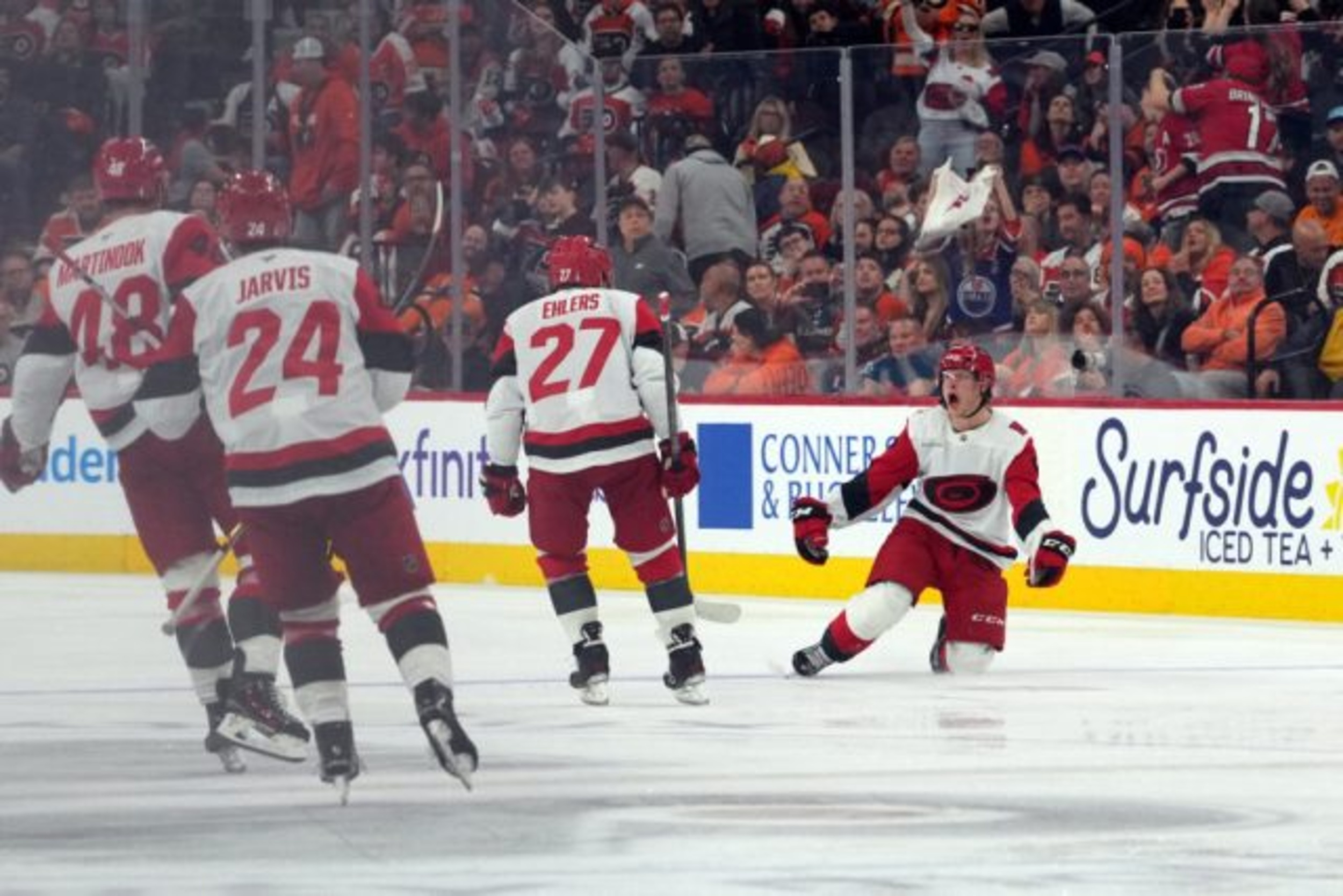
While Montreal’s youth movement has surprised many fans, Carolina’s young talent has already established itself as one of the NHL’s premier foundations for long-term success. The Hurricanes continue to overwhelm opponents with depth, skating ability, and relentless pressure across all four lines.
Much of Carolina’s playoff dominance starts with their aggressive forechecking system. The Hurricanes consistently pressure opposing defenders into mistakes and spend extended periods controlling possession in the offensive zone. That style becomes even more dangerous when combined with the speed and skill of their younger players.
Jackson Blake has continued developing into an impact postseason contributor. The 22-year-old’s quick decision-making and offensive instincts fit perfectly within Carolina’s high-pressure style, leading to 11 points in eight playoff games in 2026. Blake’s ability to create scoring chances from difficult angles has added another layer to the Hurricanes’ already dangerous attack.
Another major contributor has been Logan Stankoven, whose energy and offensive creativity have helped fuel Carolina throughout the playoffs. Stankoven (seven goals in eight games) brings pace every shift, and his willingness to attack defenders one-on-one makes him difficult to contain. Against Montreal’s young defensive core, the 23-year-old’s ability to force turnovers could become a difference-maker.
Carolina’s defensive structure also separates them from most playoff teams. Even when the Hurricanes are not generating offense, they rarely allow sustained pressure in their own zone. Their defensive rotations are disciplined, and their ability to recover loose pucks consistently frustrates opposing offenses.
That balance between youth and structure is what makes Carolina so dangerous. Many teams rely heavily on veteran playoff experience, but the Hurricanes have built a roster capable of matching energy with execution. Younger players are not simply filling supporting roles — they are actively driving the team’s success.
The Hurricanes also possess one of the league’s deepest blue lines, allowing them to maintain pressure throughout games. Defensemen consistently activate into the rush without sacrificing defensive positioning, which forces opponents to defend every inch of the ice.
The Canadiens speed could create moments of danger, but Carolina’s ability to dictate pace may ultimately define the series. If the Hurricanes establish offensive-zone possession early and consistently wear down Montreal’s defense, the Canadiens could struggle to maintain their transition-heavy attack over a seven-game series.
Carolina enters the Eastern Conference Final looking like a team built specifically for playoff hockey: deep, fast, structured, and confident.
Frederik Andersen, Jakub Dobeš Look To Battle It Out In Net

Goaltending often defines playoff series, and the Eastern Conference Final presents a compelling contrast between veteran stability and emerging confidence.
Frederik Andersen remains a crucial piece of the Hurricanes’ postseason success. The veteran netminder has delivered steady performances throughout the playoffs and continues to provide calmness behind Carolina’s aggressive system. Andersen’s positioning and rebound control have helped the Hurricanes limit second-chance opportunities, an area that becomes especially important against Montreal’s speed-driven offense.
One of Andersen’s biggest strengths is his ability to stay composed during high-pressure stretches. The Hurricanes’ defensive system limits many scoring opportunities, but when breakdowns occur, Andersen has consistently delivered momentum-saving stops.
On the opposite side, Jakub Dobeš has emerged as one of the surprise stories of the postseason. The young Canadiens goaltender has shown impressive confidence despite facing intense playoff pressure. His athleticism and quick lateral movement have allowed Montreal to survive difficult stretches against more experienced opponents.
Dobeš may ultimately become the X-factor in the series. Carolina generates high shot volume and creates chaos around the crease, meaning Montreal’s goaltender will likely face sustained pressure throughout games. If Dobeš can maintain composure and steal a game or two early in the series, the Canadiens could gain the confidence needed to push the Hurricanes deeper than many expect.
The mental aspect of the matchup will also matter. Andersen brings years of NHL playoff experience, while Dobeš is relatively unproven at this level. Young goaltenders, however, can sometimes thrive when playing without fear or external expectations.
Both teams trust their netminders, but the workload may differ dramatically. Andersen benefits from Carolina’s defensive structure, while Dobeš could face far more high-danger chances each night. The shot intensity imbalance places enormous pressure on Montreal’s goaltending if the Canadiens hope to continue their improbable playoff run.
End Of My Eastern Conference Final Rant
The 2026 Eastern Conference Final represents a clash between an established contender and a rising young team refusing to back down. The Hurricanes enter the series with more playoff experience, greater depth, and one of the NHL’s most complete systems. Montreal counters with youthful energy, offensive confidence, and the belief that its playoff run is far from over.
Whether it becomes a defensive grind or a high-speed offensive battle, this matchup has the potential to deliver memorable playoff moments from start to finish.
More must-reads:
- Best bet: Figure a battle of top seeds in Stanley Cup Final
- Sabres add to Buffalo's painful playoff misery with overtime Game 7 loss to Canadiens
- The 'NBA steals-per-game leaders' quiz
Breaking News
Trending News





Customize Your Newsletter
 +
+




Get the latest news and rumors, customized to your favorite sports and teams. Emailed daily. Always free!
PRIVACY POLICY COOKIE POLICY CONTACT US
ABOUT YARDBARKER TERMS OF SERVICE


By using this site, you agree to our Terms of Service and Privacy Policy.
This site is for entertainment purposes only.
There is no gambling offered on this site.
Gambling Problem? Call 1-800-Gambler.
