-

-


Follow Us
-

 On Facebook
 On Flipboard



For 57 minutes on Tuesday night, the Bell Centre was humming with the distinct, electric vibration of a game that fans saw as an inevitable win. Head coach Martin St. Louis’ Montreal Canadiens weren’t just beating the Winnipeg Jets; they were dismantling them. They were fast, they were structurally sound, and despite being thoroughly outshot and out chanced, they were playing with the kind of swagger that makes you think this group is growing up right before our eyes. Cole Caufield was doing Cole Caufield things, sniping his ninth and tenth goals of the season, both on the power play. Lane Hutson was doing his usual tightrope act on the blue line, leaving veteran defenders clutching at shadows. Up 4–0 late in the third, the building was ready to erupt for a statement win.
GOAL CAUFIELD
— TSN (@TSN_Sports) November 4, 2026POWER PLAY GOAL#Habs pic.twitter.com/eJvwtJ3INQ
And then, the sky fell, and crushed their hopes.
What transpires in the final three minutes of regulation is the kind of sports horror story that leaves scar tissue. Four goals surrendered in a span of just over two minutes. A historic, soul-crushing collapse that culminated in a 5–4 overtime loss. It was the latest four-goal comeback in NHL history, and there is little doubt that walking into that locker room afterward, the silence would be deafening. It felt like a disaster to the fans in attendance, and almost assuredly to the players as well. But if you step back and look at the macro picture of where this franchise is, Tuesday night shouldn’t be viewed as a reason to panic. It should be viewed as a mandatory, albeit agonizing, tuition fee on the road to becoming a contender.
The Psychological Trap
To understand how a team blows a four-goal lead in the blink of an eye, you have to look at the psychology of a young roster. When the scoreboard reads 4–0 with under three minutes to play, human nature tells you the job is done. But against a desperate, veteran team like Winnipeg, led by Mark Scheifele, that’s a lethal assumption.
The Canadiens didn’t just stop playing; they changed how they played. They stopped pushing the pace, stopped attacking puck carriers and limiting time and space, giving them room to generate high-quality scoring opportunities. They stopped playing with speed and began trying to passively defend a patch of ice. When you retreat into a shell against armed jets, you get bombed. Caufield admitted as much after the game.
I guess (we) thought the game was over, we had a four-goal lead. There’s no excuse for this. It’s terrible.
– Cole Caufield
When the Jets broke the shutout to make it 4–1, it felt like a cosmetic goal. But on the ice, you could visually see the temperature change. Rebuilding teams, which Montreal remains, don’t have the collective muscle memory of knowing how to close out elite opponents. Veteran teams rely on calm execution under pressure; young teams rely on adrenaline. When that adrenaline turns to anxiety, a meltdown happens fast. Suddenly, shifts became frantic.
Rushed clearing attempts turned into turnovers. Sticks were gripped into sawdust, and defensive assignments vanished into thin air. By the time the Jets tied it 4–4, the Canadiens were utterly shell-shocked. St. Louis could have called three timeouts, and it wouldn’t have slowed down the avalanche. By the time the game hit overtime, the result felt like a foregone conclusion. The psychological damage had already been done.
The Hard Truths of the Learning Curve
It is incredibly easy to lose perspective after a loss like that. The optics are terrible, and the players know it.
«Plusieurs gars doivent se regarder dans le miroir» – Josh Anderson pic.twitter.com/VKSIMmfhgJ
— TVA Sports (@TVASports) November 4, 2026
But let’s look at the reality of where the Canadiens sit today. Even with the collapse, Montreal secured a point. That point extended their current point streak to eight games (6–0–2). They sit second in the Atlantic Division with a 9–3–3 record and 21 points. If you had offered anyone in Montreal these exact standings position in the first week of November, they’d have asked what clinic you were escaping from. This streak isn’t smoke and mirrors. The Canadiens are genuinely competitive. They have a top-six that can score with anyone (when healthy), they have a young blue line that is growing by leaps and bounds, and are building a young, energetic and physical bottom six forward group that can provide depth scoring.
The collapse against Winnipeg was an ugly, monstrous blemish, but it came during a stretch where this team has otherwise been playing excellent hockey. Especially rookie goaltender Jacob Fowler, who was the NHL’s rookie of the month of October and who holds zero fault for this loss. So, what is the actual takeaway when a coach watches his team drop a game in that fashion? If you’re St. Louis, you don’t burn the tape; you make your players watch it until the reality sinks in. Because a loss like this exposes the difference between a team with dynamic potential and a team that actually knows how to win. First and foremost, it’s a lesson in game management. When you’re up 4–0, the objective shifts from trying to score the fifth goal to making the opponent travel 200 feet for every single inch of ice.
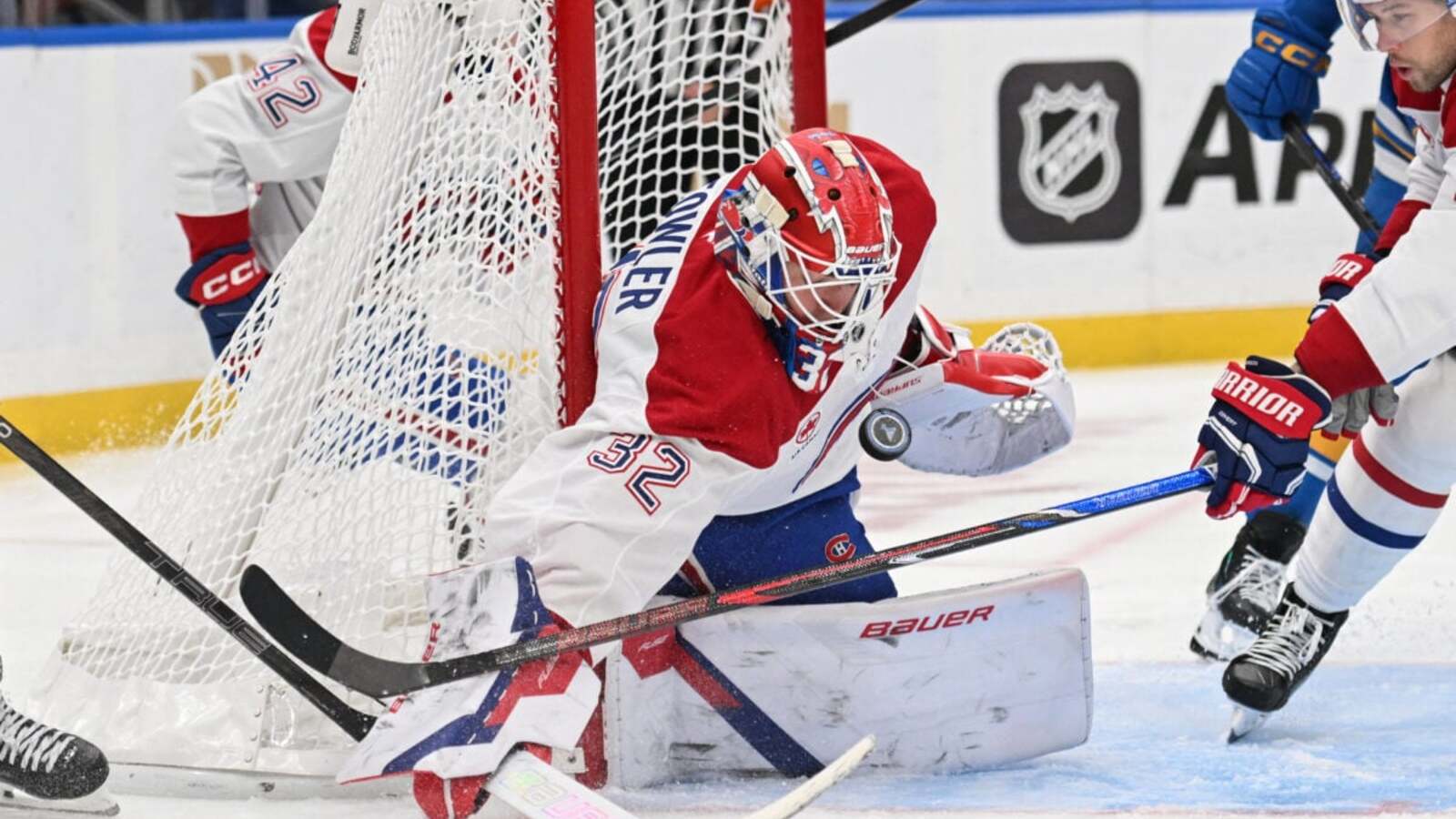
The Canadiens stopped doing that. Instead of using their speed to chip pucks out, establish a safe forecheck, and run the clock down, they began retreating. They stopped skating, started puck-watching, and allowed Winnipeg’s transition game to pick up dangerous momentum through the neutral zone. In the NHL, passive defending is a death sentence, no matter how much cushion you think you have on the scoreboard.
Secondly, it highlights the desperate need for structural leadership on the ice when the wheels start coming off. When Winnipeg scored that second goal to make it 4–2, that was the moment for a veteran presence to settle things down, to take a whistle, freeze the puck, or simply orchestrate a boring, grinding, 45-second shift in the offensive zone to kill the Jets’ energy, something Nick Suzuki likely would have done if he were in the lineup. Instead, Montreal’s young core tried to trade chances with a desperate team. The assignments became frantic, coverage in the slot completely evaporated, and the structural discipline St. Louis preaches went right out the window.
This is the kind of “scar tissue” management will talk about. You can’t simulate the panic of a collapsing third-period lead in a Monday morning practice. You have to live through it. You have to feel the sickening knot in your stomach as a four-goal lead vanishes in 120 seconds. Moving forward, the lesson is simple: maturity in this league means respecting the game for all 60 minutes, realizing that NHL teams never stop coming, and understanding that closing out a hockey game requires a completely different level of mental fortitude than building a lead in the first place.
STUNNER IN MONTREAL!!
— NHL (@NHL) November 4, 2026
The @NHLJets have stormed all the way back from a 4-0 deficit in only 2:06! pic.twitter.com/9Fkn6tJi7T

Response is everything. Can this club learn from this setback and apply it moving forward? The schedule doesn’t care about Montreal’s hurt feelings. The Canadiens have a busy November ahead, including a date with the Toronto Maple Leafs, a match against their bitter rival the Boston Bruins, and the emotional weight of Carey Price Night on Nov. 10 . The real test of this young core isn’t that they collapsed on a Tuesday. The real test is how they respond on Thursday night when the Utah Mammoth walk into the Bell Centre. Will the hangover of the Winnipeg loss linger, turning a bad three minutes into a bad three weeks?
Or will the club use this as a turning point, a harsh, necessary awakening that elevates their maturity to the next level? Three minutes of chaos cost Montreal a win and an extra point in the standings. But if it teaches this group exactly what it takes to survive at the highest level of this league, it might just be the most valuable lesson they learn all year.
More must-reads:
- Jets make NHL history with unfathomable comeback win over Canadiens
- Overrated, underrated or properly rated? Evaluating all 12 teams in the initial CFP rankings
- The 'Active 3-rushing-TD NFL games' quiz
Breaking News
Trending News







Customize Your Newsletter
 +




Get the latest news and rumors, customized to your favorite sports and teams. Emailed daily. Always free!
PRIVACY POLICY COOKIE POLICY CONTACT US
ABOUT YARDBARKER TERMS OF SERVICE


By using this site, you agree to our Terms of Service and Privacy Policy.
This site is for entertainment purposes only.
There is no gambling offered on this site.
Gambling Problem? Call 1-800-Gambler.