
-

-


Follow Us
-

 On Facebook
 On Flipboard

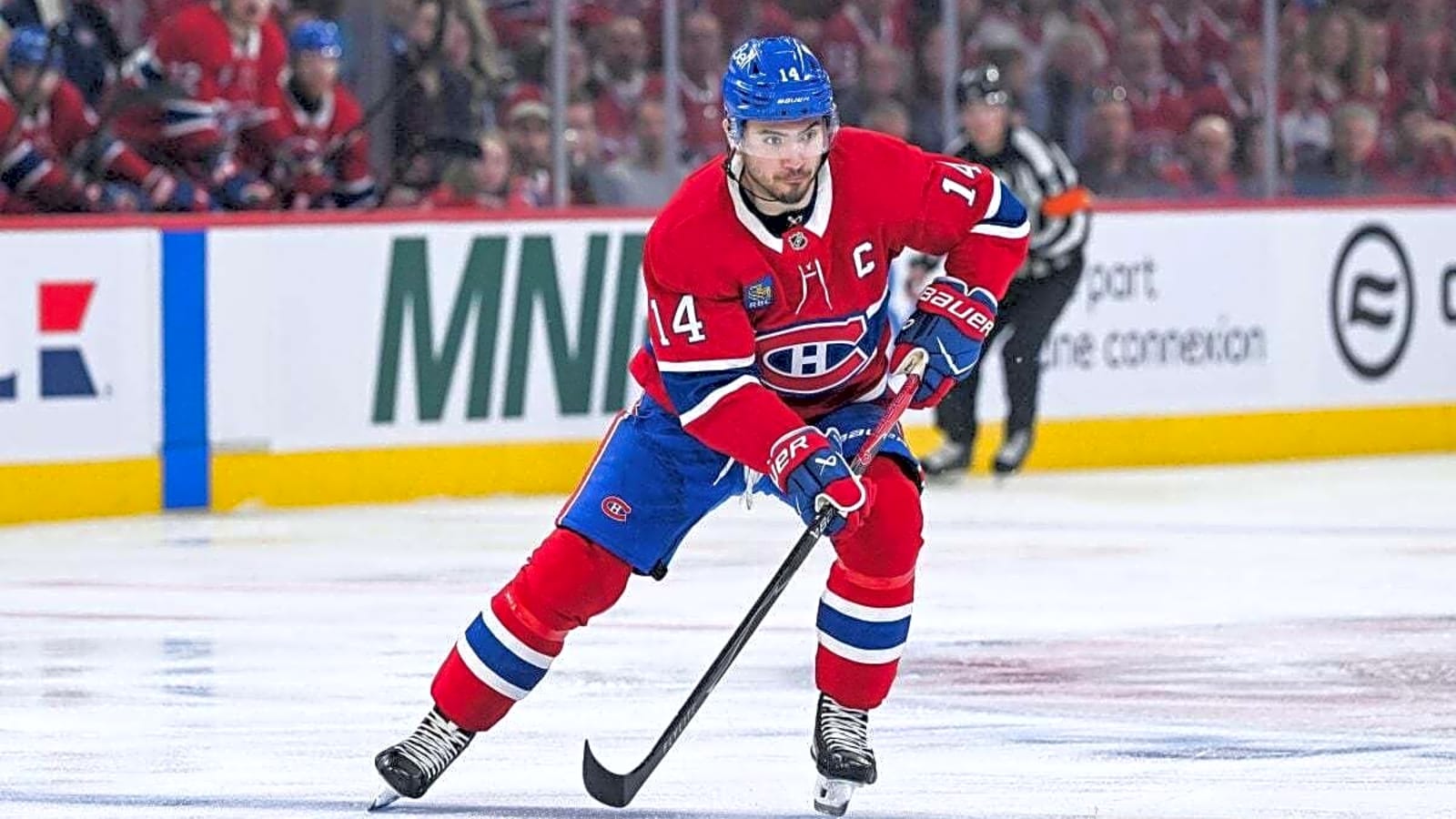
Rebuilds in the NHL are rarely linear, and they rarely adhere to a predetermined schedule. They test patience, test resolve, and far too often leave fan bases wondering if the light at the end of the tunnel is an oncoming train.
When general manager (GM) Kent Hughes took the reins of the Montreal Canadiens, he preached patience and promised a thorough build from the foundation up. He also made it clear that short-term quick fixes would no longer be the standard at the Bell Centre. Looking closely at what has been assembled in the system, that patience is about to pay off in full.
Needs, Wants and Patience
To wrap up their rebuild and become true contenders, local beat writers, and basically everyone online, highlight three core priorities: acquiring a legitimate second-line centre to ease the burden on Nick Suzuki, landing an experienced, shutdown right-shot defender to balance out offensive blueliners like Lane Hutson, and resolving a crowded crease by potentially trading veteran Sam Montembeault to clear a path for young goaltenders Jakub Dobes and Jacob Fowler.
There will be an argument to get it all done now, to finish it by bringing in external players to finish the roster. Because rebuilds don’t carry money-back guarantees, and hope isn’t a strategy. While hoarding draft picks and stockpiling top-tier prospects offers a comfortable, warm-blanket sensation for a front office, there comes a decisive tipping point in every rebuild where safety must yield to ambition. While Montreal has painstakingly built one of the NHL’s most envied pipelines, patience can wear thin for some in the fan base.
Prospects carry development arcs, injury risks, and adjustment periods; a proven top-six centre or a battle-tested right-shot partner for Hutson provides a known, elite quantity right now. It plugs a glaring positional void overnight with a player ready to carry heavy matchup minutes and provide head coach Martin St. Louis with a weapon he doesn’t have to wait two years to fully trust.
The Canadiens have the assets to go all-in on the option of sacrificing a piece of tomorrow to solve a critical need today. They could just complete their rebuild, and likely have to overpay, and step directly onto the contend-now stage. Yet there would be few assets remaining they could use as trade assets to make adjustments in the future. This is why patience is a virtue worth holding onto.
Answers Can Be Found Within
Montreal doesn’t need to scour the trade market for a saviour, nor do they need to throw foolish money at high-priced unrestricted free agents to cross the finish line. The blueprint is drawn, the foundation is set, and the crucial final pieces are already in the pipeline.
With a core group of five elite prospects – centre Michael Hage, goaltender Jacob Fowler, defenceman David Reinbacher, and wingers Alexander Zharovsky and Gleb Pugachyov – the Canadiens possess every internal solution required to transform from a rising young group into a genuine, long-term Stanley Cup contender within two years.
The Anchor Down the Middle: Michael Hage
Ask any executive in the league what the hardest asset to acquire in hockey is, and they’ll tell you without hesitation: top-six centres who possess size, skill, and dynamic skating ability.
Suzuki has solidified his place as an undisputed top-line centre, driving play night in and night out against the opposition’s heavy hitters. But a team aiming for deep playoff runs needs a lethal one-two punch down the middle.
Enter Hage.
Outta the box and into the net! pic.twitter.com/Cwc4dZKAIp
— Michigan Hockey (@umichhockey) November 30, 2025
Selected 21st overall in 2024, Hage has evolved rapidly into the type of centre modern NHL teams crave. He plays with a rare combination of explosive straight-line speed, soft hands in high-traffic areas, and an elite hockey IQ that allows him to dictate the pace of play. His ability to transport the puck through the neutral zone and generate dynamic offence off the rush gives Montreal a dimension they haven’t possessed in their secondary centre spot in over a decade.
College hockey is providing him the opportunity to polish his game. Once Hage steps into the lineup full-time, he won’t just fill a spot on the depth chart; he will be able to transform the Canadiens’ top six into a two-headed monster, taking the massive matchup burden off Suzuki’s shoulders.
The Modern Two-way Pillar: David Reinbacher
When Reinbacher was selected fifth overall in 2023, the reaction in some quarters was muted. Fans wanted highlight-reel offence; Montreal wanted a structural pillar. Time has proven the front office right, as they still need this type of player.
Erstes NHL-Spiel, direkt einen Assist gesammelt: David Reinbacher feierte vergangene Saison einen Einstand nach Maß bei den Montreal Canadiens!
— NHL Deutsch (@NHLde) August 15, 2026pic.twitter.com/PVRYnGRp0M
While Hutson captivates fans with unmatched offensive instinct, a championship defence requires balance. Reinbacher’s style is about structure amidst chaos. Standing 6-foot-3 with exceptional lateral mobility, the Austrian defenceman suppresses transition attacks, kills play in the defensive zone with a heavy stick, and efficiently breaks out pucks under intense forechecking pressure.
A pairing featuring Hutson’s explosive mobility alongside Reinbacher’s defensive presence provides Montreal with a classic “yin and yang” dynamic. Much like a Kaiden Guhle and Noah Dobson pair. Reinbacher locks down the right side of the blue line, giving the Canadiens a top-four defence capable of playing heavy, physical minutes against the East’s most formidable forward lines.
The Calm in the Crease: Jacob Fowler
There is no position in sports quite like playing goal for the Canadiens. The weight of the sweater, the echo of history, and the intense daily scrutiny can crumble even the most talented netminders.
It takes a specific demeanour to thrive under those lights. It takes Jacob Fowler.
WHAT A SAVE BY JACOB FOWLER
— NHL (@NHL) September 23, 2025pic.twitter.com/9P2y2SoBUC
With Dobeš providing a reliable presence (ranked top 10) in the NHL crease, Fowler’s arrival will complete a tandem capable of providing top-tier goaltending on friendly entry-level terms, a massive competitive advantage in a hard-cap environment.
Fowler has done nothing but win at every single level of his career. From the United States Hockey League (USHL) to dominant performances in the NCAA with Boston College, his trademark isn’t just his technical mechanics or his athletic post-to-post coverage; it’s his unfazed, stoic battle level. Even Carey Price himself sees a poise in Fowler that he himself exuded during his NHL career.
The Russian Pair: Alexander Zharovsky and Gleb Pugachyov
While structural stability at centre, on defence, and in goal builds the floor of a contender, game-breaking skill establishes the ceiling. Montreal’s core is highly skilled, but needs a supporting cast. That is precisely where Alexander Zharovsky and Gleb Pugachyov come in.
Good evening, Alexander Zharovsky! 13th goal by the 18-year-old! pic.twitter.com/7XymaG8uuZ
— KHL (@khl_eng) January 15, 2026
Drafted 34th overall in 2025, Zharovsky exploded onto the scene in the Kontinental Hockey League (KHL), capturing Rookie of the Year honours after posting 42 points as a teenager. His combination of lethal perimeter shooting, elite vision, and childhood chemistry with Ivan Demidov gives Montreal a potential offensive weapon capable of breaking open tight games on the power play. Zharovsky doesn’t just score goals; he manufactures offence out of nothing with incredible release speed and deception.
17 year old #2026NHLDraft #TOR Gleb Pugachyov hit on #SPR Mikhail Maltsev #KHL pic.twitter.com/JuGrEFaQ4n
— Jeremy Garrett HNH (@HockeyNewsHub) January 17, 2026
Contrasting that pure skill is 2026 first-rounder Gleb Pugachyov. Pugachyov brings a tenacious, relentless energy to the wing, combining a powerful stride with a relentless forechecking motor. He plays the game in high gear, forcing turnovers in the offensive zone and immediately turning them into high-danger scoring chances. He will not be a top-line player, but he can become a hard-nosed power forward that can complement a line in the middle-six, adding that gritty, physical play any contender needs in the playoffs.
The Timeline
The hardest phase of an NHL rebuild isn’t tearing the roster down to accumulate assets; it is transitioning those assets into winning NHL players without gutting the cap structure or rushing development. Which is where the Canadiens sit now. A team that is coming off of a 106-point season and a berth in the Eastern Conference Final.
With the success of the rebuild thus far, it isn’t a surprise there are some rising voices demanding it be completed via trades immediately. Yet that won’t increase their hockey odds over simply showing patience. When you project this group two years down the road, the vision becomes crystal clear.
The core group, Suzuki, Cole Caufield, Juraj Slafkovský, Hutson, and Kaiden Guhle, will be entering their prime years. Behind them, Hage, Reinbacher, Fowler, Zharovsky, and Pugachyov will step directly into crucial roles on entry-level contracts, providing elite talent and depth.
That salary cap flexibility will allow Hughes to make targeted additions to fine-tune the roster, rather than overpaying for core pieces.
Rebuilds require patience, vision, and a little luck. Montreal has checked every box. The heavy lifting is done, the talent is in the pipeline, and the Canadiens are primed to execute the final turn toward sustainable, long-term contention.
More must-reads:
- Andre Cisco, Samuel Womack remind Jets defenders it is possible to intercept a pass
- Dodgers' Andy Pages receives brutal injury update after X-rays
- The 'Rookie receiving leader by team' quiz
Breaking News
Trending News






Customize Your Newsletter
 +
+




Get the latest news and rumors, customized to your favorite sports and teams. Emailed daily. Always free!
PRIVACY POLICY COOKIE POLICY CONTACT US
ABOUT YARDBARKER TERMS OF SERVICE


By using this site, you agree to our Terms of Service and Privacy Policy.
This site is for entertainment purposes only.
There is no gambling offered on this site.
Gambling Problem? Call 1-800-Gambler.
