
-


Follow Us

 On Facebook
 On Flipboard
 On Twitter
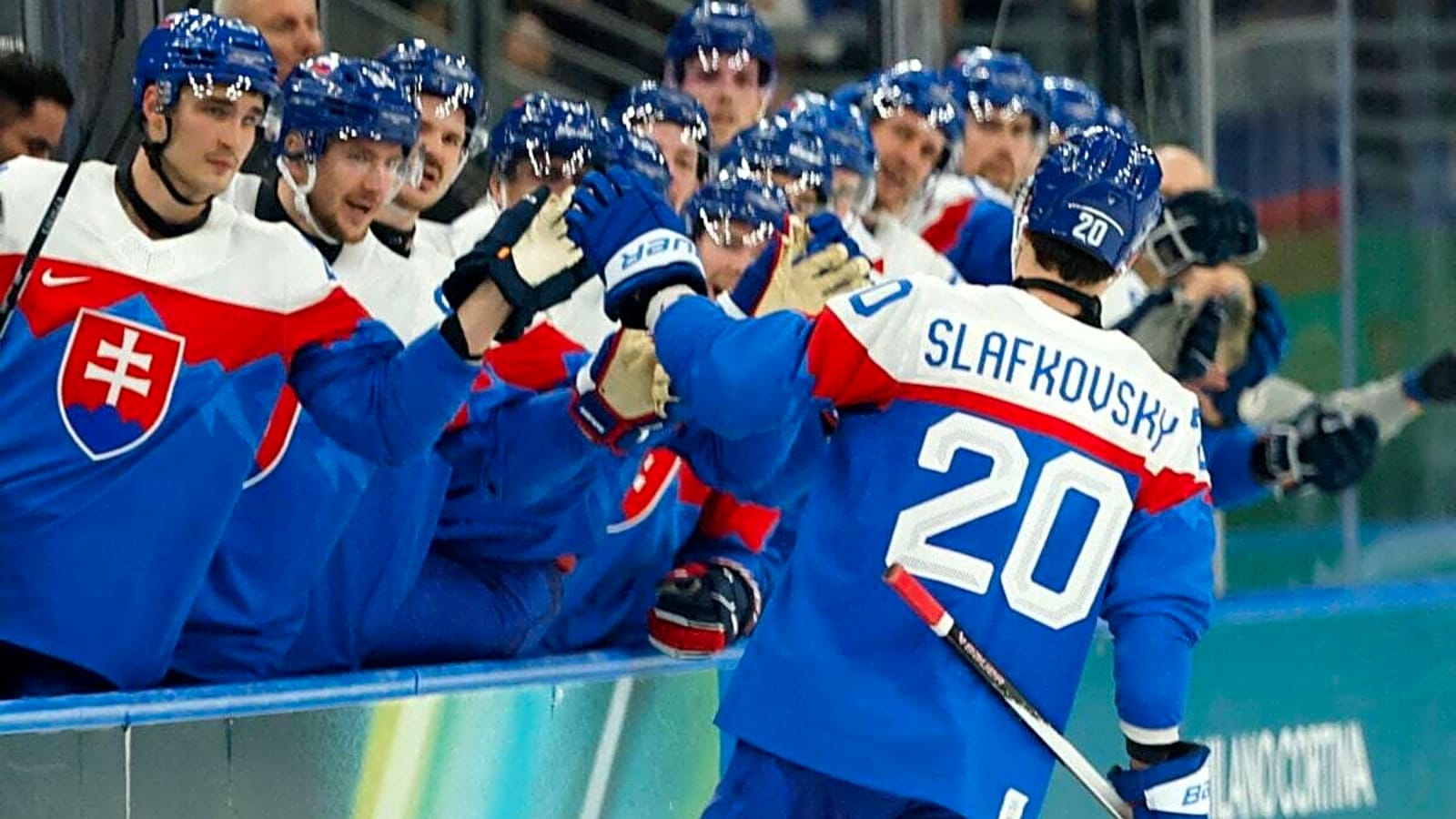
The Olympic group stage always reveals early narratives, contenders separating themselves, underdogs rising, and individuals either thriving or surviving in the spotlight. For the Montreal Canadiens, four players represented their respective nations in vastly different circumstances, Juraj Slafkovsky (Slovakia), Nick Suzuki (Canada), Alexandre Texier (France), and Oliver Kapanen (Finland). After three games, their tournaments couldn’t look more different.
Juraj Slafkovsky
If there’s one Canadien who owned the round robin, it was Slafkovsky. Slovakia finishing first in Group B ahead of Finland and Sweden was one of the biggest surprises of the opening stage, and Slafkovsky was at the heart of it. In three games, he posted three goals and three assists for six points, tied for second overall in tournament scoring after group play.
Four years ago, Slafkovsky announced himself to the hockey world with a dominant Olympic performance that ultimately propelled him to first-overall status in the NHL Entry Draft. Fast forward, and he’s once again putting his country on his back in high-pressure international competition.
What stands out isn’t just the production, it’s the timing. Slafkovsky has delivered in key moments, driving play physically, protecting pucks down low, and using his size to create space against elite competition. Slovakia doesn’t boast the depth of Canada or Sweden, which makes his impact even more significant. He’s the engine.
For Montreal fans, this is the best-case scenario. Slafkovsky isn’t just producing, he’s leading. If Slovakia is going to medal again, it will likely be because their 6-foot-3 power forward continues to dominate the way he has in the group stage.
Nick Suzuki
Suzuki’s stat line won’t jump off the page. One goal in three games isn’t what you expect from a top-line NHL centre, especially one playing alongside Nathan MacKinnon and Brandon Hagel. But context matters, and Suzuki’s role with Canada isn’t offense-first.
Canada’s lineup is loaded with scoring talent. Suzuki isn’t being asked to drive offense every shift, he’s being trusted to stabilize it. His defensive awareness, reliability, and ability to read elite opponents have quietly made him a valuable piece of Canada’s structure.
Playing with MacKinnon means handling high-speed transitions and matching against other nations’ best lines. Suzuki has been strong in support, covering defensively and allowing MacKinnon to attack aggressively. His positioning in the neutral zone and his work on the backcheck have helped Canada control possession, even when he’s not filling the scoresheet.
Is one goal ideal? No. But in a short tournament, coaches value reliability just as much as flash. If Canada goes deep, Suzuki’s two-way presence will matter more than a flashy stat line.
Alexandre Texier
For Texier, this tournament has been about survival. France entered the Olympics as heavy underdogs, and the group stage reflected that reality. Three losses, all by significant margins, made for a tough opening stretch. As the lone NHL player on the roster, Texier carried enormous expectations, and the burden showed.
He finished the round robin at minus-8, a harsh number but one that needs proper context. When a team struggles collectively, plus/minus can snowball quickly, especially for players logging heavy minutes against top competition.
Has it gone smoothly? No. But this experience still holds value. International tournaments can expose weaknesses, pace management, defensive reads, puck decisions under pressure. For Texier, this is a measuring stick.
France may not be advancing with momentum, but for Texier, the tournament isn’t only about wins and losses. It’s about competing against the best and bringing those lessons back to Montreal.
Oliver Kapanen
Kapanen’s Olympic story has been about waiting. The 22-year-old Finnish forward played just one of Finland’s three group stage games. He was a healthy scratch in Game 1, then missed time due to isolation protocols after his roommate Anton Lundell fell ill. Not exactly the way you draw it up.
Still, even limited participation in an Olympic environment carries immense developmental value. Practicing with NHL-calibre players, sitting in meetings with veteran leaders, experiencing tournament pressure, that exposure matters for a young player still carving his identity.
Finland’s lineup is structured and competitive, and breaking into that rotation isn’t easy. Kapanen’s lone appearance may not have yielded a major statistical impact, but being trusted even in a depth role speaks to how Finland views him.
From Slafkovsky’s star turn to Suzuki’s quiet reliability, from Texier’s uphill battle to Kapanen’s developmental exposure, the Olympic round robin highlighted how different roles shape different outcomes. For the Canadiens, this is encouraging.
More must-reads:
- Kings star Kevin Fiala's status revealed after Olympic injury
- Former NFL GM sends Aaron Rodgers warning to Steelers amid reports
- The 'Multiple 20-assist NBA games' quiz
Breaking News
Trending News







Customize Your Newsletter
 +
+




Get the latest news and rumors, customized to your favorite sports and teams. Emailed daily. Always free!
PRIVACY POLICY COOKIE POLICY CONTACT US
ABOUT YARDBARKER TERMS OF SERVICE


By using this site, you agree to our Terms of Service and Privacy Policy.
This site is for entertainment purposes only.
There is no gambling offered on this site.
Gambling Problem? Call 1-800-Gambler.
