
-


Follow Us

 On Facebook
 On Flipboard
 On Twitter
The Montreal Canadiens’ offseason was defined by transition. With a clear focus on youth, flexibility, and long-term upside, Montreal moved on from several familiar faces. None of these departures were headline-grabbing on their own, but as the season progresses, the absence of certain role players becomes more noticeable. Christian Dvorak, Joel Armia, Emil Heineman, and David Savard all filled specific needs in the lineup, needs that are not always easy to replace. Looking at the seasons they are having so far helps frame what Montreal may miss, and what the organization is still learning to rebuild internally.
Christian Dvorak
Dvorak’s exit was widely viewed as a necessary step to clear room down the middle. However, his current production, seven goals and 15 assists in 31 games for the Philadelphia Flyers, is a reminder of how valuable a reliable two-way centre can be. Dvorak has never been a flashy player, but his consistency, defensive awareness, and faceoff ability made him a stabilizing presence.
In Montreal, that stability is currently harder to come by. With both Alex Newhook and Kirby Dach sidelined for extended periods, the Canadiens’ centre depth has been tested. Young players have been asked to take on larger roles, often against tougher competition. Dvorak’s ability to handle defensive-zone starts and match up against quality opponents could ease pressure elsewhere in the lineup. His value lies less in his point totals and more in how he allows others to play their game with fewer risks.
Joel Armia
Armia’s impact was often debated during his time in Montreal, but his season with the Los Angeles Kings shows why teams continue to trust him. With seven goals and seven assists in 32 games, Armia has provided balanced depth scoring while maintaining his defensive responsibilities.
Armia’s strengths remain unchanged: puck protection along the boards, a strong defensive stick, and effectiveness on the penalty kill. The Canadiens’ current forward group has plenty of speed and skill, but fewer large wingers who can slow the game down and protect leads late. Armia excelled in those moments. His departure leaves a subtle gap, not one of star power, but of situational reliability, especially on the penalty kill and in defensive-zone deployments.
Emil Heineman
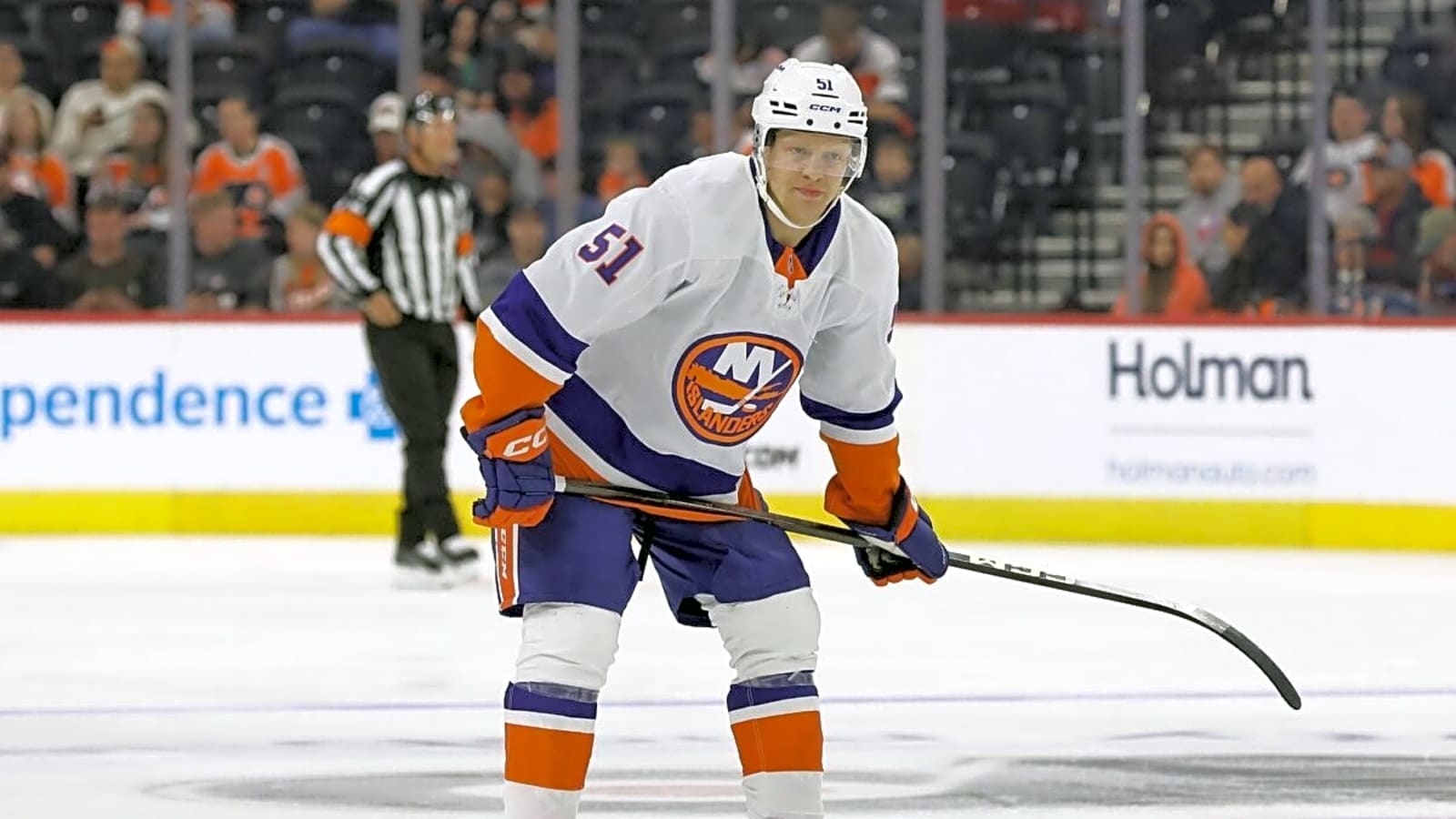
Heineman’s departure came as part of the Noah Dobson trade, making his loss easier to justify. Still, his season so far, ten goals and six assists in 33 games, highlights the type of player Montreal gave up. Heineman brings a simple, modern NHL game built on speed, physicality, and a heavy shot to the New York Islanders.
While he was never guaranteed a top-six role with the Canadiens, Heineman profiles well as a third-line winger who can forecheck aggressively and contribute secondary offence. Those players are valuable, particularly for teams trying to build lineup depth. His progression underscores the challenge of balancing immediate needs with long-term development, especially during a rebuild where young, cost-controlled contributors are at a premium.
David Savard
Savard’s retirement closed the door on one of Montreal’s most dependable defensive presences. His contributions on the penalty kill and his willingness to block shots were central to the Canadiens’ defensive structure. Savard rarely stood out offensively, but his attention to detail and leadership were evident every night.
While those qualities are difficult to replace, the Canadiens appear to be adapting. Mike Matheson, known primarily for his skating and puck-moving ability, has increasingly incorporated shot-blocking and penalty-kill responsibilities into his game. Although Savard’s specific role is still missed in certain matchups, Montreal has found ways to redistribute those defensive duties rather than replace him outright.
None of these players were stars in Montreal, and that is precisely why their departures matter in quieter ways. Dvorak, Armia, Heineman, and Savard each filled clearly defined roles that contributed to the Canadiens’ overall structure. As the team continues to prioritize youth and long-term upside, those roles are being redistributed rather than directly replaced, a natural but sometimes uneven process.
What this season highlights is the cost of transition. Injuries, inconsistency, and inexperience have exposed gaps in centre depth, defensive reliability, and special teams execution. While the Canadiens are building toward something bigger, the absence of dependable, role-specific players can make the short-term path bumpier. In the long run, Montreal may be better for it. In the meantime, the seasons these former Canadiens are having serve as a reminder that value in hockey is not always measured by star power, but by the small details that hold a lineup together.
More must-reads:
- Buffalo Sabres' GM change isn't about rebuilding
- New York sports radio legend reveals alleged reasons for Mets' clubhouse issues during 2025 season
- The 'Active NFL 5-passing-TD games' quiz
Breaking News
Trending News







Customize Your Newsletter
 +
+




Get the latest news and rumors, customized to your favorite sports and teams. Emailed daily. Always free!
PRIVACY POLICY EDITORIAL POLICY CONTACT US
ABOUT YARDBARKER TERMS OF SERVICE


Use of this website (including any and all parts and
components) constitutes your acceptance of these
Terms of Service and Privacy Policy.
This site is for entertainment purposes only.
There is no gambling offered on this site.
Gambling Problem? Call 1-800-Gambler.
