-

-


Follow Us
-

 On Facebook
 On Flipboard


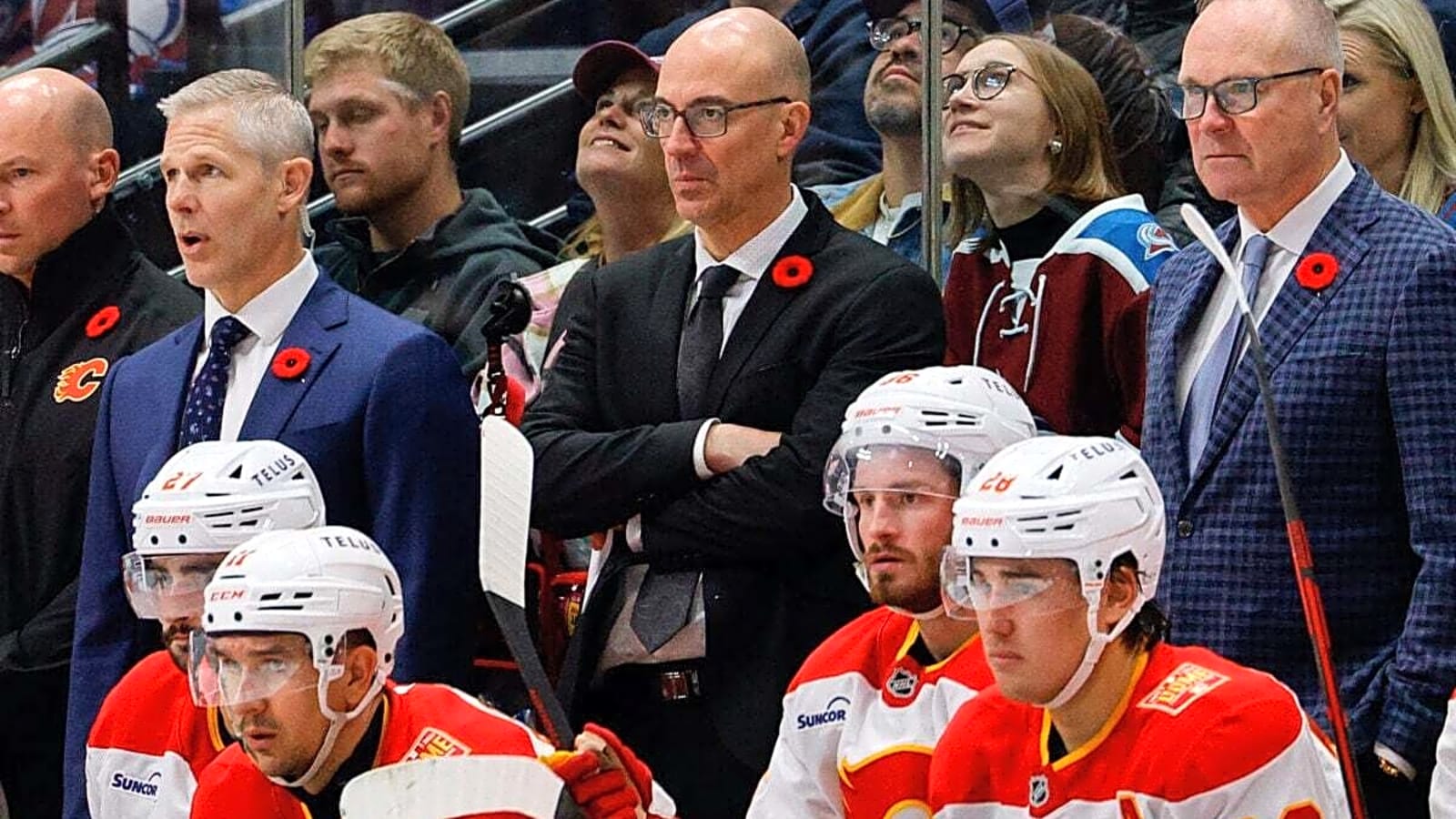
Calgary Flames head coach Ryan Huska has been at the centre of much discussion about the Flames’ short- and long-term future, with much at stake for such a young team where development is key to a successful rebuild.
Through the first five games of the season, the Flames were at the very bottom of the standings, with nothing clicking on either side of the puck and goaltending looking very lacklustre; the season seemed like it was going to be a long one. Since then, the Flames have gone 7-3-0, rounding their record to 7-8-0, while looking like one of the hottest teams in the league.
Huska’s Questionable Lineup Decisions
The expectations for the Flames this season were never to win a Stanley Cup or even make the playoffs. Coming out of preseason, their number-one centre was Morgan Frost, who has since been knocked down to the third line. The Flames produced little to no offence during their rough start, so lineup changes were inevitable.
First was the decision to place Connor Zary on waivers, which did seem like a major shock at first. Zary and the team haven’t seemed on the same page for a while now, and his lack of improvement season-over-season prompted his name as an early waiver placement along with defenceman Brayden Pachal.
To replace the two, the team called up Jonathan Castanga and Aydar Suniev, who were both off to hot starts in the American Hockey League (AHL) with the Calgary Wranglers. This was the first major change for Huska and his coaching staff, and how did he respond to the supposed incoming offensive boost? Playing them on the fourth line, with Castanga playing just 9:09 and Suniev 11:41. Both are now mainstays in the lineup.
The Zayne Parekh situation is another example of lineup decisions that bring into question Huska’s planning of his youth movement. Over the past half decade, we have seen the evolution of young puck-moving defencemen that are able to dominate the offensive zone in fluid movements. That is Parekh, or what he is expected to be. In the first few games, Huska paired Parekh and Jake Middleton together; Middleton was brought in to be a reliable depth defensive piece, yet he struggled, and it affected Parekh. Huska didn’t budge for a while, but when he did, both were noticeably better.
As the game constantly evolves to keep up with the speed and skill the newer players are bringing to the league, coaches need to be able to adjust to it just as quickly. Huska has not.
Huska Getting Bailed Out
During the rough stretch at the beginning of the season, the Flames let in 27 goals while only scoring seven. The goals against cannot all be blamed on the goalies, but when the team is struggling defensively, timely saves from netminders can be big morale boosts. Unfortunately, there were few of those.
Then Devin Cooley realized that if he just plays out of his conscious self, as he puts it, he can play at an elite level. That is exactly what happened – he started against the Carolina Hurricanes and then proceeded to play extremely well over the three games prior to the first Battle of Alberta of the season. Unfortunately, Cooley suffered an injury after a collision with Colton Dach, turning the spotlight back to the struggling Dustin Wolf.
Wolf has struggled since his fantastic rookie campaign just two seasons ago but has had an opportunity to ease some of the pain of Cooley’s loss. In his first start post-Cooley injury against the Seattle Kraken, he looked great, and following a tough matchup against the Colorado Avalanche, he bounced back against the San Jose Sharks. Crediting the whole turnaround to goaltending would be wrong, but it played a major role, so it’s up to Wolf to maintain that.
Another area that has helped bail Huksa out and keep him safe for now has been the spectacular work of the special teams. The power play notably sits top five in the league, rolling at a 30.6% efficiency. At even strength, the offence tells a different story as the team ranks 28th in goals for per 60 at just 1.86. It’s obviously a great point that the special teams are able to excel, but it’s only a portion of the game, and the team lacks at even strength.
The Flames have been one of the best teams in the league since their horrendous start, but Huska still shouldn’t feel overly comfortable. His true test will be to see how long this good stretch lasts and how he can adjust to a continuously changing landscape.
More must-reads:
- Blackhawks' Patrick Kane tallies milestone 900th career assist
- Lightning star Nikita Kucherov reportedly requests trade, won't re-sign
- The 'Last 100-yard teammates by team' quiz
Breaking News
Trending News




Customize Your Newsletter
 +




Get the latest news and rumors, customized to your favorite sports and teams. Emailed daily. Always free!
PRIVACY POLICY COOKIE POLICY CONTACT US
ABOUT YARDBARKER TERMS OF SERVICE


By using this site, you agree to our Terms of Service and Privacy Policy.
This site is for entertainment purposes only.
There is no gambling offered on this site.
Gambling Problem? Call 1-800-Gambler.