-

-


Follow Us
-

 On Facebook
 On Flipboard



There is no hatred in North American professional sports quite as pure, as historical, or as deeply ingrained as the war between the Montreal Canadiens and the Boston Bruins. It is an Original Six feud forged in blood and ice, defined by generations of heartbreak, historic playoff series, the source of a literal riot and a mutual disdain that trickles from the highest rows of the rafters directly onto the ice.
As Carey Price and Patrice Bergeron step onto the Hockey Hall of Fame stage together in Toronto, their induction isn’t just a nod to individual brilliance. It is a monument to the rivalry itself, a reminder of how two men, wearing opposing sweaters, carried the burden of an entire region’s hockey soul on their shoulders for nearly two decades.
And while Price and Bergeron represent just one of several legendary chapters of that conflict, the war itself is far from over. It is simply being fought by a new generation, using the exact same playbook.
The Price-Bergeron Era
For 15 years, Montreal vs. Boston wasn’t just a game on the calendar; it was a collision of opposing hockey philosophies.
In one corner stood the Bruins, heavy, relentless pressure, and anchored by Bergeron who became the gold standard of two-way forward play. In the other stood the Canadiens, reliant on the serene, immovable presence of Price. When these two teams clashed, the margin for error was non-existent. Boston would cycle, grind, and unleash 40 shots on goal, only for Price to tilt the ice in Montreal’s favour.
In an interview with Marco D’Amico of R.org ahead of both players entering the Hockey Hall of Fame, Bergeron spoke of that rivalry with Price.
“When we played against him, we knew we had to capitalize on the chances we had because we would not get many opportunities to score, he was the kind of goaltender that could take over games, and it forced us to elevate our games.”
– Patrice Bergeron
The true weight of the rivalry lay in that exact dynamic. Bergeron’s impact was that it forced Montreal to play with flawless structural discipline if it hoped to win; Price forced Boston to reach a level of offensive perfection they rarely needed against anyone else. They hated each other on the scoreboard, but off the ice, there was a quiet, almost solemn understanding: neither man could be great without the other pushing him to the brink.
The Heat Never Dies: The Modern Rivalry
Rivalries don’t fade when legends step aside; they adapt. The animosity between Montreal and Boston has survived since the first matchup in 1929, up to today, and it remains as volatile as ever with the Canadiens holding the edge in the playoffs 106-71 all-time. Even in the regular season, the crests on the front of the sweaters carry too much history for these games ever to feel ordinary. Where Price and Bergeron brought calculated, ice-cold precision to the feud, the current generation of young stars has begun to inject a fresh, explosive friction into the matchup.
It starts in the middle with a 200-foot chess match. Taking over the mantle in Montreal means inheriting the obligation to outplay Boston’s best down the middle. Nick Suzuki’s evolution into an elite two-way centre puts him in a direct, grueling head-to-head battle against Elias Lindholm. It is the ultimate 200-foot matchup, a high-stakes game of positional play, defensive detail, and crucial faceoff battles where Suzuki strives to dictate the game’s rhythm, the way Bergeron once did.
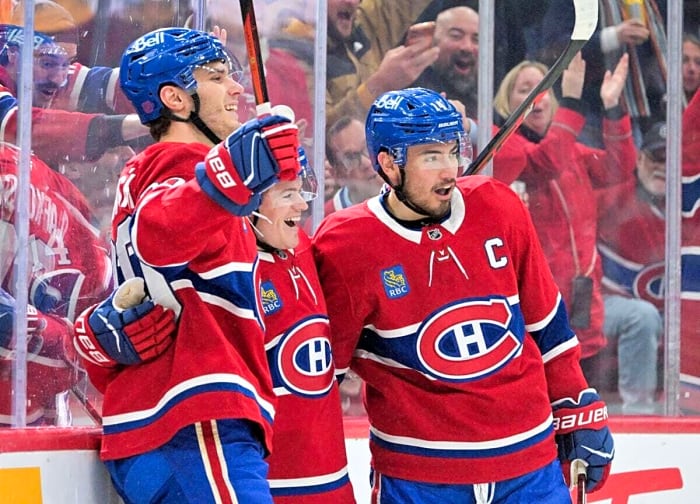
There’s always a physical aspect to these head-to-head matchups. Historically, Boston relied on intimidating Montreal with sheer size along the boards. Enter Juraj Slafkovsky, and standing in his way is Boston’s 6-foot-6 defensive hammer, Nikita Zadorov. When Slafkovsky drives the net or tries to extend offensive-zone cycles, it creates an explosive physical collision against Zadorov. It’s net-front warfare in its purest form, giving Montreal the physical pushback that they had lacked for years in the top-six against Boston’s heaviest units.
Then there is the contrasting styles on the blue line. No matchup highlights the historic clash of playing styles better than Montreal’s dynamic creator, Lane Hutson, going head-to-head against Boston’s franchise defensive cornerstone, Charlie McAvoy.
While Hutson uses his elusiveness and high-IQ playmaking to embarrass forecheckers and unlock transition offence, McAvoy brings hard-nosed, thunderous physical punishment to close down space. Every time Hutson dances along the blue line, McAvoy is waiting to line him up, creating an electrifying, high-risk dynamic whenever the two are on the ice together. It harkens back to the last generation of this rivalry, Zdeno Chara and PK Subban.
Never-Ending Battle
When Price and Bergeron stand side-by-side with their Hall of Fame plaques, they will do so as twin pillars of a rivalry that helped to define their NHL careers. They gave Canadiens and Bruins fans moments of pure euphoria and agonizing pain. They elevated a 100-plus-year-old grudge into something artistic, intense, and unforgettable.
When the puck next drops between Montreal and Boston, the names on the back of the sweaters may be different, but the mission remains entirely unchanged. Suzuki will lean into a faceoff, Slafkovsky will finish a check along the glass, and the greatest rivalry in hockey will write its next brutal chapter.
More must-reads:
- Panthers goaltender Cooper Black to make NHL debut, break interesting NHL record
- Penguins explain Ben Kindel medical emergency after his return to Pittsburgh
- The 'Last 300-yard game by NFL team' quiz
Breaking News
Trending News


Customize Your Newsletter
 +




Get the latest news and rumors, customized to your favorite sports and teams. Emailed daily. Always free!
PRIVACY POLICY COOKIE POLICY CONTACT US
ABOUT YARDBARKER TERMS OF SERVICE


By using this site, you agree to our Terms of Service and Privacy Policy.
This site is for entertainment purposes only.
There is no gambling offered on this site.
Gambling Problem? Call 1-800-Gambler.