
-


Follow Us

 On Facebook
 On Flipboard
 On Twitter

Auston Matthews and William Nylander, probably the two best Toronto Maple Leafs players, have two very different ways of being on the ice. Their contrast isn’t just about skill or scoring; it’s about mindset, personality, and how they respond to coaching.
While Nylander Might Seem Tough to Figure Out, He’s Quite Simple
Nylander is fascinating in his simplicity. He doesn’t overcomplicate things. When Berube tells him something, you get the sense that he listens, but he often doesn’t try to do more than required. That’s not laziness on his part; it’s calculated restraint. He trusts his game, and he tries to incorporate the coaching into what he knows he does best.
Nylander conserves energy, picks his spots, and trusts the game to come to him. The beauty of Nylander is that he doesn’t fight the coach’s system, but he also doesn’t strain under it. He doesn’t let it change him. I would guess he doesn’t resist the foundation of what he’s told to do, but he has his own way of playing. He’s hugely intuitive. He reads the ice, and he takes what comes. My guess (and it is only that) is that how Nylander plays can look to head coach Craig Berube as if he’s not doing what he’s been coached to do.
That results in a calmness to his play, a kind of quiet efficiency that shows up in moments when the team needs a soft touch, a seam pass, or a play kept alive just long enough. He’s not a whirlwind of uncontrolled energy; instead, he’s a measured, reliable presence.
Matthews Is More Complex, a Deeper Thinker, and More Reserved
If I read Matthews correctly, he thinks his game is very different from Nylander’s. He’s the polar opposite in this dynamic. I believe he wants to do what his coach asks him to. I also think fans have him wrong, interpreting his lack of public engagement as aloofness. Some fans interpret Matthews’s engagement as his thinking he’s “above” others. Again, who knows? But that’s not what I see.
I believe he wants to take every coaching instruction seriously, and sometimes that puts him in impossible positions. When Berube critiques Nylander by benching him for a shift or “demoting” him to the third line, I don’t think Nylander worries too much. Hence, Berube’s constant “work harder, pay attention, show up” messaging lands differently on Nylander than it does on Matthews.
Nylander doesn’t resist per se; he takes it in and then shows up and does his thing. On the other hand, I believe Matthews is internalizing Berube’s message more deeply, overthinking it, and trying to control situations he would usually read instinctively. I think Matthews is changing his game by following his coach’s instructions, and it’s frustrating him because it isn’t working.
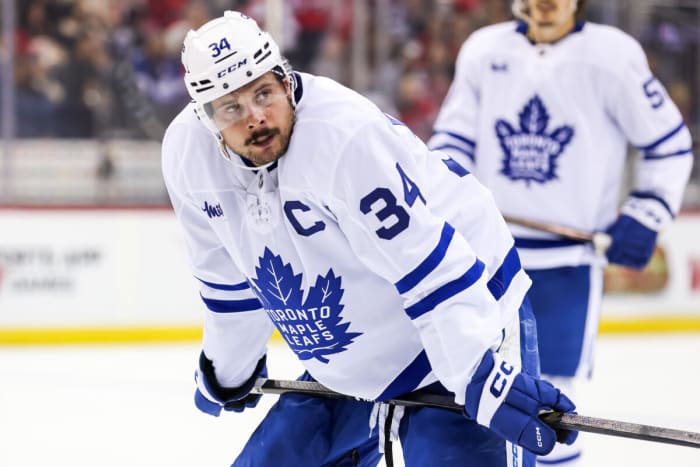
So, when the system fails, Matthews can disappear into frustration. It’s not from a lack of skill, but from the pressure he puts on himself to execute more perfectly. In short, Matthews is focusing on not making mistakes more than he is pushing his game down the opposition’s throats, which is how he played during the Rocket Richard phase of his career.
Whereas Nylander plays more intuitively, Matthews is the kind of player who carries the weight of expectations on his shoulders, and it can warp the way he plays for stretches.
The Contrast Between Nylander and Matthews Is Striking
The contrast is striking: Nylander adapts around the chaos, letting the game come to him. Matthews tries to impose order on the chaos, and sometimes that effort is what breaks him. Both are supremely talented, but their personalities shape how they handle stress, coaching, and team dynamics. Nylander flows; Matthews pushes. Nylander survives the system; Matthews struggles to master it.
I think that the best thing about Nylander is that he doesn’t always do what Berube asks — he plays his own game, trusts himself, and adapts. Matthews, on the other hand, tries to follow instructions, and that very willingness can put him in impossible spots. I think Matthews has interpreted his coach’s call to play low-event, north-south hockey as meaning his coach thinks he’s not good enough to win unless he changes. I don’t think Nylander believes that.
The Difference Between Nylander and Matthews Shapes the Team
On the ice, the contrast between Nylander and Matthews isn’t just personal — it ripples through the whole Maple Leafs lineup. It affects how the top six flows, how the puck moves in tight moments, and how the team responds when things get messy. Nylander’s more distant, measured approach lets him slot into chaos without breaking it, while Matthews’ all-in, perfectionist style can sometimes strain the team when the system falters.
If I’m right, for Maple Leafs fans, the clear lesson is that leadership isn’t only about skill or stats — it’s about handling the pressure, knowing when to push, and knowing when to let the game come to you. That difference, subtle as it may seem, is shaping what the Maple Leafs do on the ice.
More must-reads:
- Buffalo Sabres' GM change isn't about rebuilding
- New York sports radio legend reveals alleged reasons for Mets' clubhouse issues during 2025 season
- The 'Active NFL 5-passing-TD games' quiz
Breaking News
Trending News







Customize Your Newsletter
 +
+




Get the latest news and rumors, customized to your favorite sports and teams. Emailed daily. Always free!
PRIVACY POLICY EDITORIAL POLICY CONTACT US
ABOUT YARDBARKER TERMS OF SERVICE


Use of this website (including any and all parts and
components) constitutes your acceptance of these
Terms of Service and Privacy Policy.
This site is for entertainment purposes only.
There is no gambling offered on this site.
Gambling Problem? Call 1-800-Gambler.
