
-


Follow Us

 On Facebook
 On Flipboard
 On Twitter
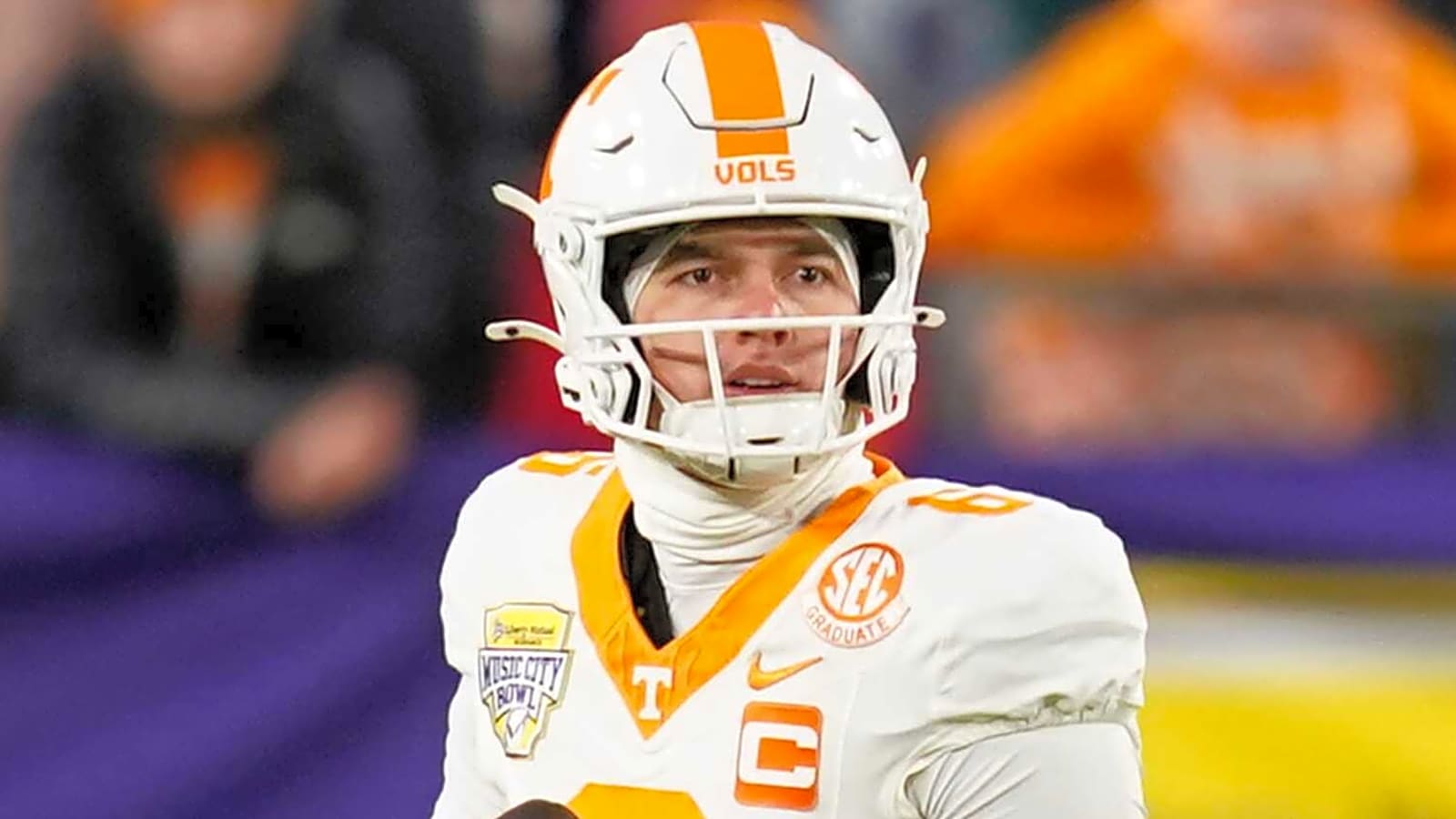
Joey Aguilar's TRO shows NCAA is losing control of eligibility enforcement
Joey Aguilar was granted a temporary restraining order on Wednesday in the Knox County Court.
Aguilar is seeking a fourth season of eligibility to play quarterback for the Tennessee Volunteers, citing that his time at Diablo Community College should not count against his Division I eligibility clock. This was not only a win for him, but a loss for the NCAA's ability to enforce eligibility rules.
Tennessee head coach Josh Heupel and his offensive staff are hoping for an Aguilar return to Knoxville. The signal-caller threw for 3,565 yards and 24 touchdowns last season. After bringing in a transfer portal class that emphasized improving the defense, the Vols look to be a playoff contender next year with continuity on the offensive side of the ball.
TRO is becoming common for athletes who want an extra year of eligibility
Similarly, Diego Pavia filed a lawsuit against the NCAA in November 2024, challenging the NCAA's rules on the eligibility of junior college athletes. It took a month for Pavia to be granted his TRO, and his case was settled with a preliminary injunction. Aguilar chose to file in state court and was granted a TRO within a week; he awaits his hearing on the preliminary injunction.
UPDATE: Joey Aguilar has been granted temporary eligibility to play another year of college football
— Vol Report (@AllVolReport) February 4, 2026
His hearing is scheduled for Friday, Feb 6th. pic.twitter.com/5HFnuaonr0
Aguilar and his representation decided to file the TRO in the Knox County Chancery Court on the state level. This has become a popular option for athletes seeking an extra year of eligibility. State courts read the NCAA rules differently and also provide sympathy to certain athletes. The NCAA has preferred to file cases in federal court rather than state court because federal courts are more likely to apply the same set of standards to rule on cases. In an in-state court, each case could be ruled upon differently, and as little power as the NCAA has had in the NIL era, it faces losing even more.
The NCAA may reach a point where it has to ask for federal legislation to try to get the college sports world back under control. Even that would put the NCAA at risk. The federal government could write legislation that further limits the NCAA's ability to enforce rules, or even worse, create a new oversight body that ends the NCAA.
There is no doubt that with this successful ruling, more athletes will seek an extra year of eligibility. It may be time for the NCAA to modify its rules to a more pro-style model. The athletes at this moment are more than amateurs, but the NCAA is stuck imposing decisions based on an old, outdated model that has lost steam since the beginning of the NIL era. This is just another example of authority lost by the NCAA.
More must-reads:
- Jon Sumrall jokes Florida should find way to bring back Tim Tebow amid NCAA's eligibility issues
- Lincoln Riley takes a shot at SEC while discussing the NIL era of college football
- The 'Super Bowl XLIX starters' quiz
Breaking News
Trending News



Customize Your Newsletter
 +
+




Get the latest news and rumors, customized to your favorite sports and teams. Emailed daily. Always free!
PRIVACY POLICY EDITORIAL POLICY CONTACT US
ABOUT YARDBARKER TERMS OF SERVICE


Use of this website (including any and all parts and
components) constitutes your acceptance of these
Terms of Service and Privacy Policy.
This site is for entertainment purposes only.
There is no gambling offered on this site.
Gambling Problem? Call 1-800-Gambler.
