
-


Follow Us

 On Facebook
 On Flipboard
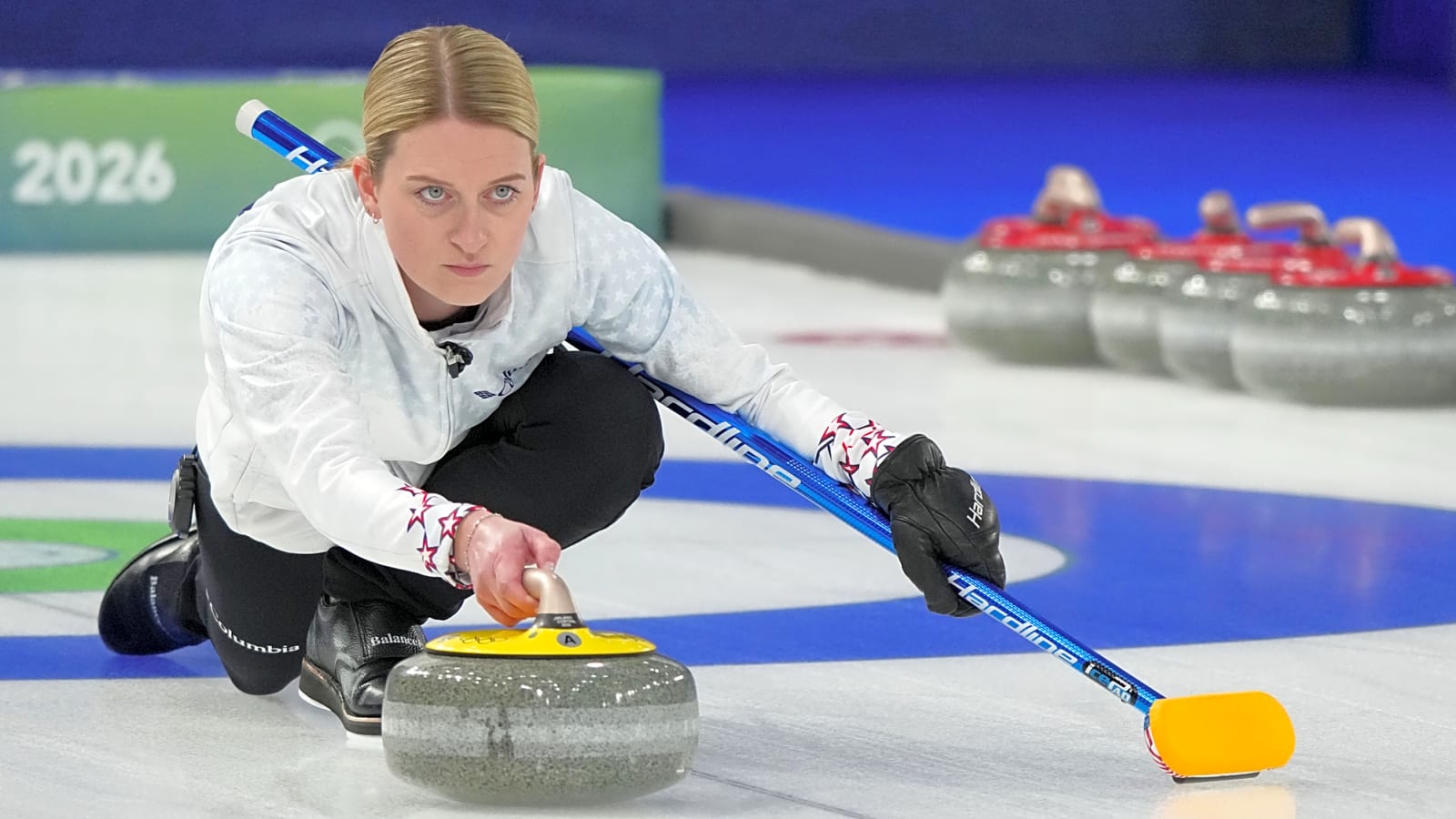
Explaining the power play in curling after gold-medal match at Winter Olympics
Those who tuned into the gold medal match in mixed doubles curling at the Milan Cortina Olympics on Tuesday learned all about the power play.
The power play is a common hockey term, but there's also one in curling. It differs significantly.
What do you need to know about the power play in curling?
A power play in curling is a move teams can use once per game. The team that has the hammer — whichever team delivered the final stone in the previous end, like an inning in baseball — gets to use it.
During the power play, the pre-positioned stones are moved to the sides of the ice instead of the center, creating a clearer scoring path. Teams score points when their rocks get closer to the button or target than the opponents'. The button on the ice looks similar to a bullseye on an archery board.
A power play in hockey, meanwhile, requires much less explaining. It occurs when a player is penalized and sent to the penalty box, giving one team a numerical advantage. Penalties depend on severity and can last two to five minutes.
The power play was used twice in Tuesday's match. Swedish brother-sister duo Isabella and Rasmus Wrana exercised it when they were tied with Americans Cory Thiesse and Korey Dropkin, 3-3, after the fifth end. They didn't exploit it, scoring just one point.
The American team then used its power play in the seventh end. It was much more successful. Thiesse and Dropkin collected two points and took a 5-4 lead.
That wasn't enough to beat the Swedes. The Americans failed to make a key shot in the last end. Isabella Wrana subsequently tossed the winning stone, securing a 6-5 win.
Isabella Wranaa had one shot to win the Gold medal... and she delivered for Sweden. #WinterOlympics pic.twitter.com/5m4TZXc52l
— NBC Olympics & Paralympics (@NBCOlympics) February 10, 2026
However, Thiesse and Dropkin are the first American duo to medal in mixed doubles curling. Consider that a moral victory.
USA curling pair Cory Thiesse and Korey Dropkin are the FIRST EVER American duo to medal in mixed doubles curling
— Bleacher Report (@BleacherReport) February 10, 2026
They got silver pic.twitter.com/BhRunRzpxa
It remains to be seen whether Thiesse and Dropkin will compete in the 2030 French Alps Games. If they do, at least the teammates know they have the power play down.


More must-reads:
- Sweden beat US to claim mixed doubles curling gold
- 'Didn't quite nail it': Mikaela Shiffrin faces her Olympic curse in Milan Cortina
- The 'Winter Olympic medal leaders' quiz
Breaking News
Trending News





Customize Your Newsletter
 +
+




Get the latest news and rumors, customized to your favorite sports and teams. Emailed daily. Always free!
PRIVACY POLICY EDITORIAL POLICY CONTACT US
ABOUT YARDBARKER TERMS OF SERVICE


Use of this website (including any and all parts and
components) constitutes your acceptance of these
Terms of Service and Privacy Policy.
This site is for entertainment purposes only.
There is no gambling offered on this site.
Gambling Problem? Call 1-800-Gambler.
