
-

-


Follow Us
-

 On Facebook
 On Flipboard
 On Twitter
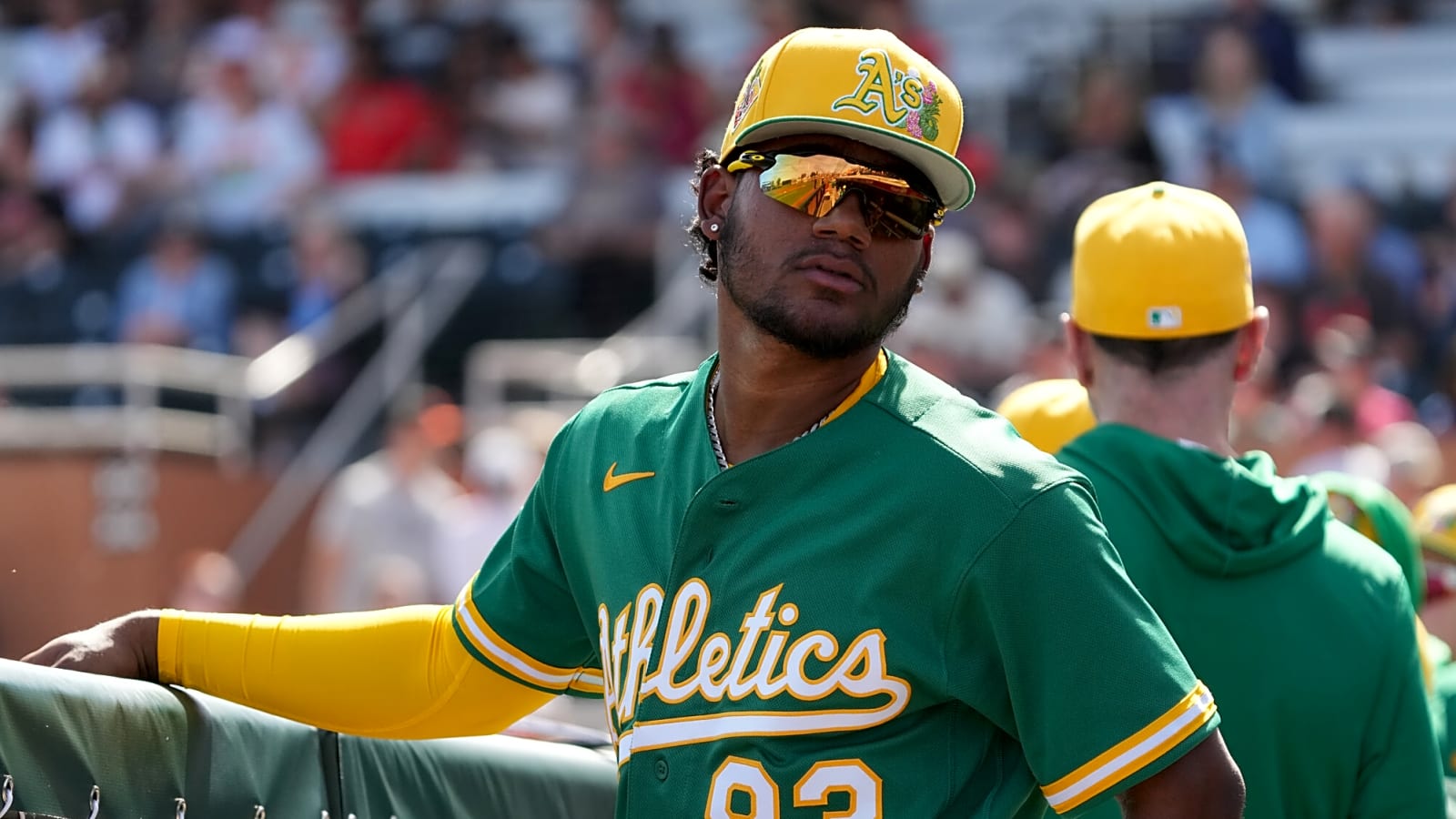
Athletics' most important prospect tests franchise’s long-term vision
When Leo De Vries signed with the San Diego Padres, the buzz felt real.
San Diego did not treat him like a depth piece. It paid for upside and projected him as a long-term shortstop. Within months, he was viewed as the most important prospect in its system, especially after years of trading away minor league depth to chase contention.
Now, he’s with the Athletics, and the reaction from fans has been predictable: excitement mixed with skepticism.
A reputation for liquidation
The Athletics have a reputation, and it's not for failing to develop players. They have actually done that part fairly well over the years. Matt Olson. Matt Chapman. Marcus Semien. Those players became impact big leaguers after coming through the organization. The coaching and evaluation side has rarely been the issue.
The frustration comes later.
Olson and Chapman were dealt before reaching the expensive stages of their careers. The teardown in 2022 sent several recognizable names elsewhere. It felt less like a reset and more like a liquidation. For many observers, it created the sense that the Athletics build talent only to move it.
There is context behind those moves. Payroll limitations and ownership constraints. Competitive windows that closed faster than expected. When a high-ceiling teenager lands in that system, people wonder whether he will ever anchor a contender there or eventually headline another trade package.
De Vries is young, but scouts already point to advanced traits. His plate discipline stands out. The swing is compact and controlled. Power projection exists without selling out for it. Defensively, he looks comfortable at shortstop. Smooth actions. Clean footwork. Strong enough arm.
Leo De Vries’ first hit of the spring is a base knock the other way!
— The Call Up | An MLB Prospect Podcast (@The_CallUpPod) February 21, 2026
Our #9 prospect will be someone to monitor closely this year. pic.twitter.com/ycjZE0EmoS
Rebuilding teams sometimes push prospects faster than ideal to spark optimism. A slow burn often works better with players this young. If the A's let him climb level by level without rushing exposure to upper minors pitching, his development arc should remain intact.
Have the Athletics shifted their long-term vision?
There is also a subtle shift worth noting. The Athletics have recently shown signs of trying to lock up younger players earlier than in past cycles. Whether that becomes a consistent strategy remains to be seen, but it complicates the automatic assumption that every rising player will be flipped.
Calling the Athletics a franchise that wastes young talent oversimplifies the situation. They develop and they compete in cycles. They also trade aggressively when the math changes. The pattern frustrates fans more than it ruins careers.
For De Vries, the spotlight grows brighter now. Not because his tools changed, but because the expectations did. The A's need cornerstone pieces as much as any organization in transition.
The question is not whether he can grow there. It is whether he will still be there when that growth finally begins to materialize.
More must-reads:
- Athletics Have Made Extension Offer To Nick Kurtz
- Dodgers may not have key starter for Opening Day
- The 'Last 40-homer season by MLB team' quiz
Breaking News
Trending News







Customize Your Newsletter
 +
+




Get the latest news and rumors, customized to your favorite sports and teams. Emailed daily. Always free!
PRIVACY POLICY COOKIE POLICY CONTACT US
ABOUT YARDBARKER TERMS OF SERVICE


By using this site, you agree to our Terms of Service and Privacy Policy.
This site is for entertainment purposes only.
There is no gambling offered on this site.
Gambling Problem? Call 1-800-Gambler.
