
-

-


Follow Us
-

 On Facebook
 On Flipboard
 On Twitter
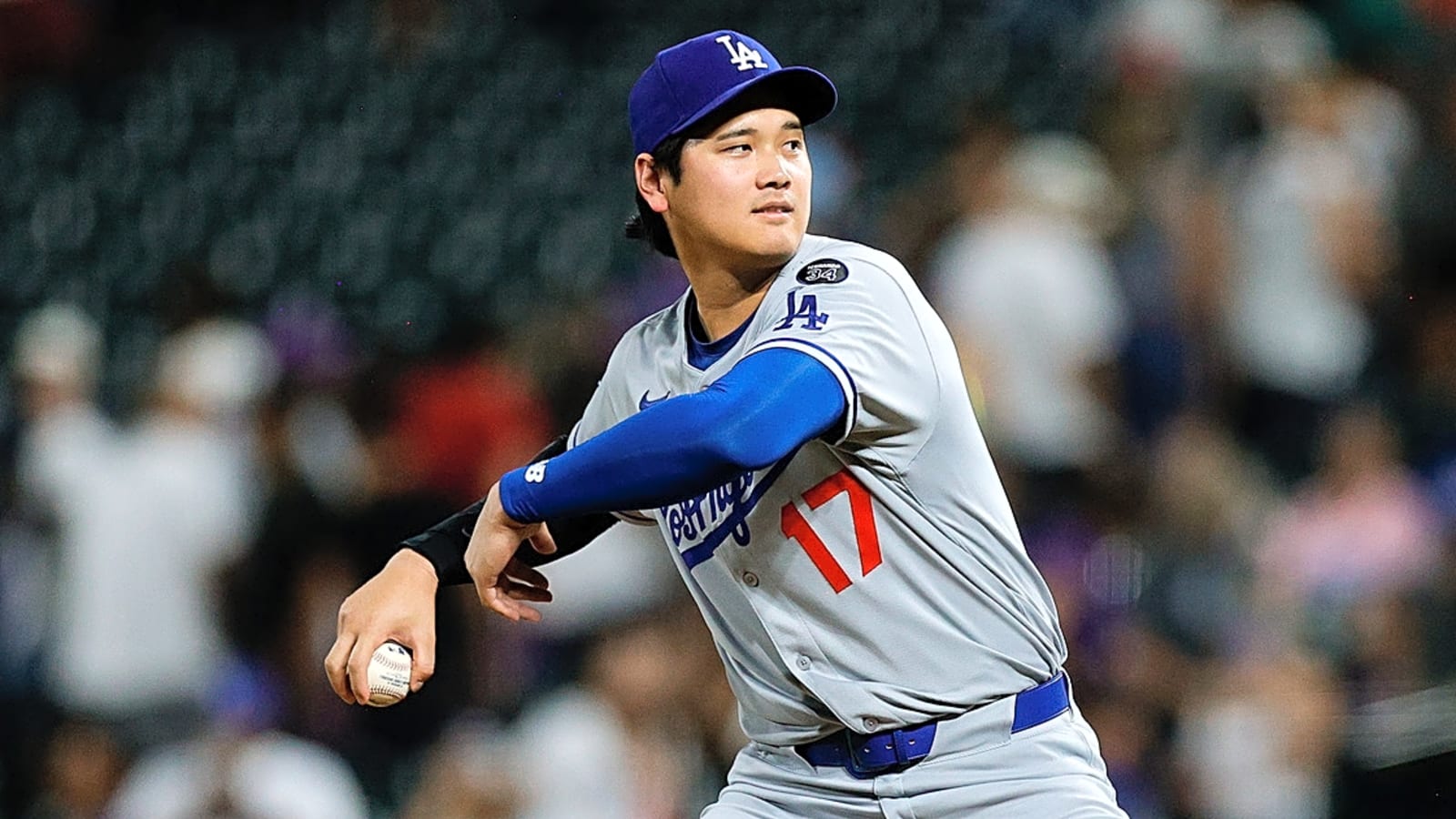
Could Shohei Ohtani change how pitchers are judged for the Cy Young?
When Shohei Ohtani enters an awards conversation, the discussion usually goes straight to one place.
Most Valuable Player.
That has become the default reaction over the last few years. When someone hits in the middle of the lineup AND steps on the mound every few days, voters do not have to think extremely hard about the value argument. The Most Valuable Player Award race has run through Ohtani (he's won in three straight years) for exactly that reason. Even though Ohtani has not pitched for a year and half, baseball fans knowing what he is capable of are anxiously awaiting his return to the mound for the Dodgers.
With Ohtani planning to take the mound in 2026, let's look back at his most recent pitching stats with the Los Angeles Angels.
In 2022 he threw 166 innings and finished with a 2.33 ERA. He also struck out 219 hitters. That works out to twelve strikeouts per nine innings, one of the highest rates in the league that season. Only a handful of starters were missing bats at that level.
Ohtani followed it up with another strong year in 2023 before injuries cut his pitching season short. In 132 innings he recorded 167 strikeouts and finished with a 3.14 ERA.
The strange part is what was happening at the plate at the same time.
In 2023 Ohtani hit 44 home runs and finished the season with a .654 slugging percentage. The year before he launched 34 homers and posted an .875 OPS.
Rethinking how the Cy Young Award is evaluated
Cy Young voting has always focused on what happens on the mound. That makes sense in most seasons. Pitchers are judged by their ERA, their strikeouts and the workload they carry across a full year. But Ohtani does not exist in a typical baseball category. When he takes the mound, he is not just another starter trying to stack quality outings. He is also one of the most dangerous hitters in the game.
That raises a fair question about how value is measured. If two pitchers produce similar numbers on the mound, and one of them also happens to hit 35 or 40 home runs, should that extra production count for something in the Cy Young Award race? Right now the answer has always been no. Pitching awards are treated as separate from everything that happens at the plate. But Ohtani’s presence in the sport makes that line feel a little less clear than it once did.
Awards exist to recognize performance. If Ohtani delivers a season where he is one of the best pitchers in baseball, and happens to be raking at the same time, voters should judge that season like they would any other ace.
How Ohtani differs from past dual winners
Pitchers have won both the Cy Young Award and the Most Valuable Player Award in the same season before. It has happened eleven times. Names like Sandy Koufax in 1963 and Bob Gibson in 1968 season immediately come to mind. Others followed over the years, including Roger Clemens, Justin Verlander and Clayton Kershaw.
But those seasons all had one thing in common. Each of them were recognized for their performance on the mound.
Winning the Cy Young is already difficult. Doing it while also launching 35 or 40 home runs would be something baseball has never really seen before and may never see again.
Ohtani already forces voters to think differently in the MVP race. The Cy Young conversation may eventually need the same adjustment too.
More must-reads:
- Shohei Ohtani is doing something even Babe Ruth never had to do
- Dave Roberts ‘Not Surprised’ By Shohei Ohtani & Yoshinobu Yamamoto’s WBC Performance
- The 'Team USA 2026 WBC roster' quiz
Breaking News
Trending News







Customize Your Newsletter
 +
+



Get the latest news and rumors, customized to your favorite sports and teams. Emailed daily. Always free!
PRIVACY POLICY COOKIE POLICY CONTACT US
ABOUT YARDBARKER TERMS OF SERVICE


By using this site, you agree to our Terms of Service and Privacy Policy.
This site is for entertainment purposes only.
There is no gambling offered on this site.
Gambling Problem? Call 1-800-Gambler.
