
-

-


Follow Us
-

 On Facebook
 On Flipboard

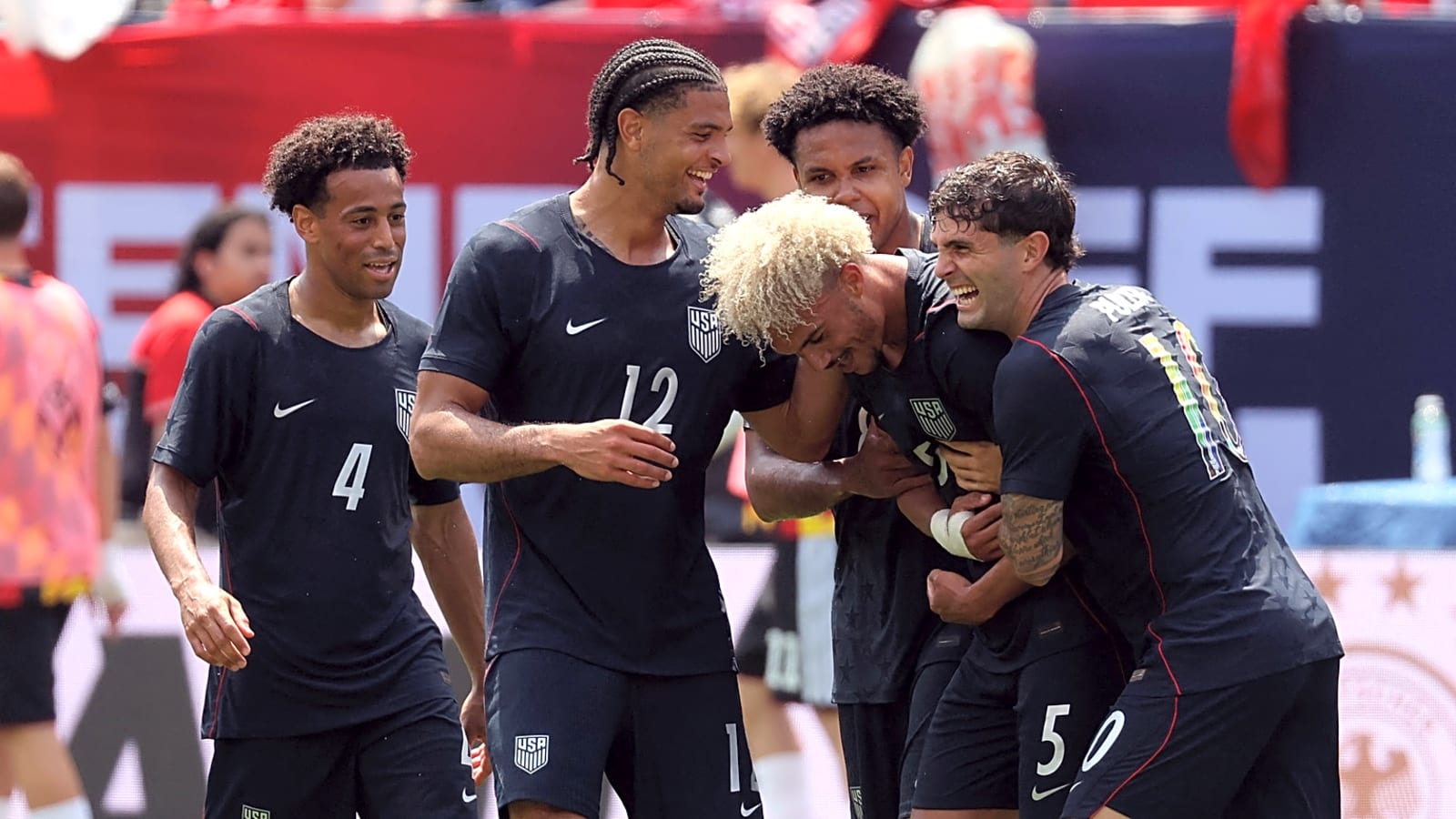
USMNT vs. Germany: Key takeaways from a fired-up friendly
The United States Men's National Team fell 1-2 to Germany in Chicago, Illinois, in its final send-off match before the 2026 FIFA World Cup.
German striker Kai Havertz opened the scoring in the second minute, but American left back Antonee Robinson leveled the game at the end of the first half with a long-distance screamer. Germany's Leroy Sane slotted a goal past USMNT keeper Matt Freese in the second half to seal the game in Germany's favor.
The USMNT was not expected to win this match; it scheduled this friendly against Germany to test its mettle against the world's best. When viewed through that lens, its close, hard-fought loss was no tragedy, but it did halt some of the momentum the team picked up after beating Senegal 3-2 in Charlotte, North Carolina.
Here are the key takeaways from the USMNT's acceptable, but not exactly inspiring, performance:
Antonee Robinson was ready for that goal...
Antonee "Jedi" Robinson is one of the USMNT's best players; stack-rank him against any left back in the world and he'll come out looking competitive. But Robinson isn't a goalscorer in the traditional sense — he's much more of a creator than a finisher — so when he finds the back of the net, it's headline news. His last goal for the USMNT was way back when in 2023.
Until now. Robinson scored a glorious long-range screamer off the bar to equalize the game at 1-1 in the first half. It was a cool finish from an infrequent scorer. And it was telling that his celebration — a pretty impressive acrobatic roundoff back-tuck situation — was just as on-point as his goal was. If Robinson hadn't been expecting to score, he wouldn't have thrown a Cirque du Soleil move like that off the cuff. He was drilled and he was ready...and his high-flying celebration proved it.
Robinson wound up limping off in the second half; here's to hoping he'll be back to his back-flipping best in time for the World Cup.
...but Matt Freese wasn't ready for Germany's.
This fixture got off to a rough start for the USMNT when Germany striker Kai Havertz slalomed past defender Miles Robinson and fired an easy header past goalkeeper Matt Freese at the near post. It was, without question, the simplest goal Havertz will score this summer, and it was downright embarrassing for the USMNT.
Plenty of blame can be laid at the feet of Robinson — he lost Havertz, after all — but Freese deserves some criticism too. This isn't the first time this season he's been beaten at his near post in the early minutes of a game. He kicked off his MLS season with NYCFC by conceding a near-identical goal in a near-identical position. L.A. Galaxy striker Joao Klauss ran the ball in rather than heading it, but he found his space because Freese, well, froze — and so did Havertz in this match.
The USMNT still hasn't decided which of its goalkeepers will start its World Cup fixtures against Paraguay, Australia and Turkiye. Freese's repeated failures at the post just might hand the advantage to his teammate, Matt Turner.
Mauricio Pochettino has some lineup tinkering to do.
When the USMNT took down Senegal in Charlotte in late May, it played a fluid, ever-changing system with three central defenders holding down the fort in front of goal. It's the same system that pushed the USMNT to wins over Japan, Australia, Paraguay and Uruguay in 2025.
Against Germany, though, Pochettino flipped the script. His lineup was still fluid, but it featured two proper center backs — captain Tim Ream and Miles Robinson — alongside full backs Jedi Robinson and Alex Freeman. (Freeman, to his credit, drifted in to serve as a third center back sometimes, but he was heavily involved in forward build-up, too.) This traditional four-man setup is the same one Pochettino tried against South Korea, Belgium and Portugal in recent matches, and it led to losses every time.
Pochettino keeps trying this four-man model because it's the system that gets the highest number of his top-tier players on the field at one time. His three-at-the-back system sacrifices an attacking midfielder for a central defender, so while it might deliver better results, it does so with riskier players.
Which system will Pochettino choose for the World Cup? It's difficult to say. The results seem to point firmly in favor of the three-at-the-back model, though, and it's interesting to think about how the USMNT would've stacked up against Germany if it had tried that from the start.
The USMNT's Weston McKennie midfield gamble might not have paid off.
When the USMNT's World Cup roster was announced, it was met with a fair amount of confusion. Why, fans wondered, was Pochettino bringing just four central/defensive midfielders, one of whom was free-roaming attacking midfielder Weston McKennie? How would that work in practice?
Pochettino assured the media that he expected McKennie to drop deeper and play a true midfield role to cover the gaps. The good news is that Pochettino kept his promise: McKennie played in a deeper role against Germany from the start. The bad news is he looked pretty ineffective there.
McKennie needs freedom. He's a player who thrives in open space and loves causing chaos. By boxing him into a gritty, water-carrier role alongside Tyler Adams, Pochettino strips McKennie of the qualities that make him great (and keeps a true central midfielder from delivering in that role). If that's where Pochettino wants to play him, that's going to be a big problem for this team moving forward.
The USMNT will kick off its World Cup on Friday, June 12 against Paraguay in Inglewood, California.
More must-reads:
- Group claims Iranian, African journalists denied visas for World Cup
- Report: Iran World Cup team issued visas to compete in U.S.
- The ''Madden' cover athletes' quiz
Breaking News
Trending News


Customize Your Newsletter
 +
+




Get the latest news and rumors, customized to your favorite sports and teams. Emailed daily. Always free!
PRIVACY POLICY COOKIE POLICY CONTACT US
ABOUT YARDBARKER TERMS OF SERVICE


By using this site, you agree to our Terms of Service and Privacy Policy.
This site is for entertainment purposes only.
There is no gambling offered on this site.
Gambling Problem? Call 1-800-Gambler.
