
-


Follow Us

 On Facebook
 On Flipboard
 On Twitter
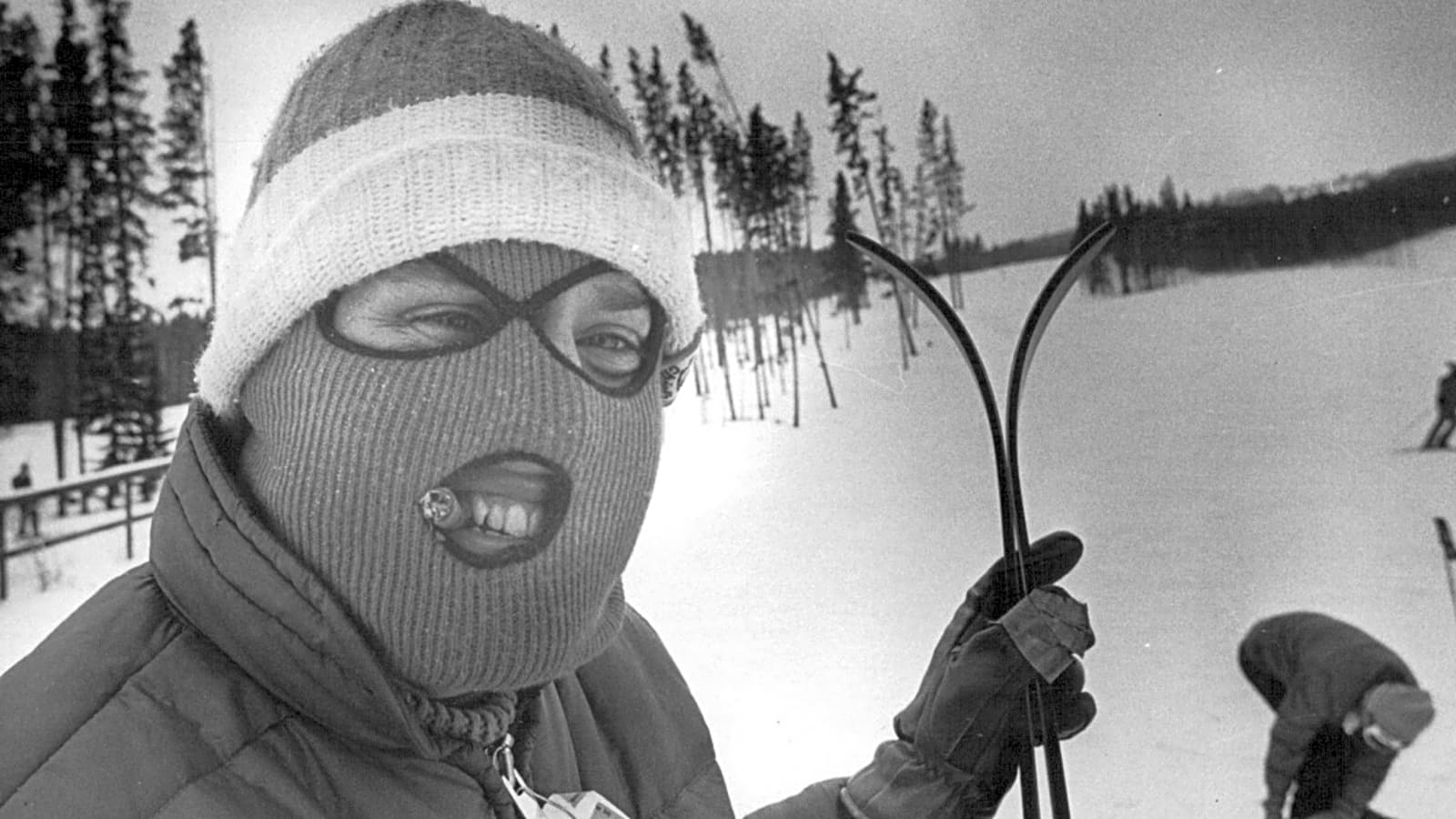
Connor Ryan, a professional skier and Lakota activist, speaks to me in long, eloquent streams that move swiftly in myriad directions before coming together in strong, poignant conclusions. He’s talking about skiing, but also so much more; its intersectionality, how it beautifully and simply frames meaning. How it embodies freedom.
But as ICE agents roam the streets of Minneapolis, as our health and human services department deplores the use of science, and as myriad other turbulent forcings wreak havoc in between, it seems that nothing, least of all skiing, could stem the flow. Such upheaval has rarely been seen in our country before, reflecting tumultuous years like 1968, whose stark divisions were notably referenced by the elder Robert F. Kennedy when he spoke of America’s “deep malaise of the spirit” in what was a seminal, tumultuous year.
“Demonstrators shout down Government officials, and the Government drafts protesters. Anarchists threaten to burn the country down, and some have begun to try, while tanks have patrolled American streets and machine guns have fired at American children,” the elder Kennedy wrote in The New York Times in February of 1968 of the tumult then induced by the Vietnam War that eerily echoes today. “Our young people-the best educated and comforted in our history-turn from the Peace Corps and public commitment of a few years ago to lives of disengagement and despair, turned on with drugs and turned off America.”
Kennedy then elicited William Butler Yeats’ “The Second Coming” and its apocalyptic imagery, inspired by the destruction of post-World War I Europe:
Things fall apart; the centre cannot hold;
Mere anarchy is loosed upon the world.
The father of Robert Fitzgerald Kennedy, Jr., elicited an existential struggle then befalling the United States; one that mirrors the turbulence of today. And something as a pastime like skiing seems little poised to confront.
But while a skier and activist like Connor Ryan may himself strongly note the injustices he sees, broadcasting them on Instagram where his perspectives are celebrated but also often met with bigotry and hate, he sees that in the midst of chaos, skiing still has purpose, and not merely as an escape; that it can stand as a bulwark of conviction in trying times.
“At the most simple level, in a lot of ways, it's learning to take the ethics that we have, especially as backcountry skiers, and apply them more broadly to society and our culture and the world that we live in,” he says. “I have to stay connected to my why and skiing has always been my why,” Ryan continues. “And it's gotten me this far and given me the beliefs that I have and the values that I have.”
Lately, it’s become ever more difficult—perhaps especially as a mere skier—to make sense of the world. News segments and social media feeds elicit unmitigated entropy; an emerging wilderness that skiing seems woefully tasked to grapple with, aside from simply being an escape from. A devolved, perhaps insane political landscape has led to a breakdown in normalcy that has many questioning what is becoming of our country.
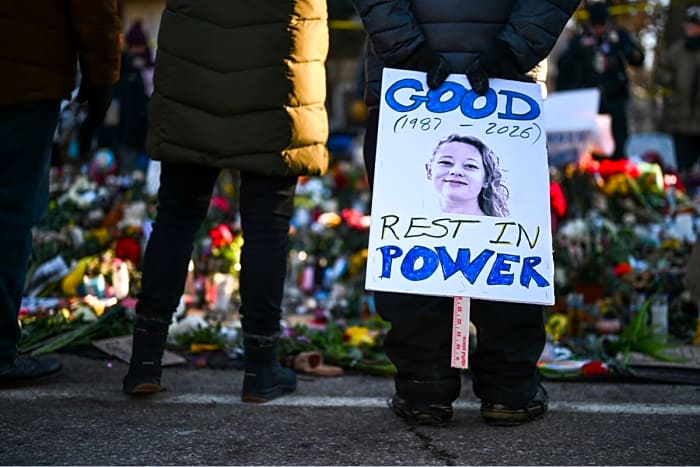
And January 7th, 2026, was a particularly horrible point in that topography. In Minneapolis, a masked ICE agent shot and killed Renee Nicole Good as she attempted to flee after apparently blocking a street ICE was moving down in their very politicized and perhaps racist crackdown on Somali and Hispanic immigrants in the Twin Cities. Perhaps she had broken a law; perhaps her actions frightened the agents. But above all, the shooter’s actions were far from in kind, likely unlawful, and brutally vulgar. And they were undeniably permanent. Regardless, Kristi Noem, the Secretary of Homeland Security, piled on, hyperbolically calling Good a ‘domestic terrorist.’ At the same time, President Donald Trump agreed with Vice President JD Vance’s baseless, fear-baiting assertion that Good was part of a broader left-wing conspiracy.
The moment was not only traumatic; it was the culmination of a worrying descent into wanton use of force and aggression that was affecting life for millions, both within and outside of the United States. And Trump’s use of ICE and the National Guard to intimidate blue cities and people of diverse backgrounds was but part of that. Five years on, the administration had taken drastic steps to distort the storming of the Capitol that occurred on January 6th, 2021, with the official White House website stating in overtly political terms that “President Trump took decisive action to pardon January 6 defendants who were unfairly targeted, overcharged, and used as political examples. They were not protected by the leaders who failed them. They were punished to cover incompetence.” A statement that seemed to ignore the insurrectionist gravity, and unlawful violence, of that day.
Moreover, just days before Good was killed, Venezuela’s president Nicolás Maduro—no matter his own transgressions—was removed from power by US commandos in a deliberate breach of the country’s sovereignty. But as historian and political analyst Heather Cox Richardson writes, Venezuela's vast oil resources seemed fated not only to fall under the control of the United States, but perhaps directly under that of Donald Trump.
“Lisa Desjardins and Nick Schifrin of PBS Newshour reported this afternoon that Trump administration officials have told lawmakers that they plan to put the money raised from their seizure of Venezuelan oil into bank accounts outside the U.S. Treasury,” Cox Richardson wrote in a Facebook post on January 7th. “Desjardins clarified that [s]ources said they understood these as similar [to] or decidedly ‘off-shore’ accounts.”
“This information—which sure looks like Trump just announced he was planning to take control of Venezuela's oil personally and is planning to stash the cash in offshore accounts—jumped out at me,” Richardson concluded.
After just a year of Trump’s second term but now years into an ever-devolving political discourse, the week was a reminder that we kept arriving at a more fraught crossroads. On January 1st, the Southeast portion of Colorado, a state home to some thirty ski areas in ever more affluent locales but whose plains counties have far fewer resources, had been denied funding for a pipeline intended to bring clean water to one of the poorest parts of the state.
Federal aid for recovery from wildfires and flooding has also been withheld, all part of a brinksmanship to bring the liberal state to heel. Life had become so permeated by devolving partisanship and rising repression that skiing, especially writing on it, but even the act itself, hardly seemed important any longer.
But perhaps in such a time, something as trivial as skiing can indeed play a part in the way forward. While the ski bum of yore may have escaped to the snowy hinterlands when nuclear annihilation and societal expectations seemed more pressing, and while that mantle is still carried by a brave few, retreating into skiing can seem a fool’s errand, or even irresponsible, in today’s world. Celebrating the stoke of the ski life, when issues pressing on mountain towns and ski culture like affordability, climate change, and unmitigated growth are at the forefront, reeks of avoidance. And while the scourge of twenty-four-hour news in a pocketed smartphone does almost nobody good, it remains the fact that our information age renders these topics as far from mysterious. No matter how prudent it can be to celebrate the ski life, these issues look us all right in the eye.
In such times, it becomes hard to look away and retreat into the trope that skiing is beautiful, an escape. While the term may indeed be overused and, like nearly everything else, has become politicized, skiing in nearly all forms remains privileged. Not only is mainstream, resort-bound skiing woefully expensive and exclusive, but even more affordable options like cross-country skiing are often inaccessible for myriad reasons. From broken conduits of information dispersal to unaffordability and beyond, our escape is one that not everyone has the opportunity to take to.
But at its best, skiing can be part of the solution; perhaps a woefully small part, perhaps a seed for something bigger. But it nonetheless can play a part.
“I guess at the most simple level, as an indigenous person in the United States, and I think as many people who are not indigenous are beginning to feel, we're not actually as free in this country as we've been told that we are," Ryan says. "But when you're skiing, you get a feeling of liberation that is unprecedented. And when you're able to tap into that essence of what liberation feels like, then it motivates you to have an objective that you're aiming for that you want to share with the world. And it is this feeling that we get from skiing.”
Undeniably, conglomeration and unaffordability reign supreme in our sport and subculture. But when stripped of those, the sport itself—and the pure, unadulterated freedom that defines it—reflects what we all want—freedom, meaning, happiness.
And at its core, our sport so embodies that. But just as much, core ski culture can also be subversive—a band of bums, free-heelers, mountaineers, and more who renounce not only the mainstream, but brutal conventionalism.
A whiplash of conventionalism has indeed come to the fore in our society, perhaps at a time when it is more difficult than ever to stand your ground, but also when it may be more important than ever to do so. All at a time when diversity initiatives and equality measures have come under fire, not just in corporate America, but even in the stereotypically liberal ski industry.
“In 2020, 2021, 2022, these times right after the killing of George Floyd and the Black Lives Matter movement [was] at its height, there was this DEI movement alongside of it. And I'm someone who definitely found a new sense of privilege and authority and ability to use my voice during that time,” Ryan shares.
But as DEI initiatives have been dismantled at many corporations and government entities, and as many companies now step in line to a leader they before renounced, that moment has been diminished, affecting many. “What we've seen in the years since 2022, 2023 is that a lot of these corporations, institutions, and organizations have backed down from their commitments that they made to communities of color, to indigenous people. And in stepping away from those commitments and emphasizing what is profitable, it's really shown me how the systems of industry and capitalism aren't aligned with what our actual values are as people unless they are what seems to be in the moment the most profitable or the most beneficial to them as entities,” Ryan notes.
Leery of dissenting in a tumultuous time, many ski brands have also shied away from diversity initiatives, something Ryan has experienced firsthand. “That's really affected me personally. I've seen my income get cut in half in the last couple years because there's sponsors who see me as a liability or as a risk. It's the same companies that were telling me they loved everything I had to say in 2021.”
If skiing could be succinctly pressed into the American canon, it would likely, if perhaps in cliche form, be best exemplified by Thomas Jefferson’s appeal to life, liberty, and the pursuit of happiness. But more than that, skiers find meaning not in simply pursuing their craft alone, but as part of a group, peacefully enjoying what appears at first to be a trivial endeavor, but, like many pursuits, is foundational to living a meaningful life.
“The real issue here is that we have a regime that is separating people from their ability to live a joyful life. And the point of our lives as human beings is to experience joy together, to make a life that has meaning. And so I think it's very important that we don't get disconnected right now from the things that have given us meaning,” Connor Ryan says.
Moreover, like many outdoor pursuits, skiing has been the bedrock of Ryan’s ever-evolving philosophy on the intersectionality of identity, politics, and meaning. “Skiing has taught me the importance of the snow pack. Not just in this singular way as a skier, but because I study the science, the hydrology, the weather systems that are coming together all the time,” Ryan notes. “I've also become way more in tune with my ecosystem. I've also begun to care about the governance of the Colorado River Compact and all these complicated political things because I find myself right in the nexus and the intersection of all these issues. And so I think it's more important than ever to keep skiing.”
Nearly sixty years on, and in a manner that brings to light cycles in motion, that elicits the repetition of history, the words written by Robert Kennedy in the winter of 1968 speak to the intangible things being that which has the most worth.
“We have fought great wars, made unprecedented sacrifices at home and abroad, made prodigious efforts to achieve personal and national wealth. Yet we ourselves are uncertain of what we have achieved and whether we like it,” Kennedy wrote.
“Yet the gross national product does not allow for the health of our youth, the quality of their education or the joy of their play. It does not include the beauty of our poetry or the strength of our marriages, the intelligence of our public debate or the integrity of our public officials. It measures neither our wit nor our courage, neither our wisdom nor our learning, neither our compassion nor our devotion to country.”
In a manner now legendary, Kennedy elicited an appeal to community. And with an analogy to backcountry skiing—where the party moves together, listens to each other, and searches for the transcendence of a moment as one—Ryan does the same. “In order to do truly great things, we've got to do them together,” he says.

Our country remains at a fraught juncture, one unique and tumultuous, but not unlike it has experienced before. In his 1968 New York Times article, Kennedy noted in part that “we search for answers to specific problems; but more than this, we seek to recapture our country. We have not yet discovered how to do it.”
History has repeated itself. Here we stand at a crossroads, again with militarized police roaming our streets and a nation struggling with existential dilemmas on what direction our republic now takes. But as Connor Ryan notes, perhaps it’s our passions—for us, skiing—that can frame our way forward.
“I think it's the most important thing in a really silly way, which is that skiing is what defines so many of our lives and gives us our humanity in a lot of ways,” Ryan says. “Our deepest experiences of joy are very often then what we orient our lives around. And that’s what's so beautiful about our sport.”
About The Brave New World of Skiing Column
This article was written by POWDER writer Jack O’Brien for his bi-weekly ‘Brave New World of Skiing’ column. Click below to read the previous column, 'The Legacy of Tunnel Creek and Skiing’s Complicated History Grappling With Death'.
More must-reads:
- When beef between Buccaneers' Baker Mayfield, Falcons' Kevin Stefanski reportedly began
- Mel Kiper Jr. makes big statement about Raiders, Lamar Jackson trade rumors via mock draft
- The 'Last three-passing-TD playoff game' quiz
Breaking News
Trending News







Customize Your Newsletter
 +
+




Get the latest news and rumors, customized to your favorite sports and teams. Emailed daily. Always free!
PRIVACY POLICY EDITORIAL POLICY CONTACT US
ABOUT YARDBARKER TERMS OF SERVICE


Use of this website (including any and all parts and
components) constitutes your acceptance of these
Terms of Service and Privacy Policy.
This site is for entertainment purposes only.
There is no gambling offered on this site.
Gambling Problem? Call 1-800-Gambler.
