
-

-


Follow Us
-

 On Facebook
 On Flipboard
 On Twitter
In Atlanta, a crew stands beneath a massive retractable roof, where each of the eight panels weighs 500 tons and stretches 220 feet. High above, the white ETFE membrane contains a Mercedes-Benz star, fused so deeply into the roof that it cannot be peeled off or painted over. As Adam Fullerton, VP of Operations at Mercedes-Benz Stadium, put it, “literally built into the material.”
Across the country, 10 other NFL stadiums face a similar challenge, as FIFA wants every trace of corporate identity erased before the first whistle blows. The countdown stands at seventy-eight days.
The Biggest Rebrand in Sports History
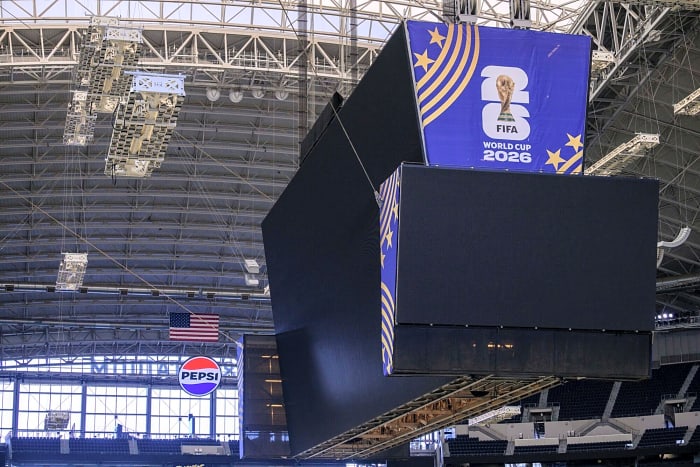
All 11 U.S. World Cup venues are NFL stadiums with long-term naming-rights deals, often worth tens of millions each year: for the tournament, MetLife becomes “New York New Jersey Stadium,” AT&T becomes “Dallas Stadium,” and SoFi becomes “Los Angeles Stadium.” Fourteen of the 16 venues across three countries must shed or modify their commercial names, while Estadio Azteca and BC Place, which begin with non-corporate names, will use neutral, tournament-approved labels.
The other stadiums signed contracts committing to hand over their venues “free and clear.” The first 48-team World Cup demands a blank canvas.
A Pattern Nobody Questioned
In 2022, Qatar built seven new stadiums, so no legacy brands needed removal and no naming-rights sponsors posed an obstacle. The 2026 World Cup marks the first time in decades the event will use only existing venues, and many expected FIFA to be flexible since the organization did not fund the infrastructure. That expectation quickly faded.
NFL stadiums had minimal de-branding for the 2025 FIFA Club World Cup, but the full World Cup comes with much stricter rules. Even now, some U.S. stadiums still have no solution for rooftop or aerial logos visible from above.
The Exemption That Backfired

Mercedes-Benz Stadium spent a year and a half in negotiations, arguing that removing the roof emblem could damage the retractable mechanism, since each of the eight panels is extremely heavy. FIFA eventually agreed to a rare exception, but the result is that for the World Cup, the stadium will keep its roof closed to protect the field and maintain a controlled environment.
The stadium’s signature architectural feature remains out of view, so the logo stays, but spectators inside will not see the sky. Eighteen months of discussion produced a closed roof. This is what “winning” looks like when FIFA controls the terms.
The $1.8 Billion Machine Behind the Mandate

This policy exists for one reason: money. FIFA’s top sponsors pay between $100 and $200 million each, every four years, for exclusive exposure; if Hyundai-Kia saw competitor ads inside Mercedes-Benz Stadium, the value of that exclusivity would collapse. FIFA made about $1.8 billion from marketing rights in the last World Cup cycle, and for 2023–26, projected marketing and sponsorship revenue rises to $2.5 to $2.8 billion.
That math only works if every competing brand disappears from every camera angle, every broadcast, and every aerial shot. Stadium owners erase their own branding, FIFA captures the windfall, and the hosts pay for the privilege of being erased.
Two Thousand Logos, One Stadium
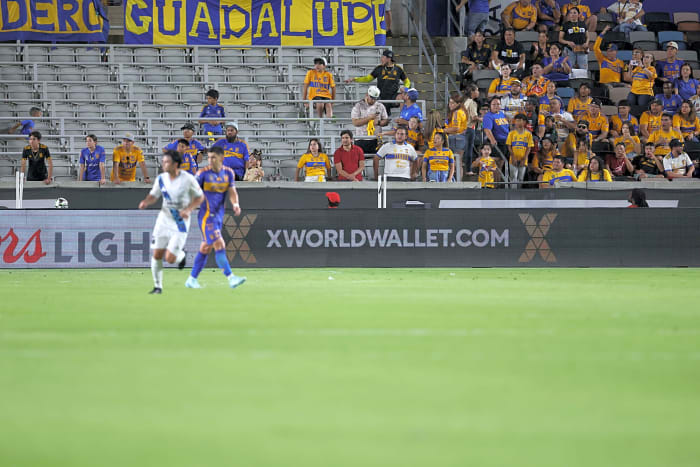
Mercedes-Benz Stadium must hide or remove nearly 2,000 corporate logos, and the work begins in late May, aligned with Atlanta United’s season break. Houston’s World Cup Host Committee set aside a seven-figure budget for commercially cleaning NRG Stadium. Drew Bryant, chief creative officer at Elevate, the group overseeing venue transformations, called the scope “quite Herculean.”
Across all 11 U.S. stadiums, the temporary loss of naming rights and signage contracts totals hundreds of millions of dollars, with the stadiums covering those costs and FIFA keeping the sponsorship revenue.
The Ripple Nobody Budgeted For

Naming-rights sponsors, who paid hundreds of millions for brand visibility, lose exposure during the most-watched sporting event on earth, with the audience projected to reach 5 billion viewers. In Atlanta, broadcasters may avoid aerial shots or digitally remove the roof logo, even if FIFA technically permitted it.
If a stadium fails to meet FIFA’s strict standards before kickoff, the organization can impose penalties or relocate matches, causing public embarrassment for the host city. The financial burden flows downward and the revenue flows to Zurich, while future host cities are monitoring these outcomes closely.
The Precedent That Changes Everything

Mercedes-Benz Stadium’s exemption is unprecedented for this tournament, as very few World Cup host venues have ever retained visible corporate branding on fixed infrastructure. FIFA grants flexibility only when physical impossibility is demonstrated, not when the cost is unreasonable or the timeline is tight.
The entire policy shifts in focus: this World Cup consists of 104 matches at 16 venues in three countries, and each one serves as a temporary retail display for FIFA’s corporate partners. The clean stadium is not clean; it is colonized.
The Clock Nobody Can Stop

Hard Rock Stadium in Miami, Lumen Field in Seattle, AT&T Stadium in Dallas, NRG Stadium in Houston, and Lincoln Financial Field in Philadelphia still face unresolved challenges for aerial branding with fewer than 100 days until the tournament.
FIFA hired specialist firms to control the visual dressing of venues, centralizing design authority away from stadium operators, and sports venue operators worldwide will factor de-branding costs into future hosting bids. Once the invoices arrive, fewer cities will volunteer for this arrangement.
The Fight That Hasn’t Started Yet

Stadium owners may begin inserting FIFA tournament exemption clauses into future naming-rights contracts, protecting sponsors from brand erasure never agreed to in advance. Some observers have speculated that venues could challenge the mandate through antitrust or contract law, arguing it constitutes unreasonable restraint of trade, and a single legal challenge from a major stadium could fracture FIFA’s entire de-branding model.
The World Cup is not a sporting event hosted in stadiums; it is a sponsored product displayed inside borrowed buildings, and most people will watch 104 matches this summer without ever realizing whose names were erased to make it possible.
Sources:
The Athletic — “NFL stadiums must scrub all branding for FIFA’s World Cup. One roof got an exemption” — March 24, 2026
Sports Business Journal — “World Cup venues are facing the FIFA-mandated process of ‘de-branding'” — September 1, 2025
Facilities Dive — “Stadium managers face daunting ‘debranding’ task before 2026 World Cup” — September 2, 2025
Sponsorship Marketing Association — “The FIFA World Cup 2026 Sponsorship Impact” — December 2, 2025
BeIN Sports — “The Real Reason Why Several Stadiums Will Change Their Names for the 2026 World Cup” — March 24, 2026
More must-reads:
- Additional details emerge regarding Tiger Woods' arrest
- Lakers' Austin Reaves out for remainder of season
- The 'NCAA men's basketball champions' quiz
Breaking News
Trending News





Customize Your Newsletter
 +
+




Get the latest news and rumors, customized to your favorite sports and teams. Emailed daily. Always free!
PRIVACY POLICY COOKIE POLICY CONTACT US
ABOUT YARDBARKER TERMS OF SERVICE


By using this site, you agree to our Terms of Service and Privacy Policy.
This site is for entertainment purposes only.
There is no gambling offered on this site.
Gambling Problem? Call 1-800-Gambler.
