
-

-


Follow Us
-

 On Facebook
 On Flipboard
 On Twitter
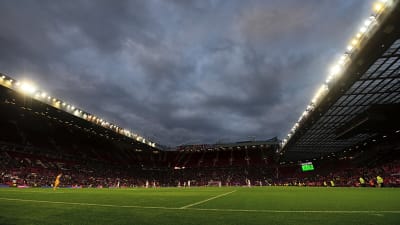
Manchester United’s difficult season is now being reflected beyond results and league position, with financial indicators also pointing to decline.
The absence of European football and early cup exits have had consequences that stretch well beyond the pitch.
Commercial strength, once an unquestioned advantage for the club, is now being tested by rivals at home and abroad.
As global revenues continue to rise, United’s place among football’s elite is no longer guaranteed.
The latest figures underline a sobering shift at Old Trafford.
Manchester United have fallen to their lowest-ever position in the Deloitte Football Money League, marking a significant moment in the club’s modern history.
According to analysis from Deloitte, United have dropped from fourth to eighth in the global revenue rankings.
The club recorded revenues of £666 million (€793.1 million) during the 2024–25 season, reflecting both sporting struggles and reduced matchday income.
This represents a notable decline for a club that has topped the Deloitte Money League on 10 occasions, most recently in 2017.
United’s slide comes after a turbulent campaign in which they finished 15th in the Premier League and lost the Europa League final to Tottenham Hotspur.
Their financial outlook has been further impacted by the lack of European competition and early eliminations from both the FA Cup and League Cup.
As a result, matchday revenue is expected to suffer again this season, an area where United once led the global football industry.
Deloitte Sports Business Group lead partner Tim Bridge highlighted just how much United’s financial position has changed over time.
“If you went back 10 or 15 years, and you looked at Manchester United’s matchday revenue it was the industry leader,” Bridge said.
“If you looked at their ability to generate commercial revenue, it was the benchmark by which everybody then went to market and set their strategy.
“I don’t think that remains the case.”
While United slipped down the rankings, several rivals surged ahead.
Liverpool became the Premier League’s top-earning club for the first time after winning the title, generating £702 million (€836.1 million).
Real Madrid once again led the global standings with revenues of £975 million (€1.16 billion), despite failing to win either La Liga or the Champions League.
Barcelona climbed to second with £819 million (€974.8 million), achieving that figure while playing away from the Nou Camp during stadium renovations.
Bayern Munich finished third with £723 million (€860.6 million), while Champions League winners Paris Saint-Germain placed fourth on £703 million (€837 million).
Manchester City also dropped down the list, slipping from second to sixth after posting revenues of £697 million (€829.3 million).
Arsenal ranked seventh on £690 million (€821.7 million), narrowly ahead of United, with Tottenham ninth and Chelsea tenth completing the top ten.
Despite United’s downturn, six English clubs still feature in the top ten of the Deloitte Football Money League, underlining the Premier League’s overall financial power.
Across the board, the total revenue of the top 20 clubs rose by 11% to a record £10.4 billion (€12.4 billion).
For Manchester United, however, the figures serve as a clear warning that financial supremacy will only return alongside sustained success on the pitch.
More must-reads:
- Good, bad and ugly for USMNT March camp: What should we make of this winless window?
- Cowboys have a dangerous plan for George Pickens' contract
- The 'Active 2K-point NBA seasons' quiz
Breaking News
Trending News






Customize Your Newsletter
 +
+




Get the latest news and rumors, customized to your favorite sports and teams. Emailed daily. Always free!
PRIVACY POLICY COOKIE POLICY CONTACT US
ABOUT YARDBARKER TERMS OF SERVICE


By using this site, you agree to our Terms of Service and Privacy Policy.
This site is for entertainment purposes only.
There is no gambling offered on this site.
Gambling Problem? Call 1-800-Gambler.
