
-

-


Follow Us
-

 On Facebook
 On Flipboard

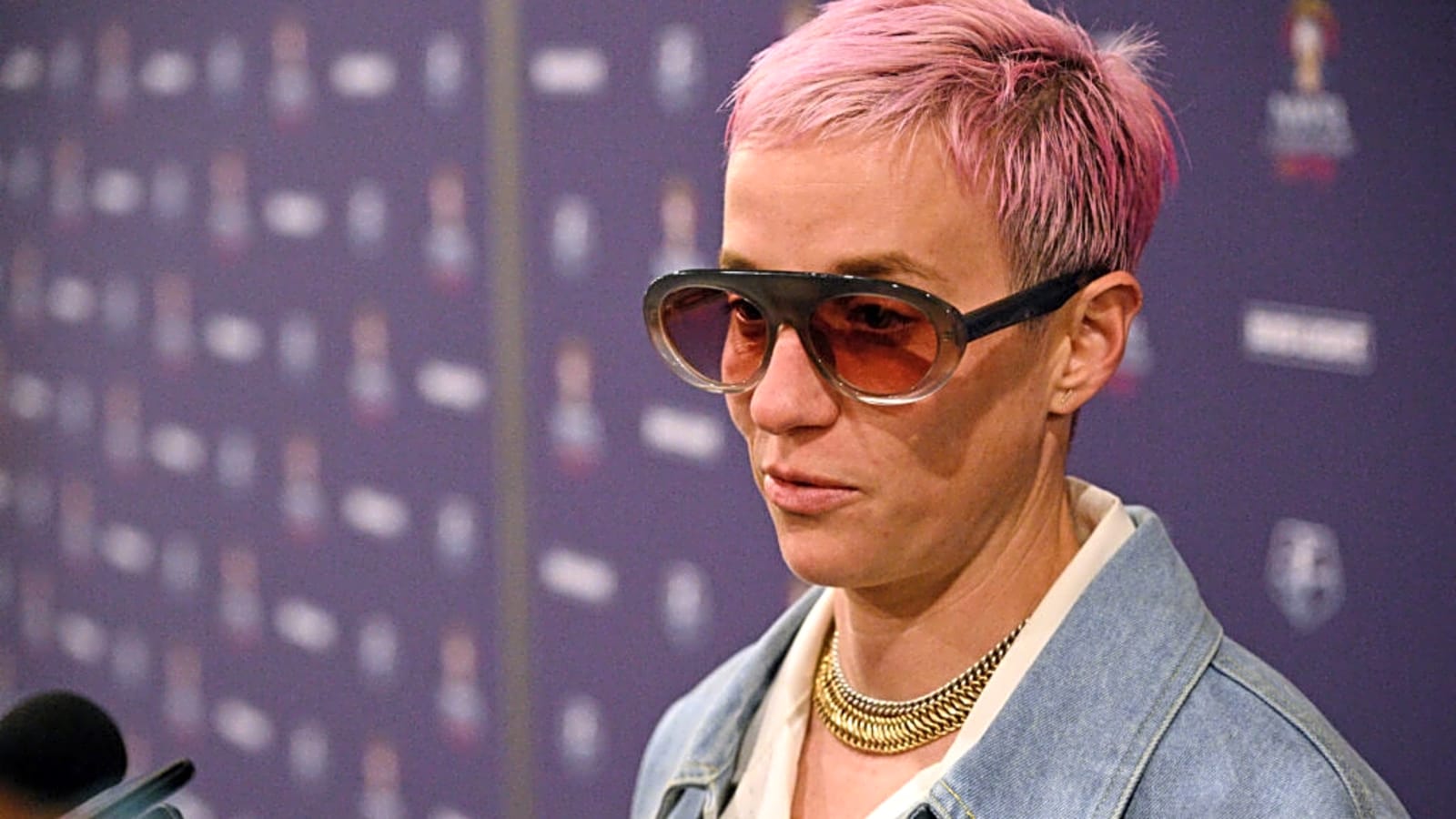
Megan Rapinoe, the retired American soccer icon known for her bold advocacy and on-field achievements, has once again sparked widespread discussion. This time, the conversation centers on her strong opposition to a fresh set of guidelines introduced by the International Olympic Committee.
The policy aims to address long-standing debates surrounding participation in elite women’s athletic competitions, drawing both support and sharp criticism from various corners of the sports world.
In March, the IOC rolled out updated regulations designed to uphold fairness, safety, and the overall integrity of women’s events. At the core of this framework is a requirement for athletes seeking to compete in the female category to undergo screening that confirms the absence of the SRY gene. This approach seeks to establish a clearer biological benchmark for eligibility in these divisions.
“Eligibility for the female category is to be determined in the first instance by SRY gene screening to detect the absence or presence of the SRY gene,” the IOC said. “Based on scientific evidence, the IOC considers that the presence of the SRY gene is fixed throughout life and represents highly accurate evidence that an athlete has experienced male sex development. Furthermore, the IOC considers that SRY gene screening via saliva, cheek swab or blood sample is unintrusive compared to other possible methods.”
The organization presented this measure as a science-based step forward, emphasizing minimal intrusion while prioritizing equitable conditions for female competitors. Supporters argue that such standards could help preserve opportunities specifically created for women in high-level sports.
Rapinoe, who boasts an impressive resume including Olympic gold and multiple World Cup titles, did not hold back in sharing her perspective.
During a recent episode of her “A Touch More” podcast, she voiced deep reservations about the direction the IOC is taking and questioned the true motivations behind the changes.
“Unfortunately, we have to say that all in the same breath as a really horrible rule came out from the International Olympic Committee,” Rapinoe said. “They announced a new policy that they’re calling, I can’t even believe that they’re calling it this because it has nothing to do with protecting women, I feel like two people, who played at the very highest level for every competition that you possibly could, don’t agree with this and never felt like this was an issue at all.”
She went on to challenge the notion of rigid biological categories, suggesting that human physiology exists on a more complex spectrum than simple divisions allow. Rapinoe expressed concern that the testing requirements could unfairly target a broad group of athletes and serve as a tool to enforce a narrow definition of womanhood in sports.
“We already know that biology, as much as we want it to be just nice and clean and tight and perfectly in one category and another, it’s not. We know that. So, now what we’re doing is subjecting everybody, all women and all people who are identifying as women to this really invasive testing that only to me says like, ‘Oh we’re just trying to whittle it down to a certain type of woman.’ Is that what we’re doing? That’s really the whole game here.”
Her remarks quickly reverberated across social media and sports forums. Many observers pushed back forcefully, contending that Rapinoe’s position overlooks the realities faced by female athletes who train and compete under the expectation of fair matchups grounded in biological differences.
Critics online have been particularly vocal, accusing the former star of undermining the very foundation that allowed her own successful career to flourish. They maintain that protecting women’s categories is essential for the next wave of talented young athletes to pursue excellence without unnecessary barriers or disadvantages.
Discussions surrounding the policy highlight deeper tensions in modern sports governance. While some celebrate the IOC’s move as a decisive effort to safeguard women’s divisions, others like Rapinoe view it as an overreach that complicates inclusion and personal identity.
Regardless of the divided opinions, the new guidelines appear set to move forward as the governing body’s official stance. Rapinoe’s public dissent, though unlikely to alter the IOC’s course, signals her continued willingness to engage passionately on issues she cares about deeply in the world of athletics.
More must-reads:
- USMNT returns: Key takeaways from Mauricio Pochettino's first post-World Cup roster
- 49ers' Mac Jones linked to two desperate trade destinations
- The 'Active 150-yard NFL rushers' quiz
Breaking News
Trending News








Customize Your Newsletter
 +
+




Get the latest news and rumors, customized to your favorite sports and teams. Emailed daily. Always free!
PRIVACY POLICY COOKIE POLICY CONTACT US
ABOUT YARDBARKER TERMS OF SERVICE


By using this site, you agree to our Terms of Service and Privacy Policy.
This site is for entertainment purposes only.
There is no gambling offered on this site.
Gambling Problem? Call 1-800-Gambler.
