
-

-


Follow Us
-

 On Facebook
 On Flipboard
 On Twitter
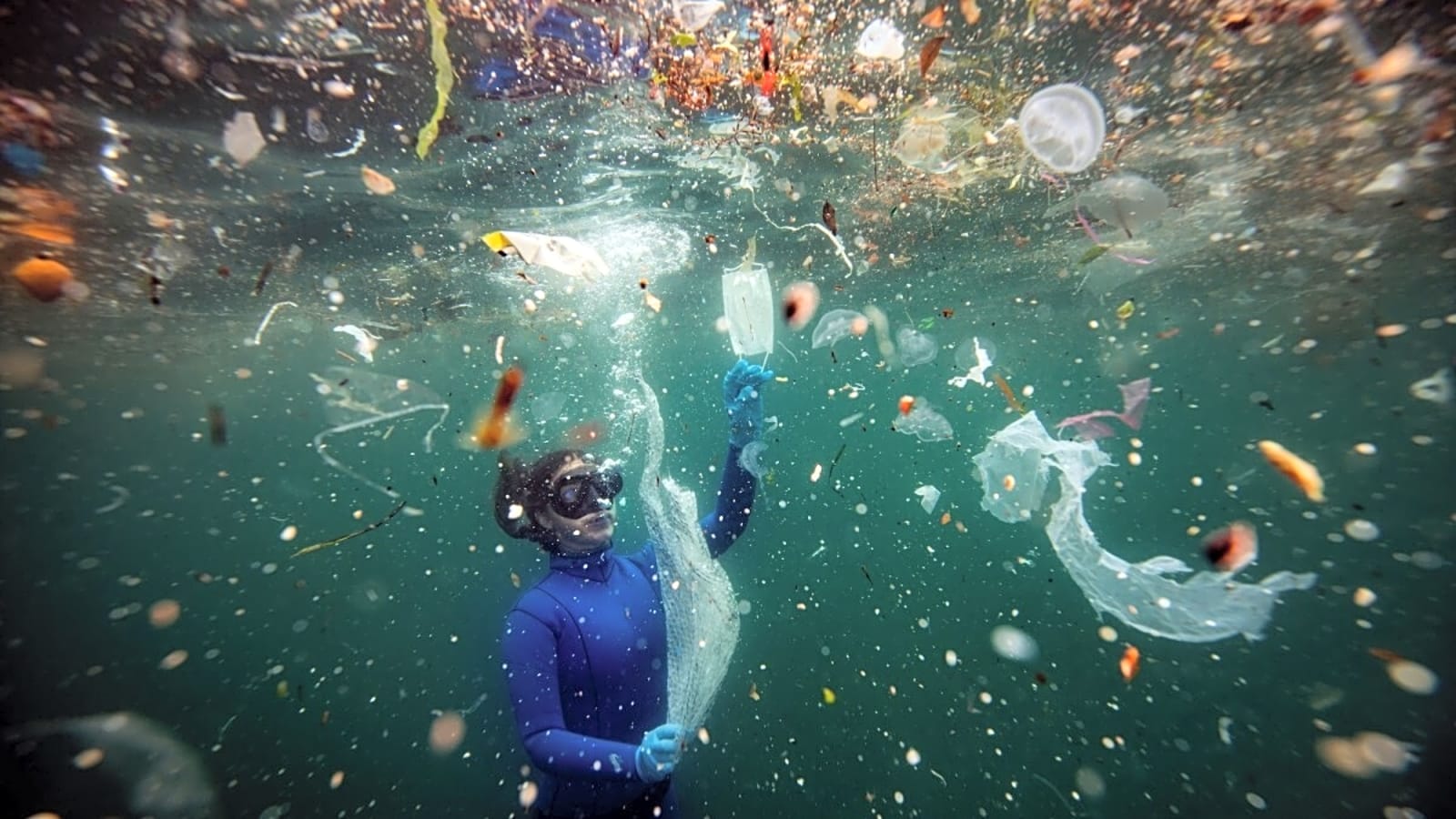
It’s good, or at least heartening, to consider that while artificial intelligence can rob us of our jobs and perhaps at some point our very autonomy, it can also still wipe our proverbial asses.
Indeed, in recent news on the sunny side of technology’s imminent takeover, artificial intelligence is going to work tracking and forecasting pollution by air and by sea.
While AI-equipped satellites and drones are both capable of detecting pollutants the world round, addressing ocean plastic pollution tracking with satellites is at the cusp of being brought into practical fruition.
Under the AI for Detecting Ocean Plastic (Pollution) with Tracking (ADOPT) program, a joint initiative between several Swiss and German universities and the Swiss Data Science Center (SDSC), European Space Agency (ESA) Sentinel-II satellites are being programmed with image recognition of ocean plastic pollution from space.
That resultant data is then combined with prediction models to then inform projected drift and, in turn, could soon be employed to initiate a two-system targeted recovery of masses of ocean plastics.
“One [system] is to identify garbage patches by analyzing satellite images, and the other is to predict where the patches will have drifted by the time clean-up teams can reach them, usually within 24 hours,” says Emanuele Dalsasso, a scientist working on the program at Switzerland’s École polytechnique fédérale de Lausanne (EPFL). “The idea,” the EPFL announced in a news post, “is to meet a simple need: Governments and NGOs can’t respond immediately when debris is detected, as they need time to organize and deploy clean-up operations.”
The ADOPT project, which spanned two years, isn’t quite complete, and isn’t without its bugs—namely, the weather. Clouds incapacitate the optical sensors. Radar images captured from another satellite, Sentinel-1, might be a solution. “Radar signals can travel through clouds, and they work day and night. But they provide information on only the texture and geometry of debris, meaning we’d lose the key spectral signatures that are picked up by optical sensors and essential for detecting garbage patches,” according to Dalsaso.
Alas, ADOPT’s two-year funding for the project has ended, but the team is passing on the baton before seeing the bots do their—and all our—bidding.
Dutch NGO The Ocean Cleanup is reportedly encouraged enough to be “comparing the algorithms” in order to implement the technology as it presses on in its bid to (largely) rid the ocean of plastics by 2040.
Praise be to the robots of the future if they can help pick up after us scurviest of creatures. Every little bit we can get…
More must-reads:
- Devils make significant front-office move, fire GM Tom Fitzgerald
- Jose Ramirez sets all-time mark with Cleveland Guardians
- The 'NBA active two-pointers leaders' quiz
Breaking News
Trending News








Customize Your Newsletter
 +
+




Get the latest news and rumors, customized to your favorite sports and teams. Emailed daily. Always free!
PRIVACY POLICY COOKIE POLICY CONTACT US
ABOUT YARDBARKER TERMS OF SERVICE


By using this site, you agree to our Terms of Service and Privacy Policy.
This site is for entertainment purposes only.
There is no gambling offered on this site.
Gambling Problem? Call 1-800-Gambler.
