
-

-


Follow Us
-

 On Facebook
 On Flipboard

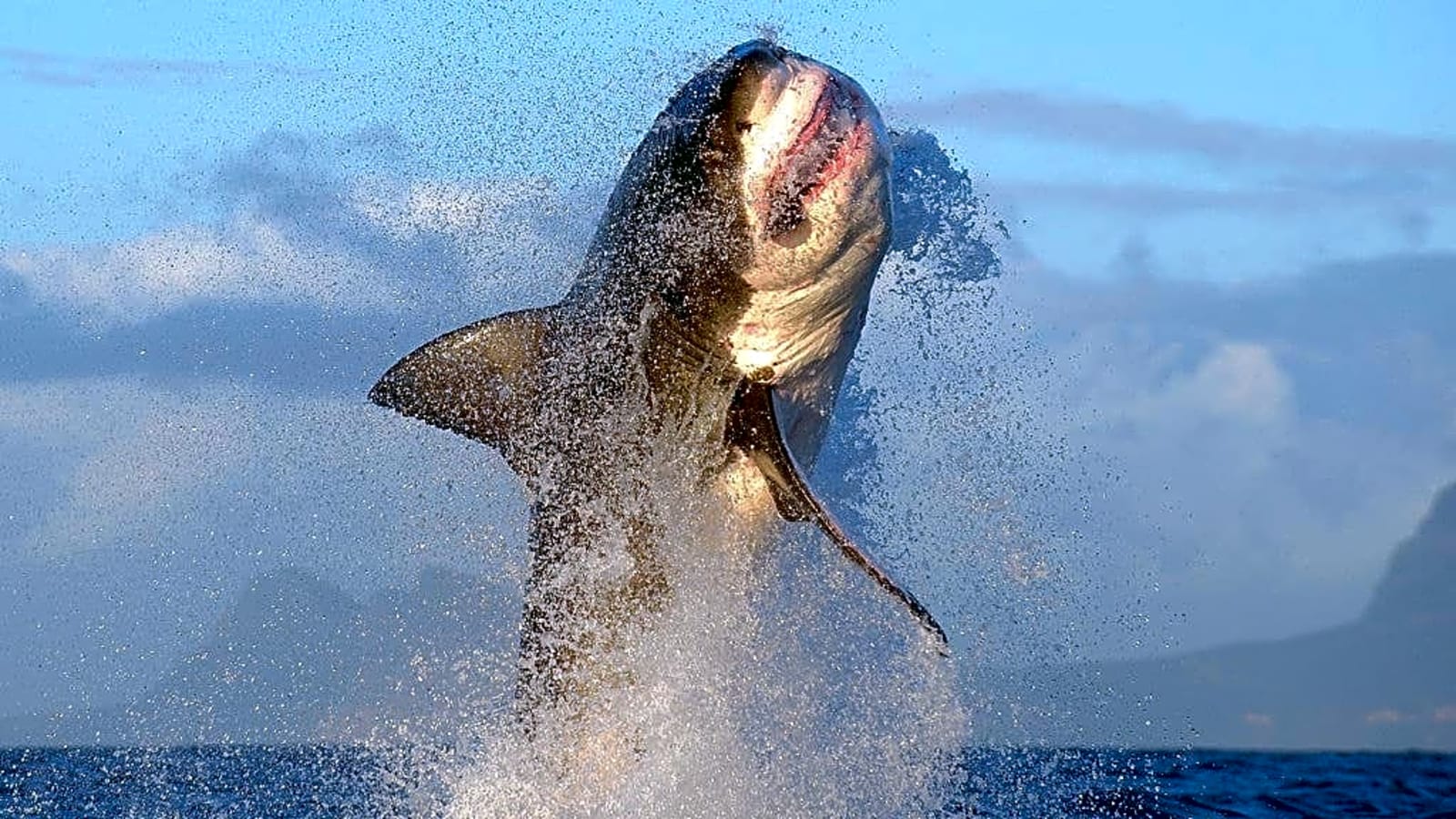
Our most formidable of friends and foes in the surf might be more fragile than we think. Great white sharks, like shortfin mako sharks and larger tunas, including bluefin and yellowfin, are mesothermic, meaning they produce heat metabolically. As such, they run hotter than the waters around them.
What with global ocean temperatures trending upwards—for whatever reason you care to choose—mesothermic marine creatures are confronting a “double jeopardy” of “warming oceans and declining food.” That’s according to a study recently published in the international journal Science titled “Mesothermic fishes face high fuel demands and overheating risk in warming oceans,” and led by researchers at the Trinity College Dublin University of Pretoria.
While many of these bony and cartilaginous fishes might be forced to relocate or alter their ranges to favor cooler waters, the complexities of finding food in different habitats might make progeny tough.
“If you're a shark, you can’t just pop down to the supermarket to buy more food,” said the study’s lead author, Trinity College Dublin Associate Professor Nick Payne. “We’re seeing animals move with climate change in every biome on land and in the sea; this is just another example of that mechanism.”
A further complication is overfishing across the seafood chain. “Many mesotherms are already heavily affected by overfishing of themselves and their prey species, so their elevated energy needs make them especially vulnerable when their food becomes scarce,” added Payne.
“What’s particularly concerning is that these animals are already operating on a tight energy budget, and climate change is narrowing their options even further,” wrote University of Pretoria Professor Ned Snelling. “Understanding these constraints is essential if we want to predict how marine ecosystems will shift in the coming decades.”
Taken at large, a University of Pretoria press release regarding the study says that “The research provides a new framework for predicting which species are most at risk in a warming world and shows that many of the ocean’s fastest and most formidable predators may also be among its most physiologically constrained.” How can that be applied? “As climate change accelerates, understanding the hidden heat budgets of marine giants could prove critical to conserving them.”
So resounding the question for this here page is: Would the lineup be a better place without whitey around? That’s debatable. We might find ourselves in greater numbers with the added sense of security.
Would the world be a better place without old whitey? Decidedly not. If great white sharks should be wiped from the face of the earth—however much to the joy of the Vic Hislops and Mark The Sharks of the world—we humans along with the whole world over would surely have much, much graver problems at hand.
More must-reads:
- Concerning update emerges on Broncos QB Bo Nix
- Dodgers' Edwin Diaz shares major injury update
- The 'Season triple-double leaders by team' quiz
Breaking News
Trending News







Customize Your Newsletter
 +
+




Get the latest news and rumors, customized to your favorite sports and teams. Emailed daily. Always free!
PRIVACY POLICY COOKIE POLICY CONTACT US
ABOUT YARDBARKER TERMS OF SERVICE


By using this site, you agree to our Terms of Service and Privacy Policy.
This site is for entertainment purposes only.
There is no gambling offered on this site.
Gambling Problem? Call 1-800-Gambler.
