
-

-


Follow Us
-

 On Facebook
 On Flipboard
 On Twitter
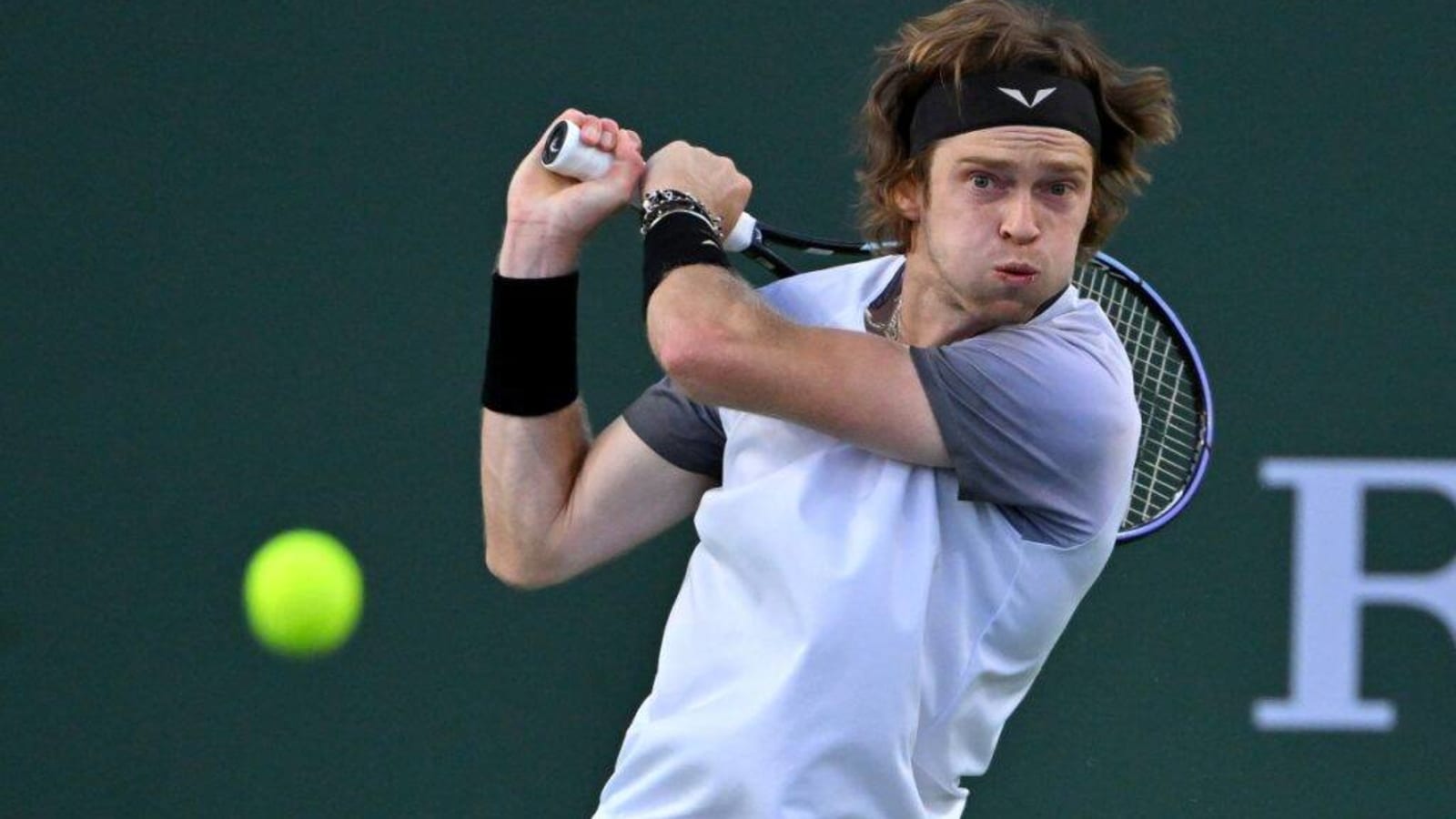
Andrey Rublev was never a Grand Slam champion, but he used to be a threat. That distinction matters because what’s happening now goes beyond simply failing to win Majors. The Russian is regressing at the tournaments that matter most, and the decline has reached a point where it can no longer be explained away by bad draws or unfortunate timing.
Let’s establish the baseline. Rublev spent years as a legitimate top-five player who could trouble anyone on a given week. He occasionally produced stunning upsets, beating players like Carlos Alcaraz when he was at his very best. He was a threat to win Masters 1000 events and played the kind of hard-hitting, aggressive tennis that made opponents uncomfortable.
That version of Rublev has seemingly disappeared. His ranking has dropped as a result – not far but still far enough to matter – that decline is never more apparent than at the Grand Slams, where it hurts most.
The Problem Runs Deeper Than Results
There’s no single issue damaging Rublev’s Grand Slam performances. Sometimes it’s the draw. Sometimes it’s genuinely bad luck in matches where he played well but couldn’t find a way through. He’s reached the quarterfinals multiple times at different Majors, hitting that stage at all four Grand Slams at least once in his career. But that’s been his ceiling.
The real collapse came in 2025 when he failed to reach the fourth round at any of the four majors. For a player of Rublev’s calibre, that’s just not good enough. He’s also 28 now, which means the window for changing this pattern is closing. A few years ago, many in tennis believed he had at least one Grand Slam title in him. That assessment feels wildly optimistic now.
The regression is all too visible when you watch him play. Part of the problem is mental, which has always been the question mark with Rublev. He’s an emotional player who competes with passion, but that passion regularly overwhelms him. In matches decided by thin margins, which describes just about every match at the business end of a Major, too much emotional volatility quickly becomes fatal.
The Weapons Have Dulled
What made Rublev so dangerous was his ability to overwhelm opponents from the baseline in neutral positions. Send a ball through the middle and give him time to set up properly, and you were getting demolished on the next shot. It didn’t matter much whether it came off the forehand, though that was his superior wing, or the backhand. Both sides could hurt you.
His serve was serviceable and occasionally better than that. We saw flashes of the old Rublev in Hong Kong recently, where he played with the aggression and effectiveness that defined his best years. But that player didn’t show up at the Australian Open. He faced a tough opponent in Francisco Cerundolo, but lost in straight sets, adding another early exit to a growing collection. Troublingly, it’s been over a year since Rublev reached a Grand Slam quarterfinal.
The match revealed the troubling patterns that now define his major performances. In the third set, he bloodied his knee in a moment of frustration that looked as bad as it sounds. The lack of results is clearly weighing on him. He’s spoken publicly about struggling with depression and the mental toll of failing to meet expectations.
The bigger problem is that he can’t overwhelm opponents the way he used to. He’s become too erratic, and the explosiveness that was his trademark shows up as inconsistency now. His return game has fallen off a cliff as well, declining sharply since 2023 and getting worse with each passing tournament. In an era where that shot has never been more important, it has become a real Achilles’ heel for the Russian.
What’s Left to Hope For
It’s difficult to see a path forward for Rublev at Grand Slams. The explosiveness that defined his game appears and disappears unpredictably. It was there in Hong Kong but absent in Melbourne. He’s starting to look ordinary against elite opponents, which is a terrible sign for someone who needs to beat multiple top players to reach a major final.
The regression is undeniable. Unless he finds a way to reverse it, and quickly, the decline will continue. At 28, he doesn’t have the luxury of time to figure it out gradually. The Grand Slam problem that was once just disappointing has become the defining characteristic of his career. And right now, there’s no indication that anything is about to change.
More must-reads:
- Cowboys have a dangerous plan for George Pickens' contract
- Konnor Griffin megadeal would be franchise-shifting moment for Pirates
- The 'Active 2K-point NBA seasons' quiz
Breaking News
Trending News






Customize Your Newsletter
 +
+




Get the latest news and rumors, customized to your favorite sports and teams. Emailed daily. Always free!
PRIVACY POLICY COOKIE POLICY CONTACT US
ABOUT YARDBARKER TERMS OF SERVICE


By using this site, you agree to our Terms of Service and Privacy Policy.
This site is for entertainment purposes only.
There is no gambling offered on this site.
Gambling Problem? Call 1-800-Gambler.
