
-

-


Follow Us
-

 On Facebook
 On Flipboard
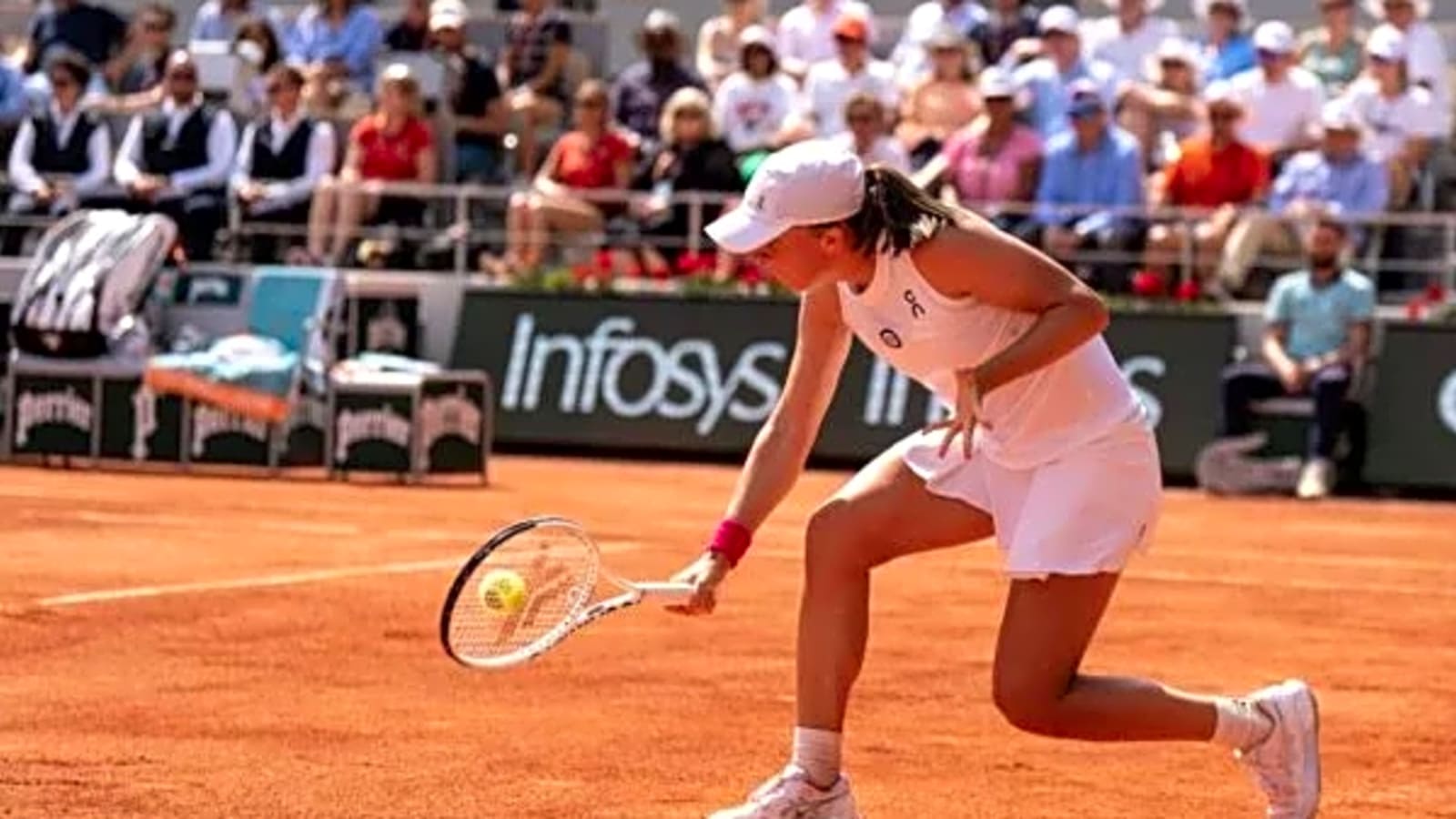
There was a time, not very long ago, when asking whether Iga Swiatek would do anything at Roland Garros was not a question anyone seriously posed. It was like asking whether the sun would rise or the clay would be red. Between 2020 and 2024, she won that tournament four times, built a 26-match winning streak on its courts, and turned the French Open into a personal fiefdom so complete that the conversation around her dominance eventually stopped being about tennis and started being about history.
Then 2025 happened. Then 2026 happened. And now, heading into yet another clay season, this time with a brand new coach, a bruised confidence, and a ranking that no longer automatically places her in the conversation’s top tier, the question is not only worth asking. It is one of the most compelling storylines in the sport.
Can Iga Swiatek get back on top on the clay?
How the Clay Kingdom Cracked
The collapse, when it came, was not sudden. It was gradual enough to be easy to explain away at each individual stage but brutal enough in aggregate to be impossible to ignore. In 2025, Swiatek entered Roland Garros unable to defend her titles at either Madrid or Rome, losing 2,000 ranking points in the process and dropping outside the top four for the first time since early 2022. On a surface where she had previously gone 21-1 in a single season, she had not reached a final anywhere on clay. She lost to Danielle Collins in Rome, a player she had beaten six times in a row, falling behind 0-5 in the opening set. The player who had once turned the clay swing into a cakewalk was visibly searching for herself.
Paris offered a partial reprieve. She reached the semi-finals, survived a scare against Rybakina, and played well enough to suggest the old version was in there somewhere. But Sabalenka ended her 26-match winning streak at Roland Garros in the semi-finals, winning the third set 6-0 in a manner that felt like a statement. Sabalenka and Rybakina became the only players to have defeated Swiatek on clay twice, a factoid that would have seemed faintly absurd three years earlier. The dynasty was not dead, but it was unambiguously over. The era of Swiatek as an automatic Roland Garros champion had ended.
The second half of 2025 produced a fascinating twist. Wimbledon, historically the surface where Swiatek had least conviction, gave her a title. A surprise final in Bad Homburg shifted her belief, and she went on to win Wimbledon, her sixth Grand Slam, sealing it with a double-bagel over Anisimova in the final. It was an extraordinary achievement and evidence that she remained a champion capable of winning big events. But it also underlined the strangeness of her current trajectory: the player who built her entire legend on clay won grass, and then stumbled badly again on hard courts as 2026 began.
The Coaching Carousel and What It Tells Us
The decision to part ways with Wim Fissette in March 2026 was the third major coaching change of Swiatek’s career in four years, and each one has told a story. She split from the coach who took her to her first Roland Garros title at the end of 2021, then parted with Tomasz Wiktorowski in late 2024, and now has moved on from Fissette after what turned into a turbulent sixteen months. The Fissette split was announced days after her streak of 73 consecutive opening round wins ended at the Miami Open, where she lost to compatriot Magda Linette.
The appointment of Francisco Roig is intriguing for several reasons, not least because of who he spent most of his career working with. Roig spent many years alongside Rafael Nadal and brings a reputation as a demanding coach with a strong understanding of technique. He is a man whose entire coaching philosophy was forged around clay, around high-spin baseliners who rely on construction and endurance. That his most famous collaboration happened to produce the greatest clay court player in the history of the sport is not entirely a coincidence.
Analysis of Roig’s approach suggests that if Swiatek can improve her serving accuracy and add further variety to her game, a more complete player could emerge. He encouraged variety and net approaches with Raducanu, a player who ultimately did not embrace the tactical shift. Swiatek, a six-time Grand Slam champion with a proven track record of incorporating coaching changes into significant improvements, is a very different proposition. Swiatek has reportedly been training at the Rafa Nadal Academy in Manacor as she begins her trial with Roig, which tells you something about the seriousness of her intent and the direction she is looking to travel.
The Case for a Resurgence
The temptation when a dominant champion starts losing is to project the decline forward indefinitely. That is almost always a mistake, and it would be an especially large one with Swiatek. Her underlying qualities have not disappeared. She remains one of the most physically durable players on tour, with a movement profile on clay that is genuinely elite. Her forehand, still one of the heaviest balls in the women’s game, is a weapon that does not rust. Her ability to absorb and redirect pace, which is fundamental to clay court tennis, has not gone anywhere.
What has eroded is the mental certainty that made her so hard to beat. The doping suspension in late 2024, the public scrutiny, the coaching changes, the loss of the world number one ranking, the first Roland Garros defeat in years, all of it has accumulated into a psychological weight that has periodically disrupted her game in ways that the results barely capture. With an entirely new coaching setup, she still posted 62 Tour match wins in 2025, becoming the first player to achieve four consecutive 60-win seasons since Martina Hingis and Lindsay Davenport at the turn of the millennium. A player in terminal decline does not do that. A player in transition does.
The Roig appointment feels like more than a tactical tweak. It reads as a genuine attempt to rediscover not just a style of play but a mentality. History says she finds another gear in spring. Whether this is the year that stops repeating itself is one of the most fascinating questions hanging over the clay season. Clay is the surface on which her muscle memory is deepest, her footwork most automatic, and her tactical vocabulary richest. If she is going to rebuild confidence anywhere, it will be on red dirt.
The Obstacle
None of this should be read as predicting a straightforward title defence, because Swiatek is no longer defending anything. She is chasing. The women’s game has shifted around her while she has been working through her difficulties, and the most significant shift is Sabalenka. Sabalenka has dominated in 2026 with a 23-1 record, having completed the Sunshine Double by winning both Indian Wells and Miami, joining an elite list that includes Steffi Graf, Kim Clijsters, Victoria Azarenka, and Swiatek herself. Sabalenka reached the Roland Garros final in 2025 and has a Madrid title to her name. Her clay game has been improving year on year, and the mental barrier that previously existed when she faced Swiatek on the surface has been dismantled. She beat her 7-6, 4-6, 6-0 in Paris. She is no longer someone Swiatek manages. She is someone Swiatek has to solve.
Coco Gauff adds another complication. At the 2025 French Open, Gauff became the youngest woman to reach the finals of Madrid, Rome, and Roland Garros in the same year, before defeating Sabalenka in the Paris final. She is the reigning champion, she is building in confidence with each clay swing, and her movement on the surface is arguably the best in the women’s game. The path through Paris has never been harder for Swiatek since she first won it.
A Story Without a Final Page
The honest answer, as with so much in Swiatek’s recent career, is that nobody knows. What we do know is that the ingredients for a resurgence are present: a coaching change that makes sense, training at an academy purpose-built for clay excellence, a player who has demonstrated across six Grand Slam titles that she can absorb disruption and come through it, and a surface that remains, whatever her recent results suggest, the one where her game is structurally most at home. What we also know is that the competition has never been stiffer, the psychological baggage has never been heavier, and the gap between her current form and her peak form on clay is a real one that a new coach cannot simply wave away.
If this clay season produces a refreshed Swiatek, more varied, more settled, more convinced of herself, then Roland Garros remains entirely within her reach. If it produces more of 2025’s early clay season, more hesitation, more unforced errors, more losses to players she used to dismiss without blinking, then we are watching a genuinely different chapter in her career unfold. Either way, it is the most interesting storyline in the women’s draw. And it is going to be settled, as almost everything in her career has been, on red clay.
More must-reads:
- Jalen Brunson, Karl-Anthony Towns help Knicks clinch No. 3 seed
- Tigers' Parker Meadows hospitalized after terrifying outfield collision
- The 'NBA top-seed top-scorers' quiz
Breaking News
Trending News






Customize Your Newsletter
 +
+




Get the latest news and rumors, customized to your favorite sports and teams. Emailed daily. Always free!
PRIVACY POLICY COOKIE POLICY CONTACT US
ABOUT YARDBARKER TERMS OF SERVICE


By using this site, you agree to our Terms of Service and Privacy Policy.
This site is for entertainment purposes only.
There is no gambling offered on this site.
Gambling Problem? Call 1-800-Gambler.
