
-

-


Follow Us
-

 On Facebook
 On Flipboard

Aryna Sabalenka has always played with her emotions visible for all to see.
That’s part of what makes tennis so compelling. Players often ride a rollercoaster of emotions, sometimes within a single match.
But in the Roland Garros final, it was one of those days where nothing went right for the Belarusian. The conditions were far from ideal, and she never looked comfortable.
Coco Gauff didn’t need a second invitation. She played smart, kept her composure, and secured her second Grand Slam title — both times getting the better of Sabalenka in the final.
Defeats are part and parcel of tennis. How you respond to them is what sets the best apart from the rest. Sabalenka seems to understand that and has already spoken about what she plans to change moving forward.
Sabalenka changes mental approach ahead of French Open
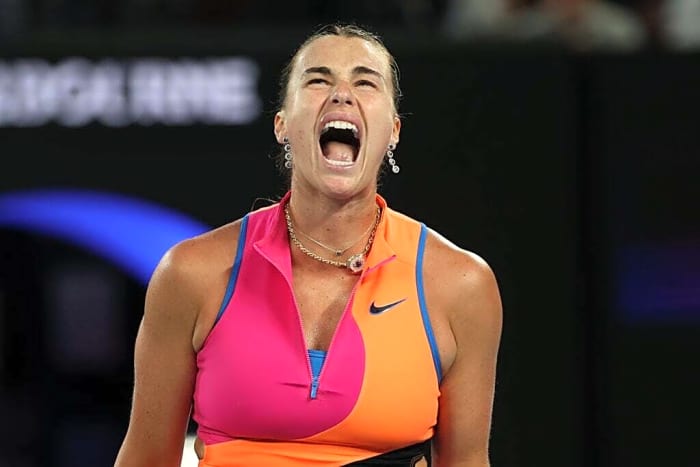
Her performance coach, Jason Stacy, appears to be a steady hand when it comes to guiding Sabalenka through such tough territory.
He spoke about the steps being taken to prevent another breakdown like last year’s, both physically and mentally, at this year’s French Open.
The American explained: “Well, to be honest, like, a big focus for us right now is just to manage her energy a lot more, especially going into the European season, because last year was an important lesson that we were realising.
“You know, a couple of years ago she was very consistent getting deeper into the tournament over the last few years you know off and on a bit longer now. Last year it was pretty much just if she’s in the tournament she’s going to be in the final or very very close to that if not winning it.
“And so it’s a lot of matches you know coming into the clay court season last year she had you know Brisbane the Australian Open you know we had Indian Wells final Miami winning you know and then just short time boom she’s in Stuttgart and then went like finals finals finals quarters you know and then to final of the French open so by time she got to French Open I mean she was so exhausted because she played so many matches.
Sabalenka didn’t shy away after such a public defeat. She regrouped quickly and went on to win the US Open later that year. By then, she’d also made three Grand Slam finals across four majors—a clear sign of her resilience.
The team picked up some valuable lessons from Roland Garros. Stacy said: “So it was a good lesson for all of us realise like okay we should just accept fact expect that well if we show up somewhere we’re going get final start understand need manage far schedule goes far all things outside courts how managing all obligations with sponsors whatnot.”
That learning seems even more relevant heading into this year’s event after Sabalenka missed recent tournaments in Rome and Strasbourg due to illness. It’s another sign that careful planning around major tournaments could pay off down the line.
Reaction to Aryna Sabalenka’s comments after the French Open final
The main talking point from last year’s French Open final was Sabalenka’s post-match comments about Gauff. In her press conference, she called it the worst match she’d ever played, blamed the conditions for her loss, and suggested that Iga Swiatek wouldn’t have lost to Gauff under the same circumstances.
Tracy Austin criticised Sabalenka for how she handled the conditions, while Novak Djokovic took a more balanced approach. He said: “I think, well, in the end, she clarified it.
“And look at if it happens and maybe came out in a wrong way, but she didn’t mean to disrespect Coco and so most of the times I had, you, Grand Slam finals with opponents in the last 20 years, the majority of the times was always quite respectful, both ways when I win or lose with my opponents so.”
Sabalenka later said she was glad for how things unfolded. She and Gauff patched things up in time to practice together at Wimbledon.
This year will be another chance for Sabalenka to put those memories behind her. The question now is whether she can finally get over that final hurdle at Roland Garros.
More must-reads:
- Coco Gauff claps back at hairstyle critics: ‘I won’t apologize’
- Takeaways from third round of Masters: Rory McIlroy's lead disappears; Shane Lowry makes history
- The 'Masters runners-up since 2000' quiz
Breaking News
Trending News



Customize Your Newsletter
 +
+




Get the latest news and rumors, customized to your favorite sports and teams. Emailed daily. Always free!
PRIVACY POLICY COOKIE POLICY CONTACT US
ABOUT YARDBARKER TERMS OF SERVICE


By using this site, you agree to our Terms of Service and Privacy Policy.
This site is for entertainment purposes only.
There is no gambling offered on this site.
Gambling Problem? Call 1-800-Gambler.
