Stepping in for a popular or prominent member of a band can't be easy — especially when there are huge shoes to fill. When it works, it's usually the stuff legends are made from. Here's our ranking of the 20 best such instances.
1 of 20
20. Janick Gers, Iron Maiden
Kevin Mazur/Getty Images for Power Trip
Gers came on to replace guitarist Adrian Smith in 1990, and was part of the traditional five-piece Iron Maiden set-up for No Prayer for the Dying (1990), Fear of the Dark (1992), The X Factor (1995) and Virtual XI (1998). When Smith returned to the band in 1999, Gers stayed on and has been part of the six-man metal assault Maiden continues to unleash. On stage, Gers seems to be having the most fun of any band member.
2 of 20
19. Robert Trujillo, Metallica
Junfu Han/USA TODAY NETWORK
Already a successful and respected bassist from his time playing with Suicidal Tendencies and Ozzy Osbourne, Trujillo got his current gig with Metallica in 2003. He replaced the highly underrated Jason Newsted (who stepped for the late, beloved Cliff Burton), and has been highly serviceable during his tenure. Trujillo brought with him a hefty funk vibe to Metallica, but handles some of the band's more popular classic bass moments with relative ease.
3 of 20
18. William DuVall, Alice in Chains
Jim Louvau/Special for the Arizona Republic via Imagn Content Services, LLC
Many fans were stunned to learn Alice in Chains would continue on following the 2002 death of prominent frontman Layne Staley. Now, it wasn't immediate, but AIC regrouped with DuVall, a Washington D.C. native, who also plays guitar while sharing vocals with guitarist Jerry Cantrell. Alice in Chains has released three records with DuVall: 2009's Black Gives Way to Blue, which featured the hit "Check My Brain," The Devil Put Dinosaurs Here, (2013) and Rainier Fog (2018). Since DuVall joined, AIC has been nominated for three Grammy Awards.
4 of 20
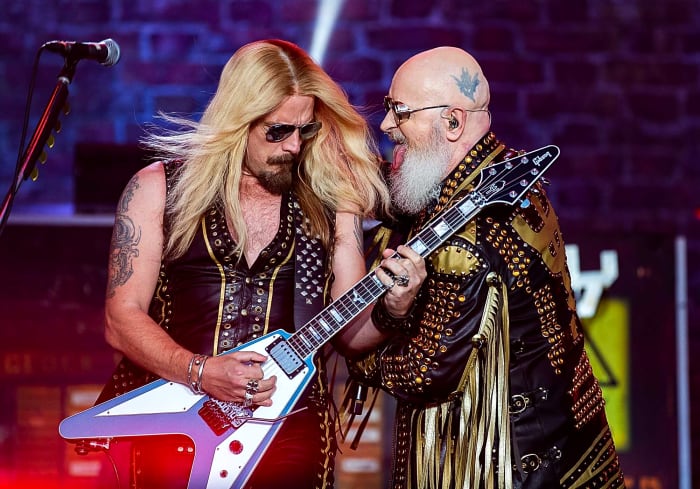
17. Richie Faulkner, Judas Priest
Jeff Faughender/Courier Journal and USA Today Network via Imagn Content Services, LLC
K.K. Downing is one of the great metal guitarists of all time, so when his time in Judas Priest came to an end in 2011, there certainly were big shoes to fill. However, Faulkner, a talented and highly praised English guitarist in his own right, has pulled it off quite well. According to the band, Faulkner's playing and enthusiasm helped reinvigorate, and essentially save the band. Judas Priest continues to tour, with Faulkner firmly entrenched within the band's legacy.
5 of 20
16. Vivian Campbell, Def Leppard
Jeff Kravitz/FilmMagic/Getty Images
Guitarist Steve Clark was a key figure within the confines of Def Leppard, both as a player and songwriter. However, Clark also struggled with alcohol, which played a part in his 1991 death. Def Leppard was one of the biggest bands in the world at the time, and needed to push on. So, it hired the venerable Campbell in 1992, and he's provided a highly dependable and effective guitar presence to keep the Leppard train rolling.
6 of 20
15. Jonathan Cain, Journey
Denny Simmons/USA TODAY NETWORK
The addition of singer Steve Perry in 1977 was a game-changer for Journey in terms of songwriting and rock brilliance. However, Cain essentially took over a leadership role — with Perry and guitarist Neal Schon — the moment he replaced band founder and keyboard/vocalist Gregg Rolie prior to breakout 1981 release Escape. At that point, Journey's musical direction shifted again to a pop-rock arena sound.
Tom Tingle/The Republic / USA TODAY NETWORK via Imagn Images
When popular guitarist and sidekick Steven Van Zandt left The Boss' legendary backing band, the veteran and highly acclaimed Lofgren filled in just in time to tour off the Born in the U.S.A. record. Springsteen was a true rock giant, and Lofgren gained some well-deserved notoriety for his talent by association. Springsteen jettisoned the E Street Band in 1989, but they reunited in 1995, this time with both Van Zandt and Lofgren in tow. When the group officially came together for the massively successful reunion tour in 1999, it was again with both guitarists, who remain in the band to this day.
8 of 20
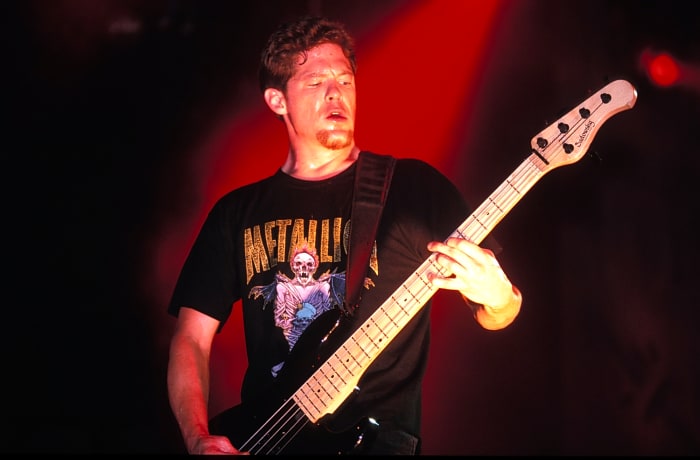
13. Jason Newsted, Metallica
Mick Hutson/Redferns/Getty Images
Replacing the late Cliff Burton was rather unenviable task within the Metallica family — on stage and off. However, it can certainly be argued that the aforementioned Newsted more than held his own — even if the surviving members of the band didn't make it easy on him — when he joined in October 1986. Newsted's bass work was highly underrated, and wasn't even featured on ...And Justice for All (1988). One of the hardest working performers in rock, Newsted was with Metallica through its most commercially successful period before leaving in 2001.
9 of 20
12. Eric Carr, Kiss
Luciano Viti/Getty Images
It can be argued that when Carr stepped behind the drum kit in place of Peter Criss in 1980, it seemed to breathe new life into Gene Simmons and Paul Stanley. Of course, Carr, who created the Fox persona, debuted with the band on the much-panned 1981 Music from "The Elder." However, Creatures of the Night, followed then by early non-makeup Kiss fare with Carr proved to be more than simply listenable. Sadly, Carr passed away in 1991 from cancer, at age 41.
10 of 20
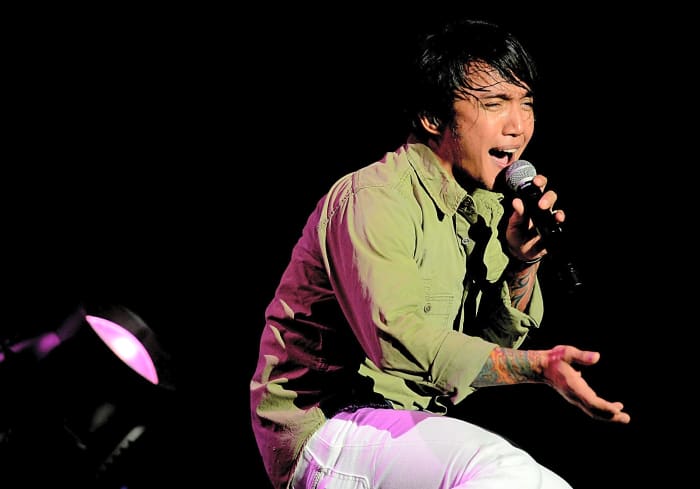
11. Arnel Pineda, Journey
Ron Elkman/USA TODAY NETWORK
Before he became the voice of Journey in 2007, Pineda was a known commodity on the international music scene. Gifted with amazing pipes and ever-reaching range, the Filipino singer was quickly welcomed by even the hardest-core Journey fans — like those still longing for a Steve Perry return. Pineda will never move out of such a shadow as the band goes on one final tour, but even Perry himself has lauded Pineda's remarkable voice.
Michael Putland/Getty Images
Brian Jones has a key factor in the Stones' experimental, almost trippy moments. Following Jones' death at age 27 and with Taylor stepping in on guitar, the Rolling Stones put out Let It Bleed (1969). Taylor delivered a bluesy vibe that worked well with Keith Richards, and it can be argued he is the most talented guitarist in the history of the group. Taylor was with the band for classic records Get Yer Ya-Ya's Out! (1970), Sticky Fingers (1971), Exile on Main St. (1972), Goats Head Soup (1973) and It's Only Rock 'n Roll (1974).
12 of 20
9. Ronnie James Dio, Black Sabbath
Ross Marino/Getty Images
The little man with the big, devilishly piercing voice that was made for metal. There are heavy metal legends — and then there is Ronnie James Dio. He was already a known commodity (fronting Rainbow), when he replaced Ozzy Osbourne in Black Sabbath at the end of the 1970s. The Dio-fronted Sabbath was well-respected and served its purpose during the later years of the band with successful albums Heaven & Hell (1980), Mob Rules (1981) and Dehumanizer (1992).
13 of 20
8. Alan White, Yes
Michael Putland/Getty Images
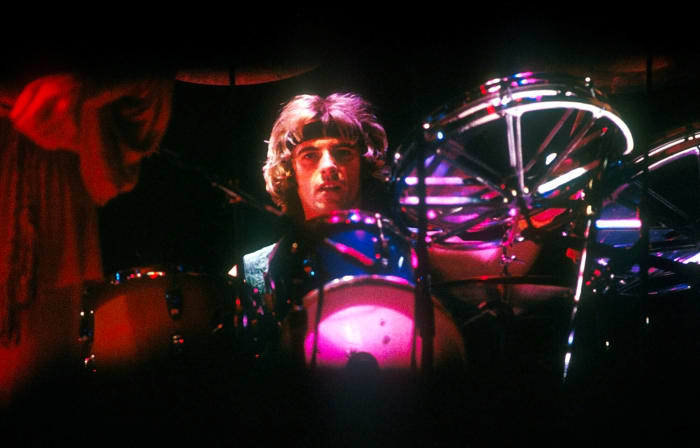
Bill Bruford is one of the great progressive rock drummers of the Hall of Fame band Yes. But, in 1972, he left to join another prog rock giant in King Crimson. Enter White, already a well-respected and highly talented drummer in his own right. White played on 43 (yes, 43) studio and live Yes albums, and solidified himself as one of the great prog rock drummers as well. White, who died in 2022, was the longest-serving member of the group.
14 of 20
7. Ronnie Wood, Rolling Stones
Michael Chow/The Republic/USA TODAY NETWORK
There's probably a very good chance Wood would have enjoyed lasting stardom had he not joined the Rolling Stones in 1975 to replace the aforementioned and underrated Mick Taylor. Wood, still mastering his guitar while well into his 70s, played with the Jeff Beck Group starting in 1967. He then helped form the Faces in the late '60s, with Rod Stewart on vocals. Wood became an official member of the Rolling Stones in 1976, and has never looked back.
15 of 20
6. Kirk Hammett, Metallica
Michelle Pemberton/Indianapolis Star/USA TODAY NETWORK
Not that original Metallica lead guitarist Dave Mustaine was a totally popular figure, but he was prominent member of the band during the early days, both for his playing and songwriting. However, when he was kicked out of the band in 1983 (before the release of the band's debut Kill 'Em All), Hammett, co-founder of Exodus, stepped in and quickly solidified himself as one of the great rock/metal guitar players of all time. He can deliver at a blistering pace without compromising style or flare, like on classics "For Whom the Bell Tolls," "Master of Puppets," and "One."
16 of 20
5. Kenney Jones, The Who
Allen Fredrickson/Milwaukee Journal Sentinel via Imagn Content Services, LLC
The Hall of Famer Jones was a well-regarded drummer for his time with Small Faces and Faces, so it wasn't much of a surprise when The Who came calling in 1978. Needing a replacement for late legend Keith Moon, the surviving members of the iconic band went with Jones. He played with the group until 1988, and was well accepted by fans (though rumors persisted about problems between he and famed frontman Roger Daltrey) even though his drumming style was less frenetic than that of Moon.
17 of 20
4. Phil Collins, Genesis
Klaus-Peter Steitz/North Jersey Media Group via USA TODAY NETWORK
When vocalist Peter Gabriel left Genesis in 1975, it essentially allowed the group to shed its critically acclaimed but not-so-commercially-successful progressive rock sound. Drummer Collins became the main vocalist. The three-piece Genesis with Mike Rutherford and Tony Banks became a full-fledged pop-rock band that was in heavy rotation on Top 40 radio and MTV thanks to hits like "No Reply at All," "Invisible Touch," "Land of Confusion," and "I Can't Dance."
Nik Wheeler/Sygma via Getty Images)
When Gilmour joined Pink Floyd in late 1967, it was to bring some stability to the group because Syd Barrett, the "Madcap Genius" was becoming more unreliable on and off stage. However, Gilmour brought so much more as a guitar player and a songwriter. His polished, mature, melodic approach to songwriting turned the Floyd from a quality semi-psychedelic, progressive rock act of the late 1960s into a commercial musical juggernaut. He had a hand in the overall creation and execution of major Floyd hits like "Echoes," "Time," "Wish You Were Here," and "Comfortably Numb."
19 of 20
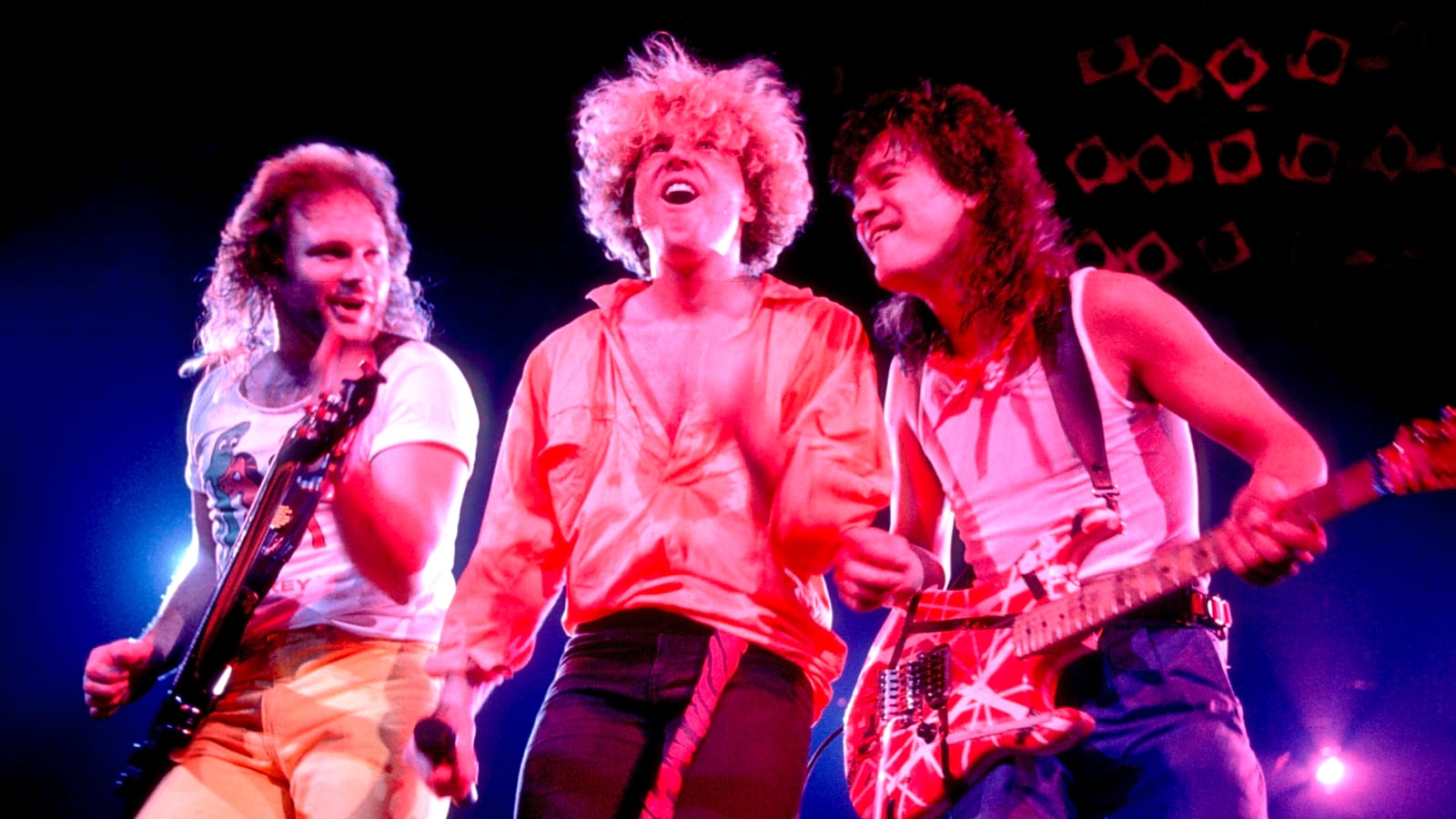
2. Sammy Hagar, Van Halen
Jose Huerta/USA TODAY NETWORK via Imagn Images
Van Halen was a popular rock band with David Lee Roth through the late 1970s and into the '80s, but didn't really enjoy mainstream success until 1984 came out. When Sammy Hagar joined the band in time to cut 5150 (1986), Eddie Van Halen's synthesizer use increased, and the music had a more made-for-MTV vibe. The result: four straight U.S. No. 1 records with Hagar in tow: 5150, OU812 (1988), For Unlawful Carnal Knowledge (1991), and Balance (1995).
20 of 20
1. Brian Johnson, AC/DC
Robert Hanashiro/Imagn Images
It would have been easy for AC/DC to call it a career following the 1980 death of lead singer Bon Scott. He was living embodiment of the attitude and persona of the band, which just scored huge success via Highway to Hell. However, the group trudged on with new, raspy-voiced singer Johnson in tow. A relative no-name, Johnson helped usher AC/DC into the 1980s with a more accessible — but no less powerful — sound. It all began with 1980's Back in Black, which features classics “Hells Bells,” “You Shook Me All Night Long,” “Shoot to Thrill” and the legendary title cut. As of 2025, Johnson and beloved guitarist Angus Young are still successfully carrying the AC/DC torch.





 On Facebook
 On Flipboard















 +
+






