We tend to remember who won the Heisman trophy. Maybe not the exact year, but if you rack your brain (or see a Heisman House ad), you can remember the last several winners, plus a handful more from the past. However, what is rarely remembered is who finished second. Let us help with that! Here are the Heisman runners-up in the 21st century.
Robert Deutsch/USA TODAY NETWORK via Imagn Images
It was a neck-and-neck battle between two quarterbacks to kick off the new millennium. Fittingly, the two quarterbacks in question ran the show for the two teams that played in the title game. Florida State’s Chris Weinke was, famously, 28 when he won the Heisman. Heupel, now Tennessee’s head coach, was the runner-up, but Oklahoma did win the national title.
Matt Cashore/Imagn Images
Old-school football: Eric Crouch won the Heisman. He was the quarterback for Nebraska, but this was still when Nebraska ran an option offense. Crouch barely beat out Grossman (who barely beat out Ken Dorsey). The Florida signal caller was slinging it around, and he actually was the runner-up in his sophomore season. As a junior, he didn’t even finish in the top 10.
Joseph Cress/For the Register/USA TODAY NETWORK via Imagn Images
Banks is one of those classic college football names. If you were watching college football in 2002, you likely remember the Iowa quarterback. In his only season as a college football starter, Banks threw for 26 touchdowns against five picks and added 423 yards and five touchdowns on the ground. That was good enough to finish second to Carson Palmer. Also, yes, there was a time when the Hawkeyes had great quarterback play.
4 of 25
2003: Larry Fitzgerald
Barry Reeger/Imagn Images
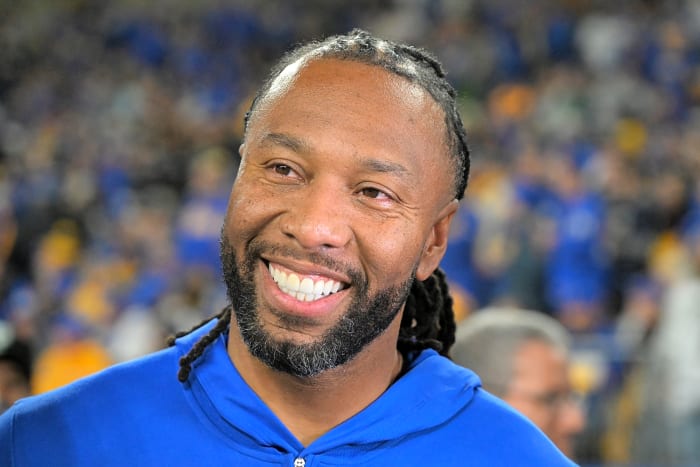
Our first non-quarterback, which is perhaps not surprising given how often quarterbacks rack up Heisman votes. A quarterback, Oklahoma’s Jason White, won the Heisman. However, the runner-up was Pitt receiver Larry Fitzgerald. For a receiver to finish this high in the Heisman voting, he has to be quite good. Indeed, Fitzgerald had 92 catches for 1,672 yards and 22 touchdowns that season. He then went on to have a Hall of Fame career in the NFL.
5 of 25
2004: Adrian Peterson
Matthew Emmons/Imagn Images
Speaking of Hall of Famers! Peterson was an NFL star, and to date is the last non-quarterback to win NFL MVP. He was also a star running back in college at Oklahoma. That being said, he finished quite a bit behind the Heisman winner Matt Leinart. Notably, finishing a close third was the 2003 winner Jason White.
USA TODAY/Imagn Content Services, LLC
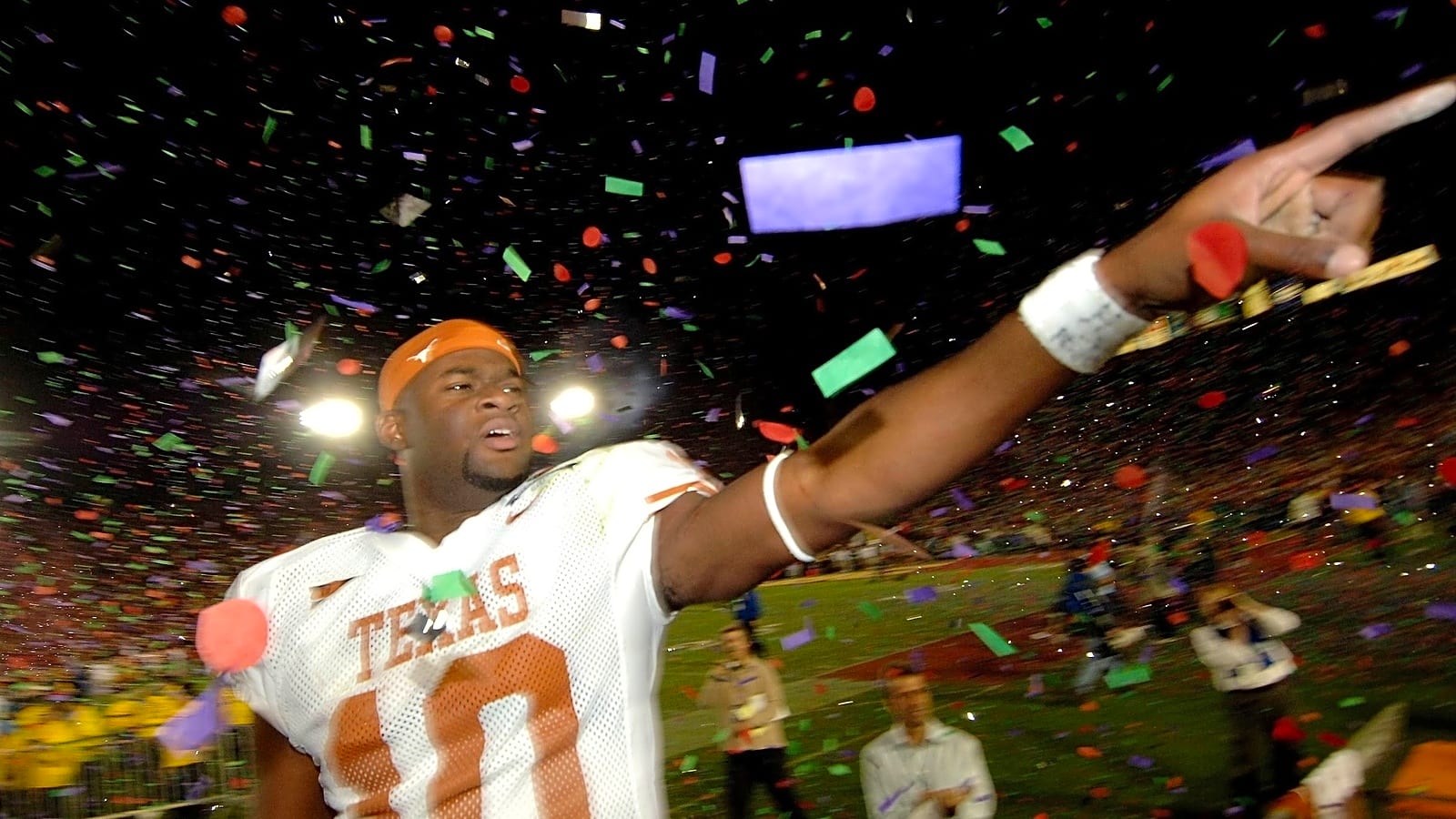
This was an incredible college football season, culminating in an incredible championship game featuring the guys who finished first and second in the Heisman voting. The winner was, of course, Reggie Bush. We don’t need to equivocate here because Bush has gotten his Heisman back. Young, Texas’ quarterback, was the runner-up. Of course, memorably, Young and the Longhorns beat Bush and the Trojans in that title game for the ages.
7 of 25
2006: Darren McFadden
John David Mercer/Imagn Images
Troy Smith won the Heisman in a walk. He got 801 first-place votes, and McFadden was second with 45. Yeah, there was no question about this one. Still, finishing second is better than finishing third, and with Arkansas not being a blue blood franchise, it’s impressive that McFadden garnered the attention at that school to finish second in the Heisman voting.
8 of 25
2007: Darren McFadden
John David Mercer/Imagn Images
Famously, Archie Griffin is the only person to win back-to-back Heismans. However, people have been back-to-back runner-up since then. McFadden is one such player. This time, the Arkansas running back finished a closer second, which is something of a surprise. That’s because Tim Tebow, a guy a lot of people had a very normal, not complicated love for. McFadden was then the fourth pick in the NFL Draft and went on to have a solid NFL career. A better career than Smith or Tebow, to be sure.
Mark J. Rebilas/Imagn Images
Three quarterbacks all got over 250 first-place votes and over 1,500 total points. Tebow, fresh off winning, finished third. He actually had the most first-place votes, but others didn’t have him in the top three. The people who voted for him first definitely had a reasonable feeling about Tebow. In first place, we had Sam Bradford. Then, in between McCoy. The Texas quarterback is a college football legend, and he then had a lengthy career as an NFL backup.
Kyle Terada/Imagn Images
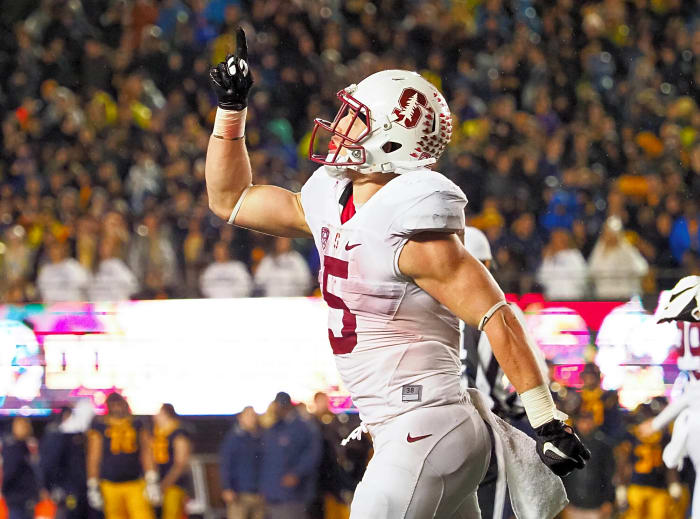
McCoy finished third (and famously Ndamukong Suh finished fourth), but the top-two vote getters were…running backs? It’s true! It was a close race between the best player for a blue-blood program and a guy who came out of nowhere at Stanford. Well, he came out of nowhere in 2008, but then in 2009, he ran for 1,871 yards and 28 touchdowns. He put up better numbers than Mark Ingram, but you know, Ingram played at Alabama.
Matt Kartozian/Imagn Images
Stanford is back! For a second, they were a high-quality run for the Cardinal, primarily thanks to Jim Harbaugh. That was bolstered by Harbaugh's ability to get Luck, one of the top quarterback prospects, to go there. Now, Harbaugh’s coup wasn’t as impressive as Gene Chizik getting Cam Newton at Auburn, to be fair. Newton won the Heisman with maybe the best college football season ever, but Luck finished second.
12 of 25
2011: Andrew Luck
BRYAN TERRY/THE OKLAHOMAN/USA TODAY NETWORK
That’s right, Luck also went back-to-back as a Heisman runner-up. He arguably should have won this year, but people were floored by Baylor actually being good. That got Robert Griffin III the Heisman. Luck then went first-overall to the Colts as the heir apparent to Peyton Manning. The fact he was a back-to-back Heisman runner-up at Stanford played a role in the hype, and he mostly lived up to it until Luck surprisingly retired.
13 of 25
2012: Manti Te’o
Matt Cashore/USA TODAY Sports
We’ve had quarterbacks, running backs, and receivers. Or, rather, a receiver. Now, we have a defensive player. It’s impressive how close the Notre Dame linebacker came to winning the Heisman. He only finished 300 points behind Johnny Manziel, the winner. Of course, both of those guys only have normal stories about off-the-field stuff surrounding them.
14 of 25
2013: A.J. McCarron
Crystal LoGiudice/Imagn Images
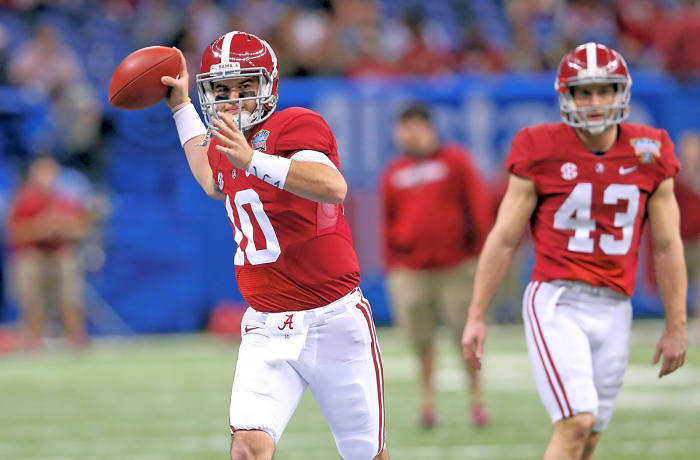
Jameis Winston won this one in a walk as a redshirt freshman and the youngest-ever Heisman winner. Somebody had to finish second, though, so why not the quarterback at Alabama? McCarron was actually better in 2012, but the competition was less stiff so he got to finish second in his final college football season.
15 of 25
2014: Melvin Gordon
Mike De Sistis/Milwaukee Journal Sentinel/USA TODAY NETWORK
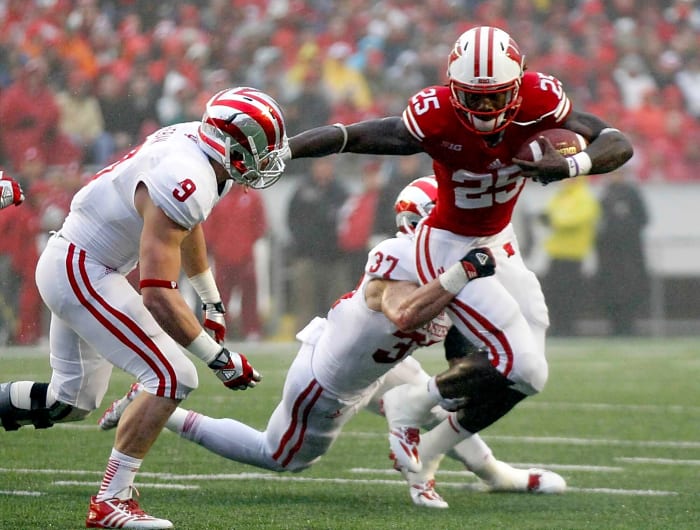
Gordon had an all-time college season in 2014, but to no avail. He carried the ball 343 times for 2,587 yards and 29 touchdowns, and added three scores through the air. However, Wisconsin was Outback Bowl good. Oregon was the two-seed in the playoffs. Why mention Oregon? Because the Ducks’ quarterback Marcus Mariota won the Heisman. The success of Oregon helped Mariota best Gordon. Well, we should also note that 251 of those rushing yards for Gordon came in the Outback Bowl, and that wasn’t included in the Heisman voting.
Kelley L Cox/Imagn Images
Stanford Cardinal players love to finish second in the Heisman voting! We know this! This was a battle of two running backs who both went on to become great NFL players. Possibly both Hall of Famers, given McCaffrey’s skills as a receiver. McCaffrey ran for over 2,000 yards and added 645 yards through the air, but he lacked touchdowns while the winner scored 28. The winner? Derrick Henry.
Ken Ruinard/USA TODAY NETWORK
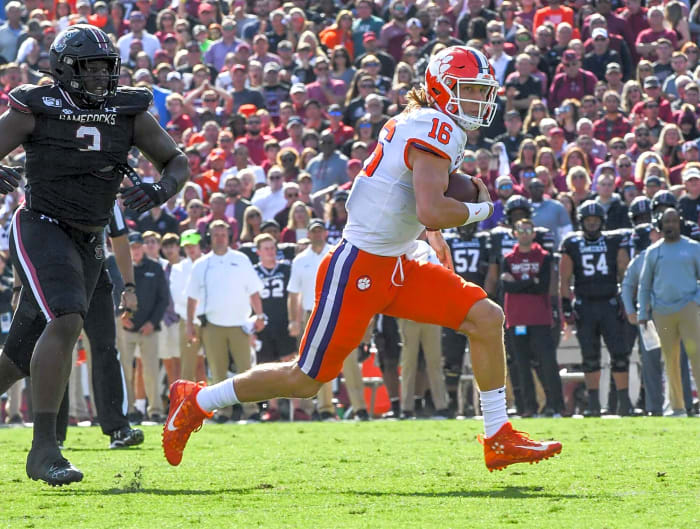
Watson, the Clemson quarterback, finished third in 2015. He was able to jump up to second in 2016. Unfortunately for Watson, another quarterback rose to jump him. That would be Lamar Jackson, who brought a Heisman to Louisville. Of course, given where Watson’s reputation has ended up, we don’t exactly have a ton of sympathy for him falling short.
Peter Brouillet/USA TODAY Sports/Imagn Images
Not just another Stanford player, but a Stanford player most people have probably forgotten. Did you remember that Bryce Love was the runner-up to Baker Mayfield? He finished ahead of Saquon Barkley and Jonathan Taylor! Love averaged 8.1 yards per carry and scored 19 touchdowns. Unfortunately, the next season he suffered a knee injury in his final college game and never played in the NFL.
Gary Cosby Jr./Imagn Content Services, LLC
Another season, another Oklahoma quarterback winning the Heisman. This time it was Kyler Murray. Lincoln Riley is far from a perfect head coach, but he knows how to make a quarterback’s numbers pop. Finishing in a clear second (in terms of distance from third and also from first) was Tagovailoa. He and Alabama got the best of Murray and Oklahoma in the playoff, but then Clemson smashed Alabama in the championship game.
20 of 25
2019: Jalen Hurts
BRYAN TERRY/THE OKLAHOMAN/USA TODAY NETWORK
Well, Joe Burrow won the Heisman with the largest margin of victory ever, but the race for second was close! Hurts, who was the quarterback at, yes, Oklahoma, eked past Ohio State’s Justin Fields. Fields may have suffered from vote splitting. Two other Buckeyes, Chase Young and J.K. Dobbins, finished in the top six.
Ken Ruinard/USA TODAY NETWORK
What did it take for a receiver to win the Heisman for the first time in decades? A global pandemic, apparently. Devonta Smith won the Heisman in a chaotic year for college football, but second and third were neck-and-neck. Lawrence, the Clemson quarterback who went on to be the first-overall pick, barely bested Alabama’s Mac Jones.
Trevor Ruszkowski/Imagn Images
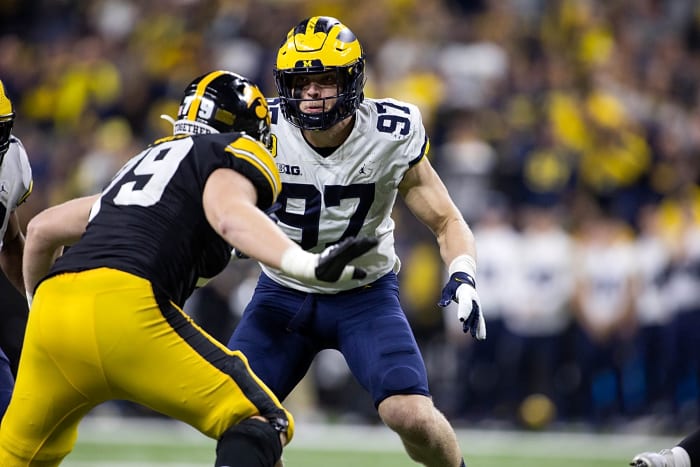
Bryce Young ran away with the Heisman at Alabama, but a defensive player finished as the runner-up. Michigan pass rusher Aidan Hutchinson tallied 14 sacks and created chaos in backfields all over the Big Ten and beyond. Of course, while Hutchinson finished second, he didn’t really get close to being the rare defensive player to win the Heisman (and generally, you have to also play a bit of offense as well).
Kirby Lee/Imagn Images
Time flies. It’s only been a few years, but Duggan has already been forgotten. Probably not at TCU, though, as he carried the team to an unexpected title-game appearance. Duggan was your classy, scrappy, but productive college quarterback. Heisman winner Caleb Williams became the first-overall pick in the NFL Draft, and Duggan is a Toronto Argonaut.
24 of 25
2023: Michael Penix
Vasha Hunt/Imagn Images
Jayden Daniels came out of nowhere (more or less) to win the Heisman, and he earned it with a remarkable season. Having said that, he did not run away with the award like Joe Burrow. Penix finished a respectable second in the voting. The quarterback had begun his career at Indiana (when that wasn’t a place to go play college football) but after years plagued with injuries he transferred to Washington. There, his career took off, and he also managed to stay healthy. He also probably helped get Kalen DeBoer get the Alabama job.
Joe Rondone/The Republic/USA TODAY NETWORK via Imagn Images
While everybody from third on down was dwarfed in voting by the top two, Jeanty and the winner were quite close to one another. Personally, we think the Boise State running back should have won. People were just so enamored with the novelty of Travis Hunter playing offense and defense. Why vote for one of the best college running backs ever when you can vote for a guy who is good at two things? Jeanty carried the Broncos to the playoffs and totaled 2,601 rushing yards and 29 rushing scores.





 On Facebook
 On Flipboard










 +
+






