
-

-


Follow Us
-

 On Facebook
 On Flipboard

As one of the longest-standing members of the Big Ten conference, could Michigan football be on its way out in the future? In the short term, the answer is no. But following the end of its current media rights deal, which is set to expire in 2036, it could be on the table.
University of Michigan Board of Regents member Jordan Ackers talked with Nicole Auerbach earlier this week and spoke on the possibility of the Wolverines leaving the conference.
University of Michigan Regent Jordan Acker said the Wolverines “would consider going independent when the current media rights deal expires in 2036,” if the Big Ten agrees to receive a private capital investment without unanimous approval.
— Yahoo Sports (@YahooSports) November 19, 2025
(via @freep) pic.twitter.com/fs1idyaUvH
"Michigan has a lot of options," Acker said. "The possibility of independence for football is certainly something that has to be considered. Not today, but at the end of the grant of rights. I think it's something you have to think about, not because we want to leave the Big Ten conference, because the commissioner's office has made it enormously clear that they're going (to move forward with the proposed capital deal) without us… That would be the end of Michigan, as far as I can see, in the Big Ten conference."
The conflict comes from a private equity investment, which would look to give $2.4 billion to each of the 18 schools up front, in exchange for a 10 percent cut of the Big Ten’s media rights.
"Having the richest college football conference join arms with private equity is not in my view a positive for the University of Michigan," Acker said.
It has been well documented that the UofM is strongly against this and is clearly willing to walk away from the conference if need be. USC is also against the private equity investment, voicing its concerns over the decision-making at the top of the conference.
Michigan and the Big Ten
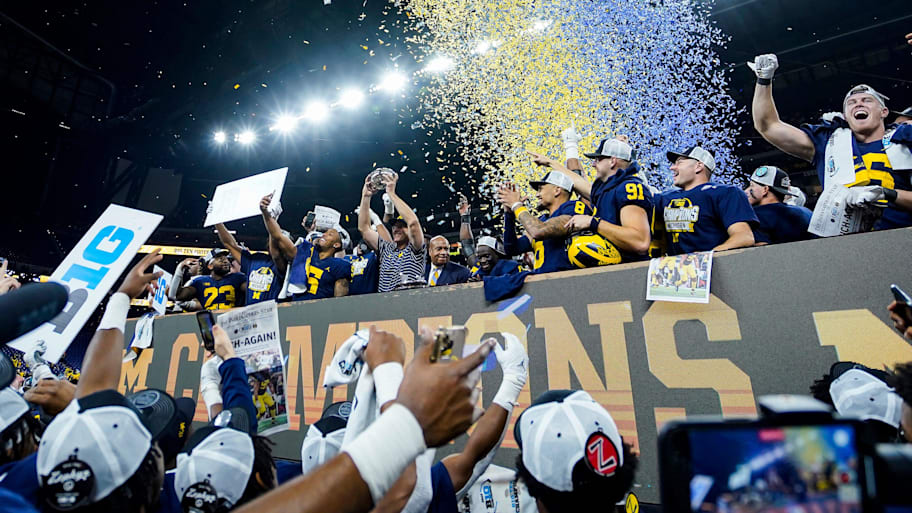
Michigan was one of the original six schools to join the conference when it was founded in 1896.
However, Michigan left the conference in 1908 over disagreements over football regulations. The Wolverines rejoined the conference in 1917.
Becoming an Independent
Would leaving the Big Ten and becoming an independent be good for the Wolverines? That probably depends on who you ask.
A school like Notre Dame, which is independent in football but a part of the Atlantic Coast Conference (ACC) in other sports, seems to thrive in that. The Fighting Irish have a $50 million deal with NBC and can obviously have flexibility with who they want to schedule year-to-year.
However, not being a part of a conference can hurt when on the edge of a College Football Playoff berth. Also, Michigan fans wouldn’t want to lose annual rivalry games like Michigan State and Ohio State if they did leave the conference.
Overall, it is difficult to determine whether it would be beneficial or detrimental to the program. But the longer Michigan and the Big Ten go without a resolution, the more likely it will become.
More must-reads:
- Patriots QB Drake Maye has one word to describe Super Bowl loss
- Scottie Scheffler shuts down a reporter after a bizarre Masters question
- The 'Masters runners-up since 2000' quiz
Breaking News
Trending News






Customize Your Newsletter
 +
+




Get the latest news and rumors, customized to your favorite sports and teams. Emailed daily. Always free!
PRIVACY POLICY COOKIE POLICY CONTACT US
ABOUT YARDBARKER TERMS OF SERVICE


By using this site, you agree to our Terms of Service and Privacy Policy.
This site is for entertainment purposes only.
There is no gambling offered on this site.
Gambling Problem? Call 1-800-Gambler.
