
-

-


Follow Us
-

 On Facebook
 On Flipboard
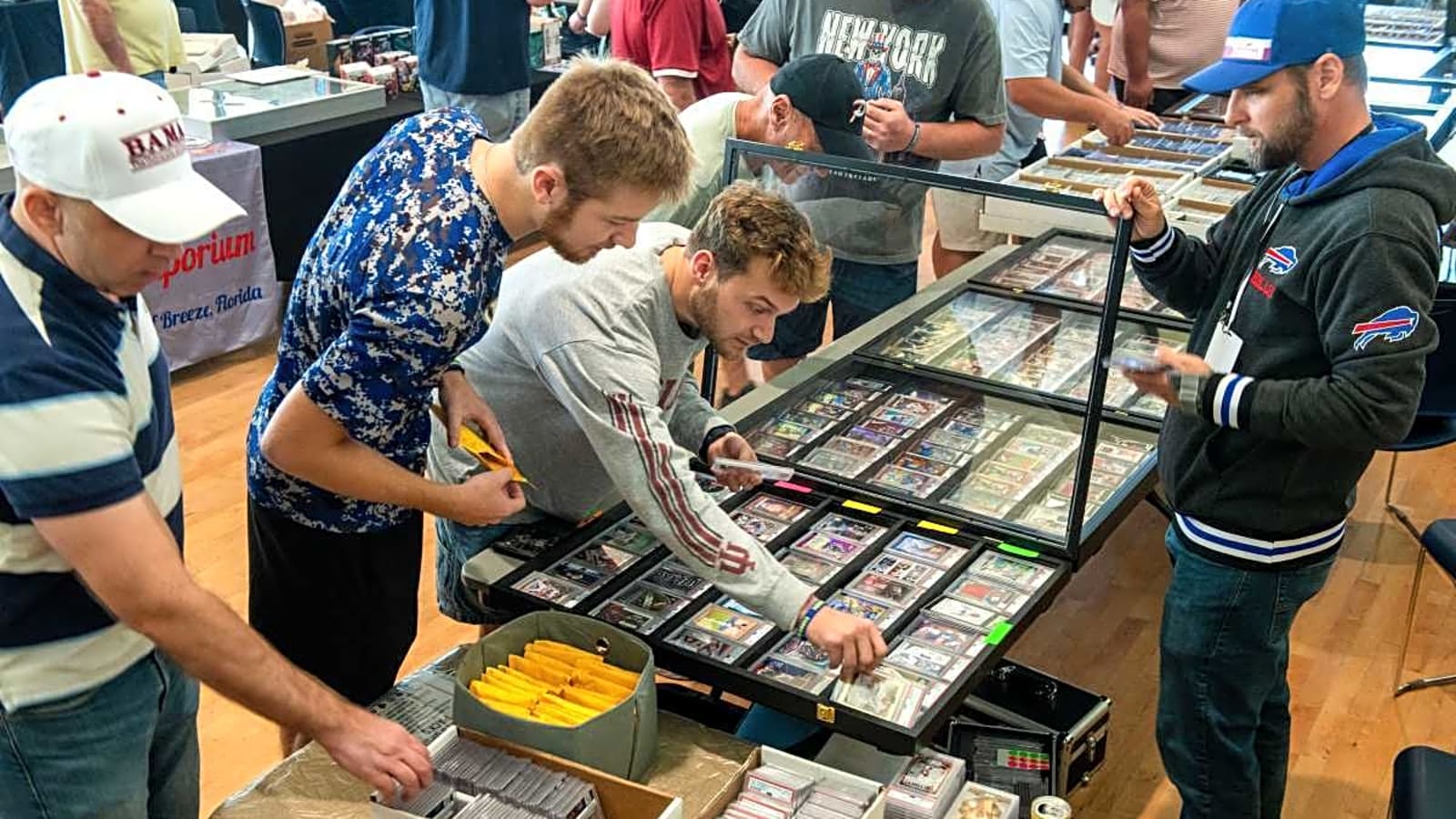
Baseball card sizes help maintain order in the hobby. Standard dimensions facilitate display and storage. If you're new, sorting your collection will be made easier if you know the sizes of both graded and classic cards. This guide, based on industry standards such as Topps and PSA, covers key specifications, how sizes have changed, and offers helpful advice. Prepare your magnifying glass because in a $13 billion market, precision is crucial.
The Standard Trading Card Size
Modern Flagship Dimensions
Topps and Panini cards typically measure 6.4 cm by 8.9 cm, or 2.5 inches wide by 3.5 inches high. Each card weighs about 1.5 grams and is about 0.013 inches thick, which is equivalent to 13 points. Like credit cards, these sizes adhere to the ISO 7810 ID-1 standard, making sleeves easy to use and helping prevent card bending during transportation.
Measurement Tools
Use a ruler to measure your cards accurately. You can also try apps like Card Size Checker for digital scans. A difference of up to ±0.005 inch is usually fine for collectors. Just take a photo, and the app takes care of the rest, tracking any unusual measurements in your collection.
Why This Size?
The standard card size comes from poker decks, which fit well in wallets and binders. After 1957, Topps made this size the norm, and it soon became standard worldwide. This makes it easy to trade cards across countries without worrying about size differences.
Vintage and Variant Sizes
Pre-1950 Oddities
T206 cards are 1.4375 inches by 2.625 inches. Cabinet cards are larger at 4 inches by 6 inches, while E90-3 caramel cards are 1.75 inches by 3 inches. Cards from the tobacco era are fragile, so handle them carefully. Their small size made them easy to pack into cigarette boxes.
Oversized and Mini Sets
The 1975 Topps Mini cards are smaller at 2.25 inches by 3.125 inches, while the 1991 Stadium Club Dome cards are larger at 3 inches by 4 inches. Promotional and novelty cards like these can be fun, but they may not fit standard storage. Still, they often get collectors' attention.
H3 International Variations
Japanese NPB cards are close in size, usually about 2.3 inches by 3.3 inches, with a slight trim to fit packs. BBM and Calbee sets are made for global trading, and Topps NPB cards use the standard size. There aren’t any major size differences, so importing is simple.
Slabs and Storage Impacts
Graded Holder Sizes
PSA slabs measure 3.75 inches by 5 inches and are 0.25 inches thick. Beckett’s prismatic holders are 3.5 inches by 5 inches. Magnetic display cases are larger, at 4 inches by 6 inches. Adding a sleeve increases the thickness by 0.1 inches. With the card inside, the total weight is about 42 grams. The main goal is to protect your cards.
Binder and Box Fits
Each pocket on BCW 9-pocket pages measures 2.625 by 3.625 inches and is designed for standard 2.5 by 3.5-inch cards. Approximately 500 ungraded cards can fit in an 800-count box. Custom acrylic holders are good for unusual sizes. To ensure the safety of your collection, arrange your storage.
By the way, listed below are more great sports card collecting tips:
- How to Get Baseball Cards Graded: A Novice Collector’s Guide
- These 5 Sports Cards Could Steady Your Collection Through 2026
- How to Ship Baseball Cards Safely and Securely
Shipping Considerations
To stop cards from bending, use mailers that fit 35-point holders and add stiff boards. Sending slabs is a good use for USPS flat mailers. When shipping, always use tracking and bubble wrap.
Practical Tips for Collectors
Measuring Your Cards
Check the length of the card by scanning apps, and measure its thickness with a caliper. For every set, note any variations in size. A card's value can decrease by 50% if it has been trimmed. Always start by looking at the corners.
Custom and DIY Solutions
Certain cards don't adhere to standard sizes because they are die-cut. For roughly $20, you can purchase 3D-printed holders on Etsy or create your own for a personalized fit. You can also save money by making your own binders. Experiment with various prototypes to determine what works best.
H3 Common Mistakes
Not every card is 2.5 by 3.5 inches. Vintage cards may surprise you and come in a variety of sizes. Online advice regarding size mismatches is widely available, and these discrepancies frequently lead to storage issues. Before storing your cards, take careful measurements.
Conclusion
The basis for organizing your collection is the size of baseball cards. Measuring your cards will help you store them correctly, whether you have graded slabs or standard cards. Feel secure as your collection grows with common storage options. Accuracy is crucial, so start with a caliper.
People Also Ask:
-
Q: What is the standard size?
A: 2.5 inches by 3.5 inches. -
Q: What are the graded slab dimensions?
A: PSA 3.75x5 inches. -
Q: Are vintage cards smaller?
A: Yes, T206 1.4375x2.625. -
Q: Are there thickness variations?
A: 0.01-0.013 inches stock; up to 130pt for relics. -
Q: Do Topps cards fit binders?
A: Yes, BCW 9-pocket standard.
More must-reads:
- Three reasons the Rams are bigger Super Bowl favorites after Aaron Donald signing
- Austin Wells makes MLB history in Yankees' blowout win over Red Sox
- The 'FBS college football nicknames' quiz
Breaking News
Trending News






Customize Your Newsletter
 +
+




Get the latest news and rumors, customized to your favorite sports and teams. Emailed daily. Always free!
PRIVACY POLICY COOKIE POLICY CONTACT US
ABOUT YARDBARKER TERMS OF SERVICE


By using this site, you agree to our Terms of Service and Privacy Policy.
This site is for entertainment purposes only.
There is no gambling offered on this site.
Gambling Problem? Call 1-800-Gambler.
