x
The origin behind 25 of the most famous cocktail names
Shutterstock

The origin behind 25 of the most famous cocktail names

We've all knocked back a few cocktails in our time. Have you ever wondered, though, why some of them are called what they are? Is there someone actually named Tom Collins? Why would anyone call something a Sidecar?

Let's take a look at some of the origins and legends behind the most famous mixed drinks on the market. 

 
1 of 25

Old Fashioned

Old Fashioned
Shutterstock

Back in the early 1800s, cocktails were pretty straightforward. Then, as the century went on, bartenders began to concoct fancy drinks. As a result, bar-goers began to crave the simple stuff, and patrons began to coin the term “Old Fashioned.” There’s nothing complex about this one; it’s just a blend of sugar, bitters, whiskey, and a garnish. 

 
2 of 25

Margarita

Margarita
Shutterstock

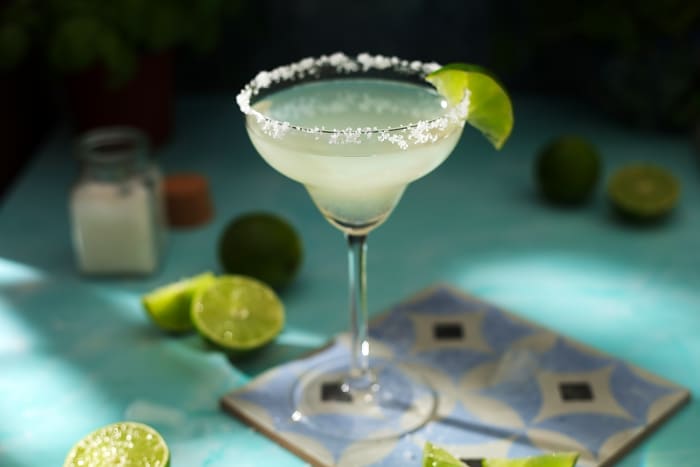
There’s not one single source of truth behind this name. Though one of the most told stories involves the Spanish translation, Daisy. In the early 20th century, a category of cocktails emerged featuring a spirit of choice, citrus, and a sweetener. The most popular “Daisy” at the time was the Tequila Daisy, essentially the Margarita as we know it today. 

 
3 of 25

Tequilla Sunrise

Tequilla Sunrise
Shutterstock

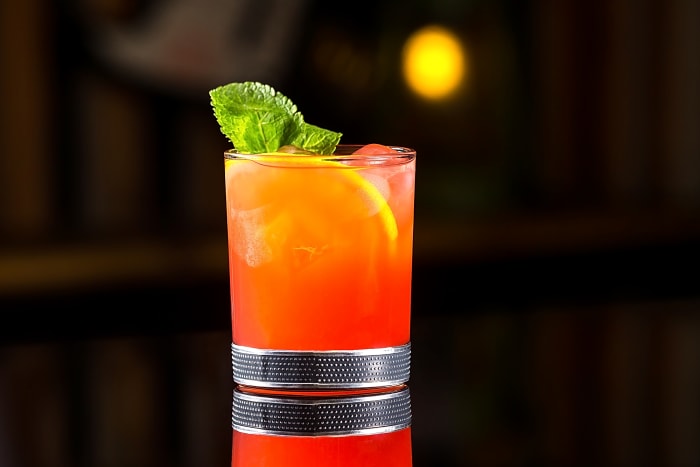
This drink traces its roots to the Arizona Biltmore Hotel in Phoenix. In the 1930s, a bartender came up with the idea of mixing tequila with soda water, lime juice, and a blackcurrant liqueur, which created the sunrise gradient that signifies the cocktail. 

 
4 of 25

Negroni

Negroni
Shutterstock

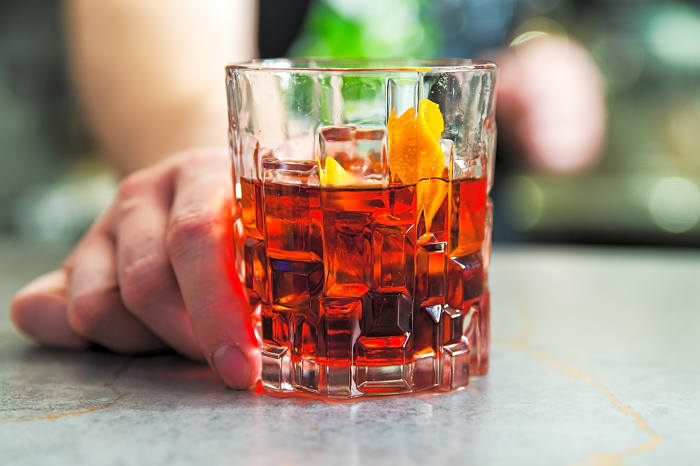
Count Camillo Negroni simply wanted something stronger. A frequent patron of Florence bars, Negroni asked the bartender to stiffen his drink, an Americano. That recipe featured Campari, Sweet Vermouth, and soda water. He asked for the latter to be replaced with gin, thus creating the drink as we know it today. Negronis are topped with an orange slice, which replaced the traditional lemon slice that adorned the Americano. 

 
5 of 25

Bloody Mary

Bloody Mary
Shutterstock

A Paris bar called Harry’s New York Bar is where the Bloody Mary reportedly first surfaced. The bartender, best known as Pete Petioit, created it, then refined it when he moved back to New York City to work at the St. Regis Hotel in 1934. To accommodate the different taste preferences between the two countries, Petioit adjusted the French version by adding salt, pepper, cayenne, lemon, and Worcestershire sauce. 

 
6 of 25

Manhattan

Manhattan
Shutterstock

Some legends and facts contradict the origins of this popular cocktail. On one hand, many believe it was invented at the Manhattan Club in New York City in the 1870s at the request of Winston Churchill’s mother. Others believe it traces its roots to The Big Apple around the 1860s. There, a bartender used the newly-imported Vermouth from Europe and mixed it with American Rye Whiskey. 

 
7 of 25

Daiquiri

Daiquiri
Shutterstock

The namesake is actually a mining town in Cuba. An American miner, Jennings Cox, was working along the coast during the Spanish-American War. After running out of gin, he decided to mix the Bacardi rum he had on hand with lime juice and sugar to tame its harshness. The drink was a hit with the guests and became a mainstay at bars worldwide. 

 
8 of 25

Mojito

Mojito
Shutterstock

Arguably one of the oldest cocktails, the mojito first began to appear in the 1500s. An English sea captain, Sir Francis Drake, was in Havana following a raid. Fearing the loss of many men to scurvy, Drake mixed the local aguardiente de cana, a local beverage similar to rum, with lime juice, sugar cane juice, and mint to create a medicinal alcohol for his team. Eventually, that recipe evolved over time as white rum became a thing. The official moniker was adopted in the 1800s, tracing its roots to either the Cuban translation of Mojo (a lime-based seasoning) or Mojadito, which is Spanish for “a little wet.” 

 
9 of 25

Mai Tai

Mai Tai
Shutterstock

This is a cool story because it was born in the moment. Victor Bergeron was at his Oakland bar in 1944 when he took a rum and infused it with lime juice, orange curacao, a sweet almond syrup, and rock candy syrup. He let his friends from Tahiti give it a whirl, and one famously uttered, “Maita’i rose!” That’s Tahitian for “Out of this world.” Bergeron shortened it to Mai Tai from that point on. 

 
10 of 25

Sidecar

Sidecar
Shutterstock

The Roaring Twenties lay claim to this one. Some believe it was from a World War I soldier who frequented a Paris bar while riding in the sidecar of a motorcycle. He liked to ask for something stronger than an aperitif but not something on the level of brandy. Thus, the mix of Cognac, Cointreau, and lemon juice was used. Others like to trace the roots to the Buck’s Club in London and The Ritz in Paris. 

 
11 of 25

Gimlet

Gimlet
Shutterstock

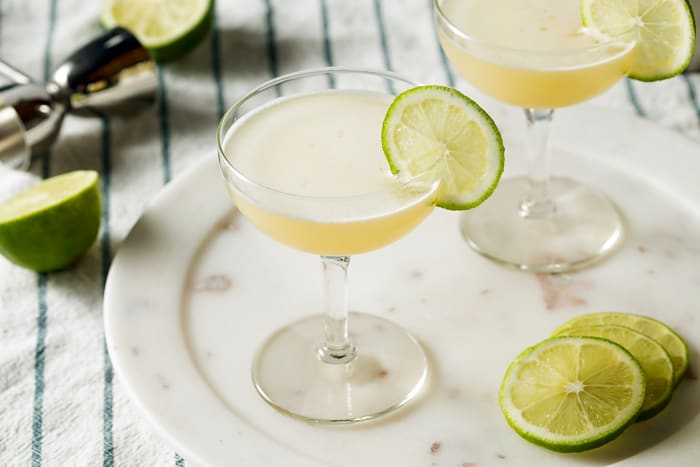
Apparently, a naval surgeon called Rear-Admiral Sir Thomas Desmond Gimlette mixed gin with the fruit cordial that contains preserved lime juice and sugar. That's one explanation behind the name. The other is that a "gimlet" is a small tool used on ships to poke holes in barrels for spirits to go into. With gimlets being strong and sharp to the palate, the name makes sense. 

 
12 of 25

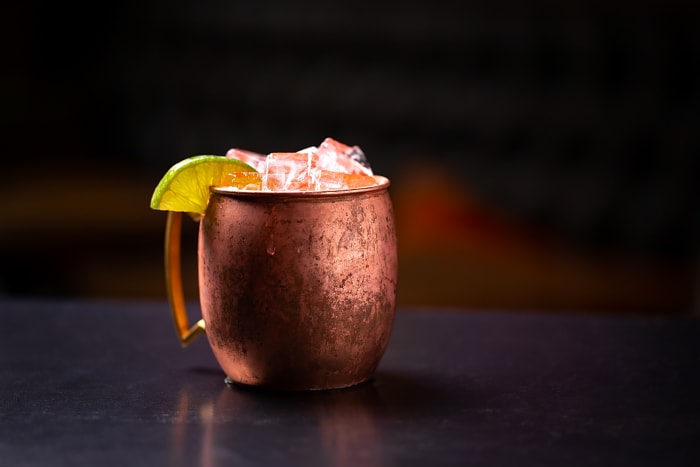
Moscow Mule

Moscow Mule
Shutterstock

There's a good chance you probably could have guessed why it's called a Moscow Mule. The first half points to the vodka's heritage in Russia, while the second word ties in with the kick drinkers get from the ginger. You know, like a donkey -- err, mule -- kicks. 

 
13 of 25

Pina Colada

Pina Colada
Shutterstock

This one isn't too difficult. The Spanish translation is "strained pineapple." No surprise, then, a Pina Colada is brimming with flavors of tropical fruit. It also didn't hurt that Rupert Holmes' famous song, "Escape," added even more intrigue to the cocktail. Who hasn't had those "if you like Pina Coladas" lyrics stuck in their head before, right?

 
14 of 25

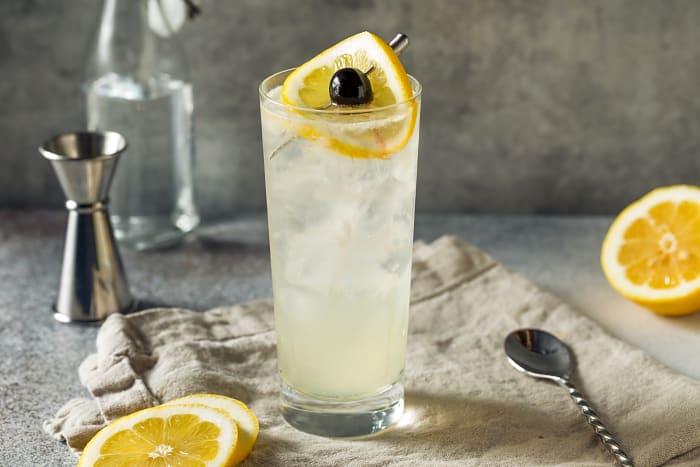
Tom Collins

Tom Collins
Shutterstock

This has to be named after a person, right? Wrong. It's actually a viral joke that dates back to long before viral pranks were a thing on social media. In the 1870s, pranksters would approach random people and ask, "Have you seen Tom Collins?" That would always illicit a "no" that would be followed up by the jokester urging the person to head to the bar (usually nearby) to stop "Tom Collins" because he was talking badly about them. That person would proceed to the bar looking for a confrontation, only to be met with nothing but that bartender telling them, "He just left for the bar down the street." Yeah, what a dumb prank. 

 
15 of 25

Bellini

Bellini
Shutterstock

The founder of Harry's Bar in Venice was enamored with a painting by Giovanni Bellini for its vibrant pink hue. He was so inspired that he crafted a cocktail that best resembled the colors, mixing white peach puree with sparkling wine. 

 
16 of 25

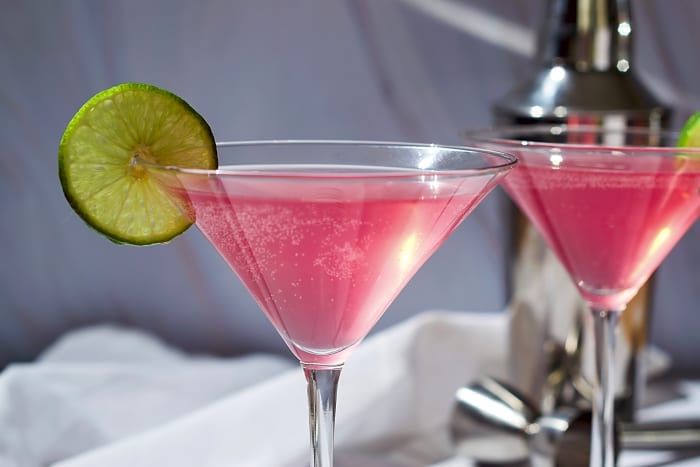
Cosmopolitan

Cosmopolitan
Shutterstock

No, this name didn't come from the magazine. Nor did Carrie Bradshaw and Sex and the City create this drink, although they did popularize it to new heights. The history of the Cosmopolitan has three stages, beginning in the 1970s as a drink in LGBTQ+ bars as a lighter alternative to the martini. In 1985, Miami improved it by adding Absolut Citron, triple sec, lime juice, and a splash of cranberry. Shortly after, a New York City bar, The Odeon, upped the ante by using squeezed limes and swapping in Cointreau for triple sec. The name, like the circles it's associated with, was given to represent sophistication. 

 
17 of 25

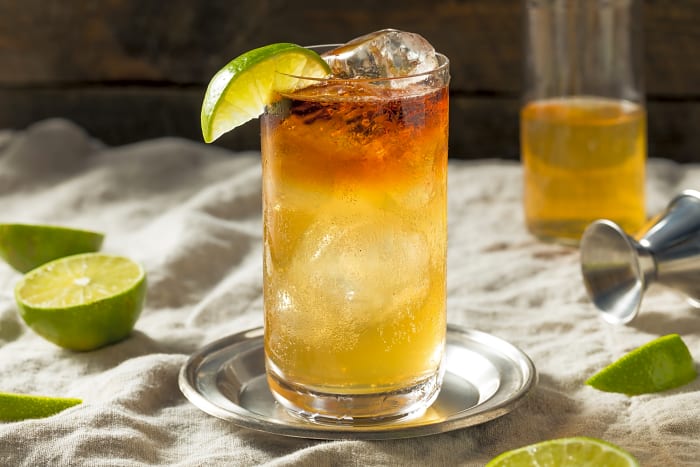
Dark N' Stormy

Dark N' Stormy
Shutterstock

Unlike most cocktails, a true Dark N' Stormy can only use one rum: Gosling's Black Seal. If you don't use that, then it's just a rum and ginger beer. Its history begins after World War I, when the British Royal Navy popularized the brew. A sailor is said to have looked at the pour and remarked that it resembled a cloud that "only a fool or a dead man would sail under." 

 
18 of 25

Paloma

Paloma
Shutterstock

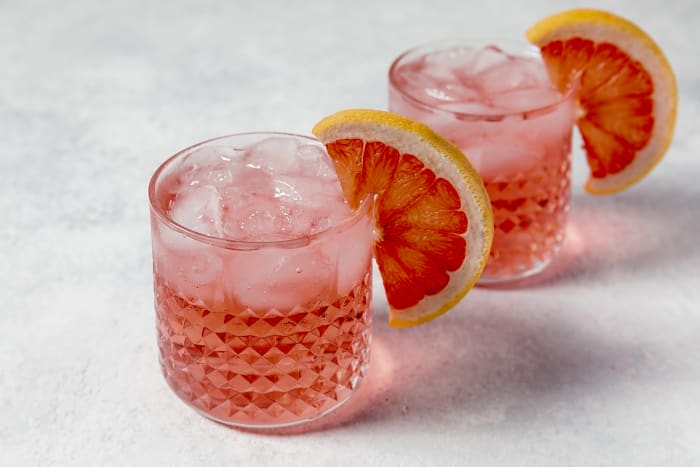
No one actually knows where the Paloma was first born. One legend claims that Don Javier Delgado Corona, a bartender from Mexico, came up with the drink. Others say it just appeared in different phases before taking on its beloved recipe. Regardless, "Paloma" translates to "dove" in Spanish. Does that mean anything? Again, no one really knows. Others believe it's due to the exported soda, Squirt, a grapefruit-based cola, that originated in Phoenix. 

 
19 of 25

French 75

French 75
Shutterstock

The roots of this drink trace back to the French 75mm field gun used primarily during World War I. Like the weapon, the French 75 delivers a powerful kick with its mix of gin and champagne (or cognac). It became a popular drink among both American and French soldiers.  

 
20 of 25

Mimosa

Mimosa
Shutterstock

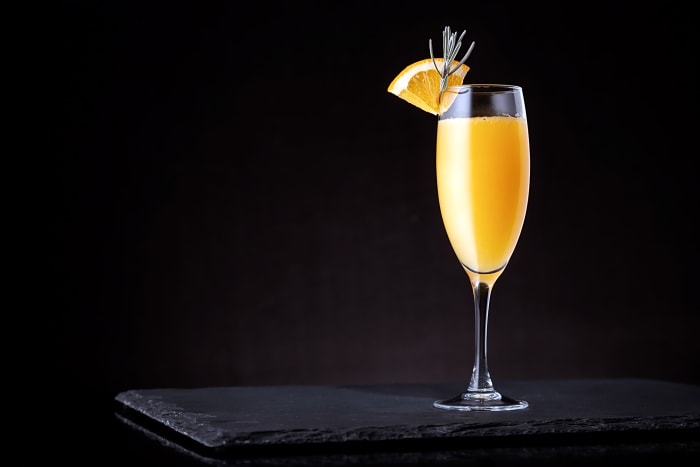
The brunch staple has a few backstories, but the one that most people recognize is the one involving The Ritz in Paris. That's where Frank Meier mixed equal parts juice and Champagne before coining the Mimosa moniker. He did so to refer to the Mimosa flower, which is prevalent in southern France. 

 
21 of 25

Mint Julep

Mint Julep
Shutterstock

While known as the drink of choice at The Kentucky Derby, its origins don't begin on the racetracks. The "Julep" label is Persian for rose water, which is why juleps were sweet syrups used medicinally. Eventually, farmers in the South began mixing it with brandy or whiskey to serve as a refreshing pick-me-up before starting labor. 

 
22 of 25

Long Island Iced Tea

Long Island Iced Tea
Shutterstock

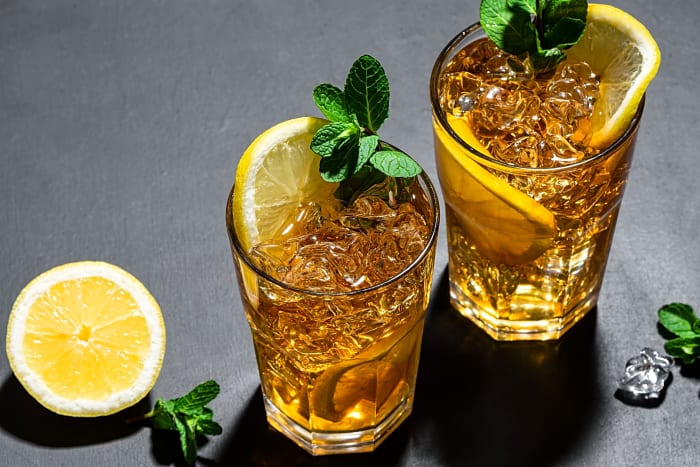
There are five different spirits found in this absurd creation. There are also two different origin stories. The first is from the 1920s, when a man named "Old Man" Bishop came up with the idea during Prohibition while living on "Long Island" in Kingsport, Tennessee. The thought process was to dilute the remaining liquor by combining everything they had and disguising it in a tea-like color. The other story is from 1972 in Babylon, New York, where Robert Butt allegedly invented the drink for a cocktail competition and brought it to glory. 

 
23 of 25

Sazerac

Sazerac
Shutterstock

The official cocktail of New Orleans. An apothecary in the 1830s began with a medicinal bitter that was mixed with brandy in a small eggcup. It found its way into bars later on, shifting from pharmaceutical to recreational use, first popping up at the Sazerac Coffee House. Eventually, whiskey and absinthe made their way into the drink. 

 
24 of 25

Vesper Martini

Vesper Martini
Shutterstock

The names Bond, James Bond. Yep, that's right, you can thank the movie star spy – well, actually the writer Ian Fleming – for this drink. Fleming first coined the term in Casino Royale in 1953, a nod to the first Bond girl, Vesper Lynd. 

 
25 of 25

Sex on the Beach

Sex on the Beach
Shutterstock

This name was born from a Florida bartender who wanted to win a selling contest. Seriously. Ted Pizio was working at Confetti’s Bar when he was tasked by a distributor to sell the most cases of Peach Schnapps in the 1980s. Needing to get guests’ attention, he came up with a wild name, citing the reasons that people visit Florida, which are, well, the beach and sex. 

Kyle Phillippi

Kyle is a freelance writer who spent many years covering Philadelphia sports before honing in on the world of entertainment. Kyle's bylines include The Philadelphia Inquirer, SI.com, Metro, NBC Sports and more recently, Collider. Kyle can be found on X, @Kyle_Phillippi.

More must-reads:

Customize Your Newsletter

Yardbarker +

Get the latest news and rumors, customized to your favorite sports and teams. Emailed daily. Always free!