
-

-


Follow Us
-

 On Facebook
 On Flipboard

The St. Louis Cardinals are the most successful National League team in the history of baseball. Their record books are filled to the brim with legends both at the plate and on the mound.
Somewhat strangely, when compiling this list of the five greatest pitchers in franchise history, though, two modern-day Cardinals made the list. That isn’t a negative toward previous generations, but more of a testament to a ball club that has never truly had a down era. The Cardinals have no gone longer than a quarter-century without a World Series win.
These are the five pitchers that have most kept St. Louis as one of the most consistently successful teams in Major League Baseball.
5. Chris Carpenter
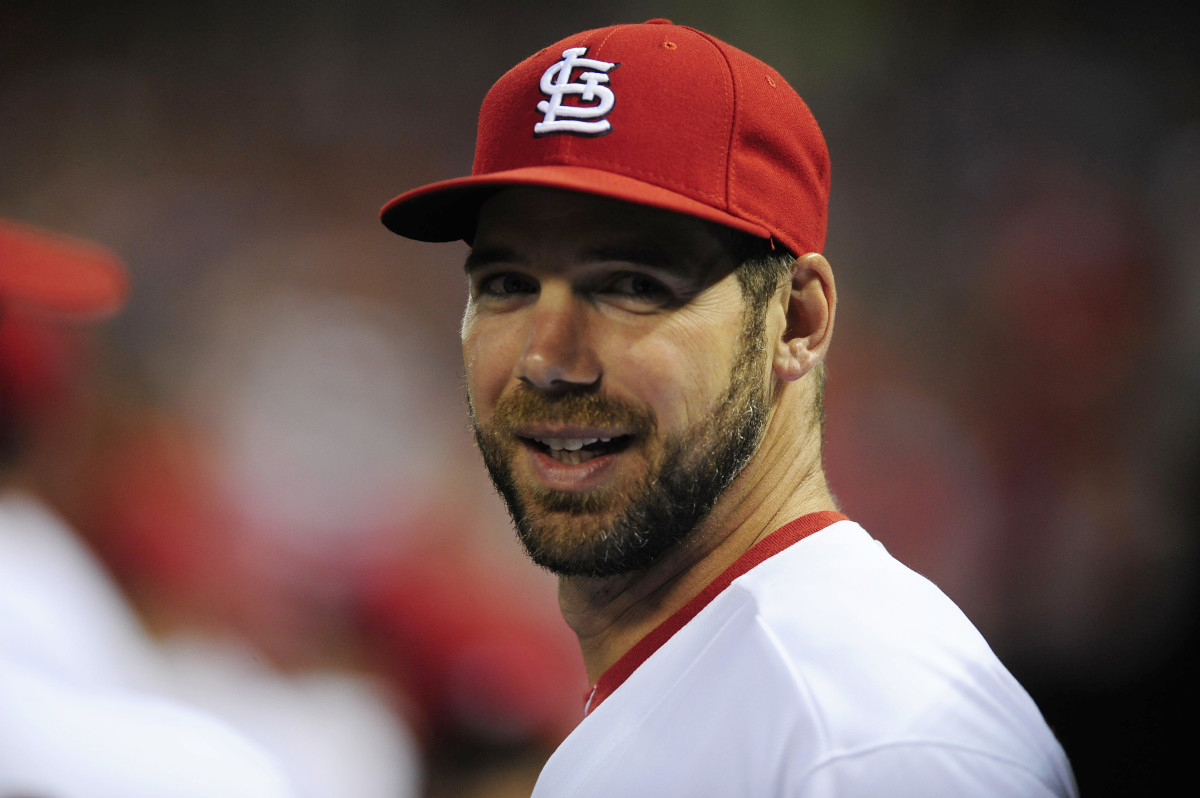
The years between the Randy Johnson/Roger Clemens National League era in the early 2000s to the Clayton Kershaw/Max Scherzer National League era of the early-2010s produced three one-time Cy Young Award winners. Carpenter was one of them.
From 2004 to 2010, Carpenter was one of the most dominant pitchers in all of baseball. He might be higher on this list had he not missed basically all of 2007 and 2008 with injuries, as Carpenter threw in just five total games over those two seasons. But before and after? Excellent. And it was excellence that was impossible to see coming, considering his ho-hum first six years in the league.
Carpenter joined the Cardinals in 2002 with anticipation he would be ready to pitch by the middle of the 2003 season. Instead, he made just eight rehab starts and the club declined his option. They did re-sign to a cheaper, $300,000 deal and he debuted with St. Louis in 2004.
All he did was win 15 games with a 3.46 earned-run average and 1.137 WHIP. The next year was the stuff of Cy Young: Carpenter went 21-5 with 213 strikeouts, a 2.83 ERA, 1.055 WHIP, and seven complete games.
In 2006, he finished third in Cy Young voting and led the NL in WHIP. Arm troubles returned the next two years, but at age 34, in 2009, Carpenter finished second in CY Young voting in ERA at 2.24.
4. Harry Breechen
Breechen may not be one of the first names non-Cardinals fans think of when thinking of St. Louis’ greatest pitchers. But he deserves recognition. It’s hard to keep a guy off the list when he put together several good seasons and then won three games in a World Series.
That’s Breechen in a nutshell. His performance against the Boston Red Sox in 1946 was nothing short of brilliant. He won Game 2 with a four-hit shutout, then threw a complete game in Game 6 as the Cardinals fought off elimination. Somehow not exhausted - or perhaps he was; it was just a different time - Breechen came out of the bullpen in Game 7 and pitched the final two innings with the Cardinals breaking a 3-all tie in the eighth to win the World Series.
Breechen pitched his entire career for the Cardinals from 1940 to 1953. He missed the 1941-43 seasons, though he did not miss because of military service like dozens of his peers. Breechen, nicknamed "The Cat," suffered from medical maladies that made him ineligible for such service. His best season came in 1948 when he led the National League with a 2.24 ERA, 149 strikeouts, and a 1.037 WHIP.
3. Adam Wainwright
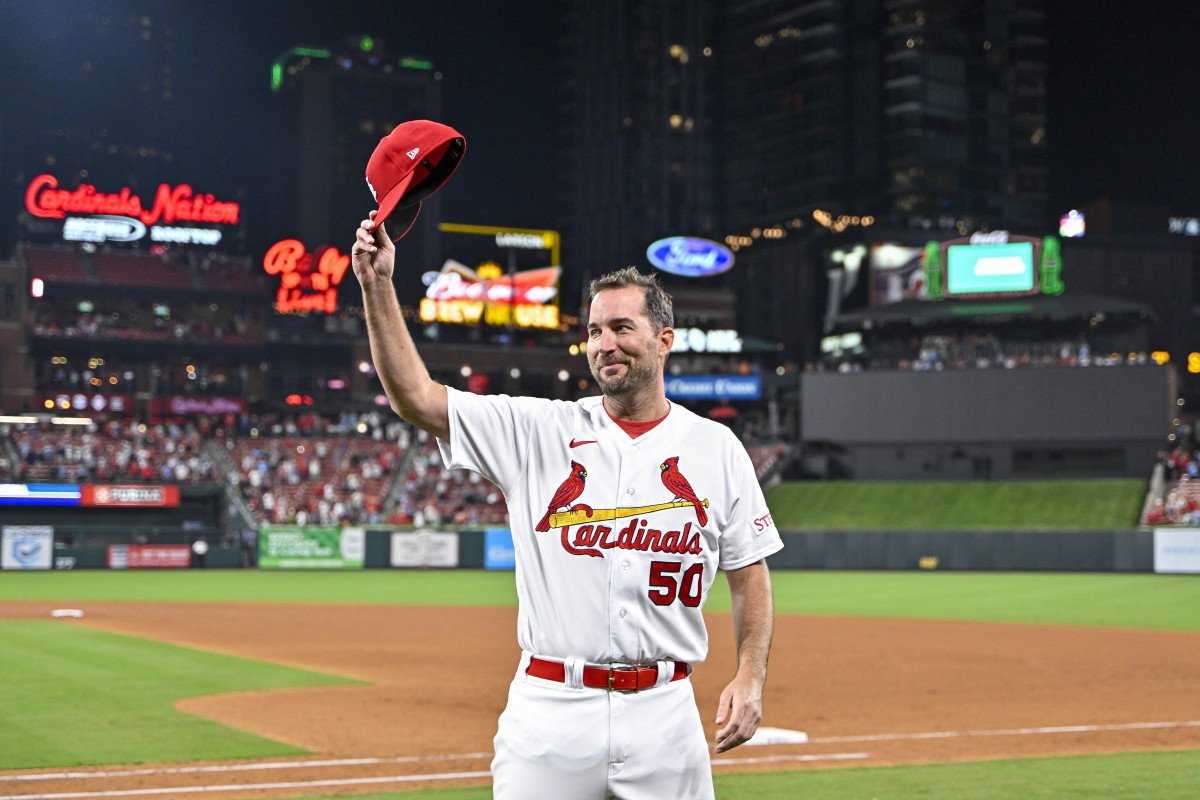
Wainwright was a top-100 prospect for four years before debuting with the Cardinals in 2005, so his arrival to the Majors was highly anticipated. But his pitching for 18 years and collecting 200 wins was not quite as counted on, even if it was hoped for.
Not only did "Waino" meet both those milestones, but he did so while spending his entire career in St. Louis. After a cup of coffee in his first year, manager Tony La Russa pitched Wainwright in 61 games out of the bullpen in 2006 before making him a full-time starter in 2007.
By 2009, the 6-foot-7 right-hander finished third in NL Cy Young voting after leading all baseball with 19 wins and teaming with Carpenter to give the Cardinals the best one-two punch in the game. In 2010, he finished second while winning 20 games, recording a 2.42 ERA and 1.051 WHIP.
It was only the beginning. Wainwright would win 19 or more games two more times and lead the Majors in complete games three more times as baseball’s consummate workhorse. He finished second and third one more time apiece in Cy Young voting, as well as a final seventh-place finish in 2021 at the age of 39.
2. Dizzy Dean
You may not know you know it, but if you’re a fan of classic baseball, Dean’s wind-up is one of the most familiar sights in baseball history. Of course, it wouldn’t have meant much if he were just a run-of-the-mill pitcher. And while his career is relatively short for a legend, what he did during the best years remains as legendary as his pitching mechanics.
Dean pitched in one game in 1930 and took the 1931 season off. At the age of 22 in 1932, he began his climb to the Hall of Fame. From ‘32 to 1937, no pitcher could up him. Dean won National League Most Valuable Player honors in 1934 and finished second in 1935 and 1936.
During his seven years with the Cardinals - he left for Chicago after the 1937 season - Dean pitched to the tune of a 134-75 record with a 2.99 ERA, and 1.204 WHIP. He led the NL in complete games and innings three times and led all of baseball in strikeouts four times.
His play suffered a bit after the move to the Cubs in large part because of an injury he suffered with the Cardinals. In the 1937 All-Star, he took a comebacker off his foot, fracturing it. Dean returned too soon from the injury and altered his pitching motion to compensate for the pain. For the final four seasons of his career, minus a comeback attempt in 1947, Dean won just 16 more games, though he did still pitch with a 3.35 ERA.
1. Bob Gibson
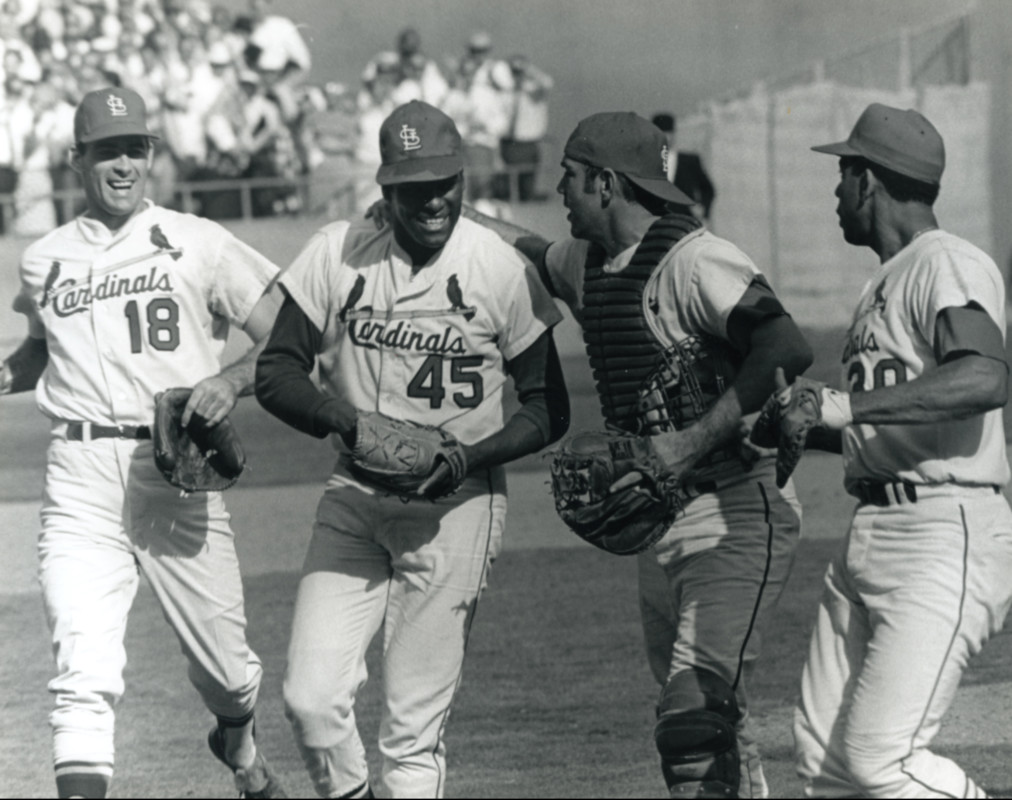
The term “ace” is common parlance in modern baseball. But Gibson was the pitcher who most personified it before it became a regular phrase. Consider just his best season of all time.
In 1968, from June 6 to Sept. 2, Gibson made 18 starts. Seventeen were complete games, and his record was 16-1 with a 0.60 ERA. For the season, Gibson went 22-9 with 13 shutouts, 268 strikeouts, and carried a 1.22 ERA and 0.853 WHIP in what is largely considered the greatest pitching year of all-time.
If that was it, if Gibson had just been an average or so pitcher for the other 16 years of his career, he still might make this list. But we’re talking about a guy who won another Cy Young Award outside of his 1968 one and made eight more All-Star Games. His 241 wins are 31 more than the next highest total among Cardinals pitchers, and Gibson was inducted into the Hall of Fame in 1981, six years after he retired; his entire career played in St. Louis.
And the kicker? Gibson was dynamite in the postseason. He pitched in three World Series, with the Cardinals winning two of them. Gibson made nine starts over those three Series and went 7-2 with a 1.89 ERA, 0.889 WHIP, and recorded 92 strikeouts in 81 innings. This in an era in which more strikeouts than innings pitched was hardly a common feat.
More must-reads:
- Tigers ace Tarik Skubal speaks out in wake of unexpected injury update
- Angels' Mike Trout speaks out amid growing trade speculation
- The 'Active 40-HR MLB seasons' quiz
Breaking News
Trending News




Customize Your Newsletter
 +
+




Get the latest news and rumors, customized to your favorite sports and teams. Emailed daily. Always free!
PRIVACY POLICY COOKIE POLICY CONTACT US
ABOUT YARDBARKER TERMS OF SERVICE


By using this site, you agree to our Terms of Service and Privacy Policy.
This site is for entertainment purposes only.
There is no gambling offered on this site.
Gambling Problem? Call 1-800-Gambler.
