
-

-


Follow Us
-

 On Facebook
 On Flipboard


It doesn’t usually happen the same way. Sometimes it takes a little longer and, in other cases, the adjustment needed to find the balance that a big-league infielder with more offensive than defensive options is looking for never comes.
For Brooks Lee, the evolution has come as quickly as his almost definitive move to third base in 2026.
The Minnesota Twins had seen some of his efforts to provide the best possible defense at a key position like shortstop. Lee played shortstop in 208 of his first 371 defensive innings when he made his big-league debut during the 2024 season.
He finished with –3 Fielding Run Value, with notable deficiencies in range (–2) and other difficulties that were by no means minor on double-play plays (–1).
Often, most of the problems appeared when right-handed hitters put the ball in play in his territory, as plays toward his glove hand and when he had to cover ground moving backward were difficult for him.
Even so, Lee’s bat and his offensive contributions, which also went through a process of improvement until he developed his power, secured him a spot in the lineup.
In 2025, the Twins didn't give up, so they tried another approach with Lee. He appeared at three positions, splitting his playing time with 253 innings at second base and 285 at third, but he spent most of his time at shortstop, with 595 innings.
He was an average third baseman, was below average at second, finishing with –1 FRV, but the experiment failed again at shortstop, where he finished the campaign with a terrible –3 FRV.
More Than a Move
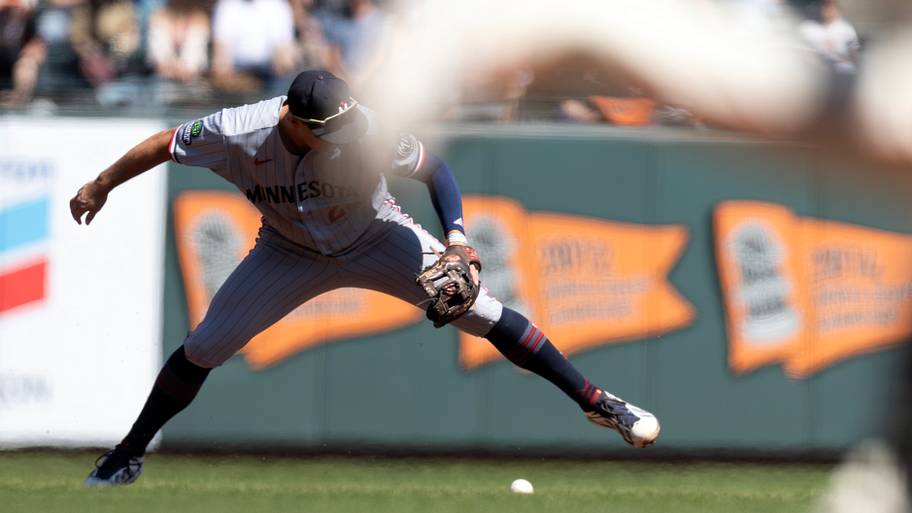
When you look at the numbers he put up offensively, you cannot avoid the feeling that this could be just the beginning of a breakout. If there is one thing Lee has always had, it is determination.
He approaches game situations aggressively and showed in 2026 that Minnesota can count on his bat to be part of a new generation with high expectations.
But if you ask me what the most interesting part of Lee’s progress is, I would not focus only on the offense and those 24 home runs with 83 RBIs that he put in his numbers, recording 2.8 fWAR, after starting 2026 at 0.0 during the first two campaigns of his career. I, instead, would give greater credit to his defensive leap as a third baseman.
Lee recorded 0 FRV and +6 OAA in 900 innings as a third baseman, taking his defense to another level compared with his entire recent history of struggles and shared playing time at other positions.
Even so, he played 400 innings at shortstop, most of the time out of team necessity. Now, what could change this story is precisely that added value from Lee, who will probably stay at third base full-time next year when the talented Kaelen Culpepper gets the opportunity to play every day as the starting shortstop.
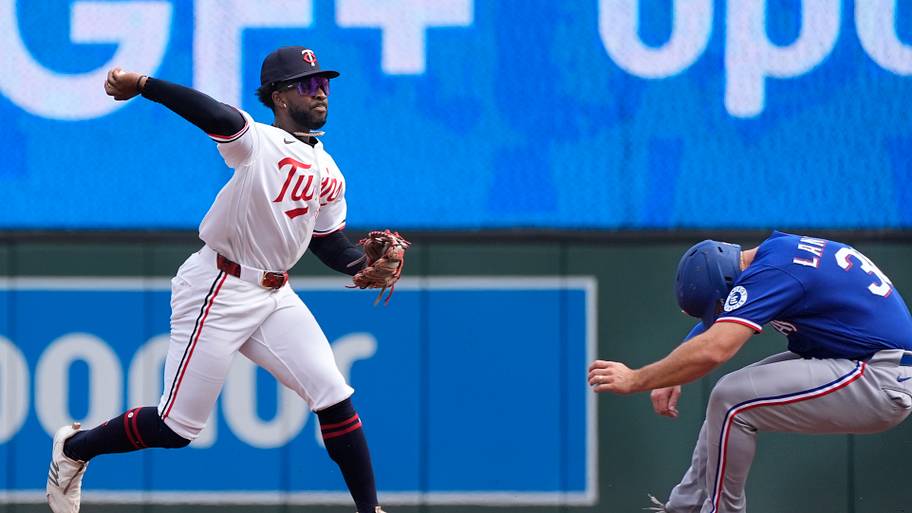
Culpepper still has many challenges to face, but in his short playing time when he debuted this year, he showed progress in his offensive skills. He played only 281 innings at shortstop and, although it is still too small a sample to draw major conclusions, the metrics revealed his range ability.
He will still have to work on double-play plays, but if Culpepper can become a consistent everyday player, then Lee would take care of third base and the Twins would have an infield with much greater expectations for long-term impact.
More must-reads:
- Ex-Yankee Anthony Rizzo calls out team after latest playoff flop: 'It's insanity'
- White Sox name Sean Burke as Game 5 starter for ALDS finale
- The 'Most 3-HR MLB Playoffs' quiz
Breaking News
Trending News




Customize Your Newsletter
 +
+




Get the latest news and rumors, customized to your favorite sports and teams. Emailed daily. Always free!
PRIVACY POLICY COOKIE POLICY CONTACT US
ABOUT YARDBARKER TERMS OF SERVICE


By using this site, you agree to our Terms of Service and Privacy Policy.
This site is for entertainment purposes only.
There is no gambling offered on this site.
Gambling Problem? Call 1-800-Gambler.
