
-

-


Follow Us
-

 On Facebook
 On Flipboard
 On Twitter
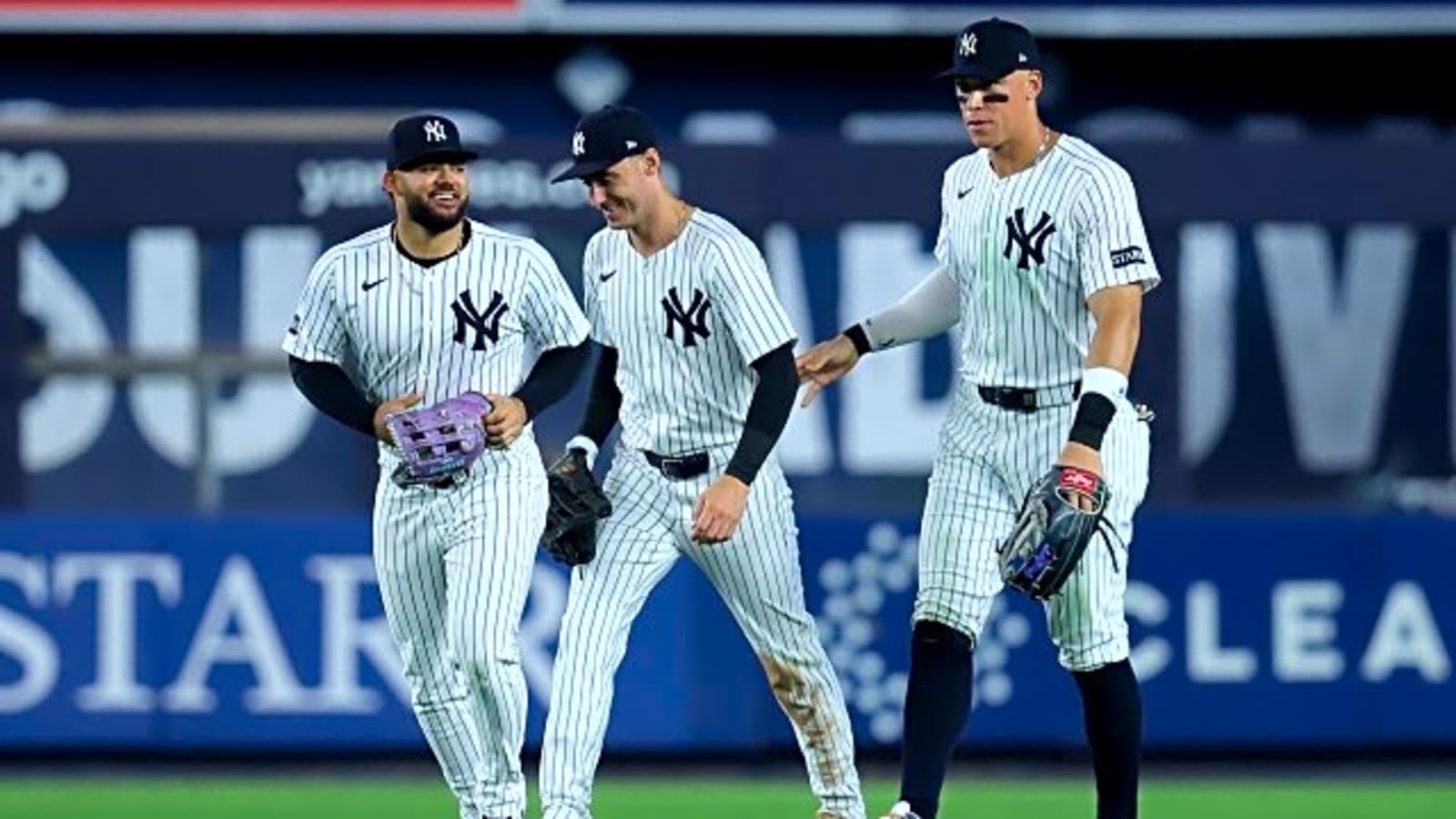
The back and forth between Cody Bellinger and the New York Yankees is finally over as they agreed to a five-year, $162.5 million contract on Wednesday, according to Jeff Passan of ESPN.
This was a very tumultuous offseason, as it felt early on that this pairing was inevitable, and then Bellinger’s agent, Scott Boras, reportedly sought out a seven-year contract. Yankees General Manager, Brian Cashman, wasn’t budging on his number and years because it was a great offer. New York certainly played the long game with Bellinger and his camp after all, as they didn’t give in and remained firm on their price.
Ultimately, Boras and Bellinger lost all their leverage after the New York Mets traded for Luis Robert Jr. on Tuesday night, and they were another team heavily linked to him.
Passan also mentions that the contract includes a $20 million signing bonus, opt-outs after the second and third seasons, and a full no-trade clause.
With this contract, Bellinger is now the fifth-highest-paid outfielder in the league in terms of average annual value at $32.5 million and ninth in total money, according to Spotrac.
Why The Yankees Needed To Bring Back Bellinger
If the Yankees didn’t bring back Bellinger, they would have to rely on their young outfielders such as Jasson Dominguez and Spencer Jones. Both of these players come with their flaws, as Dominguez was horrendous against left-handed pitching and defensively this past season. In terms of Jones, he had an alarming 41.4% strikeout rate in 67 Triple-A games in 2025 and comes with legit zone-contact, whiff, chase, and strikeout issues.
On the other hand, Dominguez was really good against right-handed pitching at the major league level, outstanding on the basepaths, and was easily one of the team’s fastest players. Jones had prodigious power in the minors, even in Triple-A, as he hit 19 home runs in those 67 games. This is also a player who runs well for his 6’7 frame and is already heralded as a good defender in at least the corners.
Now you see why New York at points seemed desperate in retaining Bellinger’s services and even giving him multiple opt-outs and a no-trade clause. This is a guy who’s excellent defensively, great against left-handed pitching, and he’s handled all three big market teams that he’s played in, including Los Angeles, Chicago, and now New York.
Aaron Judge also isn’t getting any younger by the day. The time is now, and Bellinger is coming off a 125 Weighted Runs Created+ and 4.9 Fangraphs Wins Above Replacement Season alongside him.
Bellinger is a nice third option in my opinion, who at points can be the robin, which could also be Ben Rice, and you can’t ever rule out Giancarlo Stanton, either. It really helps that Bellinger rarely strikes out, puts the ball in play, can play a multitude of different positions, and has an infectious energy as well.
The Concerns With Bellinger
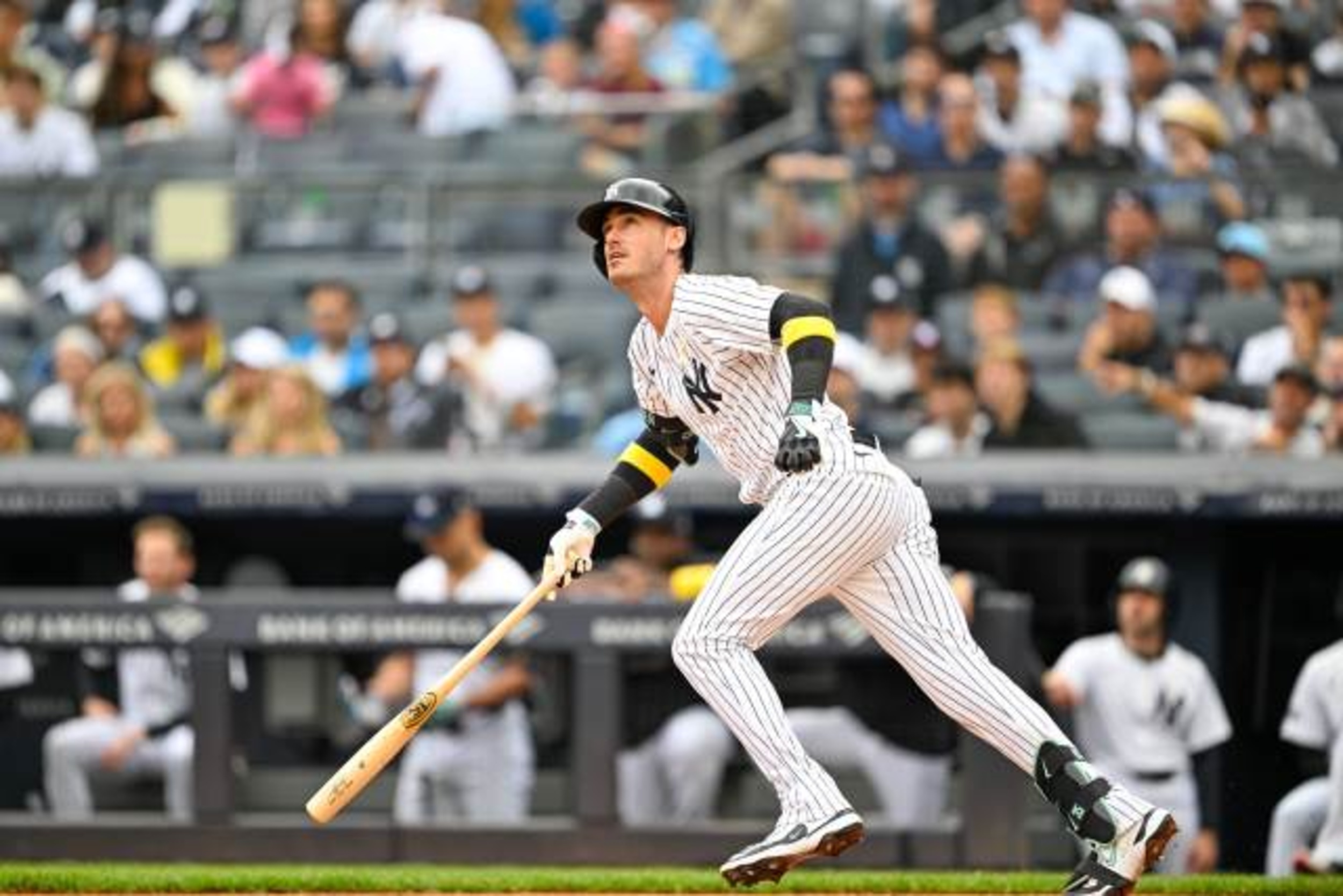
The Yankees will have Bellinger from his age 30-35 seasons at maximum, assuming he doesn’t opt out or waive his no-trade clause to head elsewhere. We also have to remember his volatility that led to the Los Angeles Dodgers non-tendering Bellinger in 2022. Then, the Chicago Cubs salary-dumped him to the Yankees in 2024 for Cody Poteet, who pitched zero innings for them before being traded to the Baltimore Orioles. Even with the Orioles, Poteet only mustered 2.2 innings in 2025 with a 16.88 ERA. In this scenario, the Cubs were able to trade for Kyle Tucker and the entirety of his salary from the Houston Astros.
Bellinger was a heavy product of Yankee Stadium this past season, as it fits his swing to a tee, and the stats indicate that as well. At Yankee Stadium, he hit .302 with a .902 OPS, had 18 home runs, drove in 55 runs, and had a 152 wRC+ in 298 at-bats. On the road, Bellinger only hit .241 with a .715 OPS, 97 wRC+, drove in 43 runs, and hit 11 home runs in 290 at-bats.
Bellinger’s platoon splits were also jarring as he hit an astounding .353 with a 1.016 OPS, hit eight home runs, drove in 36 runs, and had a 180 wRC+ in his 153 at-bats against left-handed pitching in 2025. On the other hand, he only hit .244 with a .741 OPS, 105 wRC+, but hit 21 home runs and had 62 runs batted in across his 435 at-bats against right-handed pitching.
Another concern with Bellinger is his leverage statistics, as he excelled in low and medium-leverage situations with a 137 and 124 wRC+, but struggled in high-leverage situations with a 61 wRC+, according to Fangraphs.
The End Of My Cody Bellinger Rant
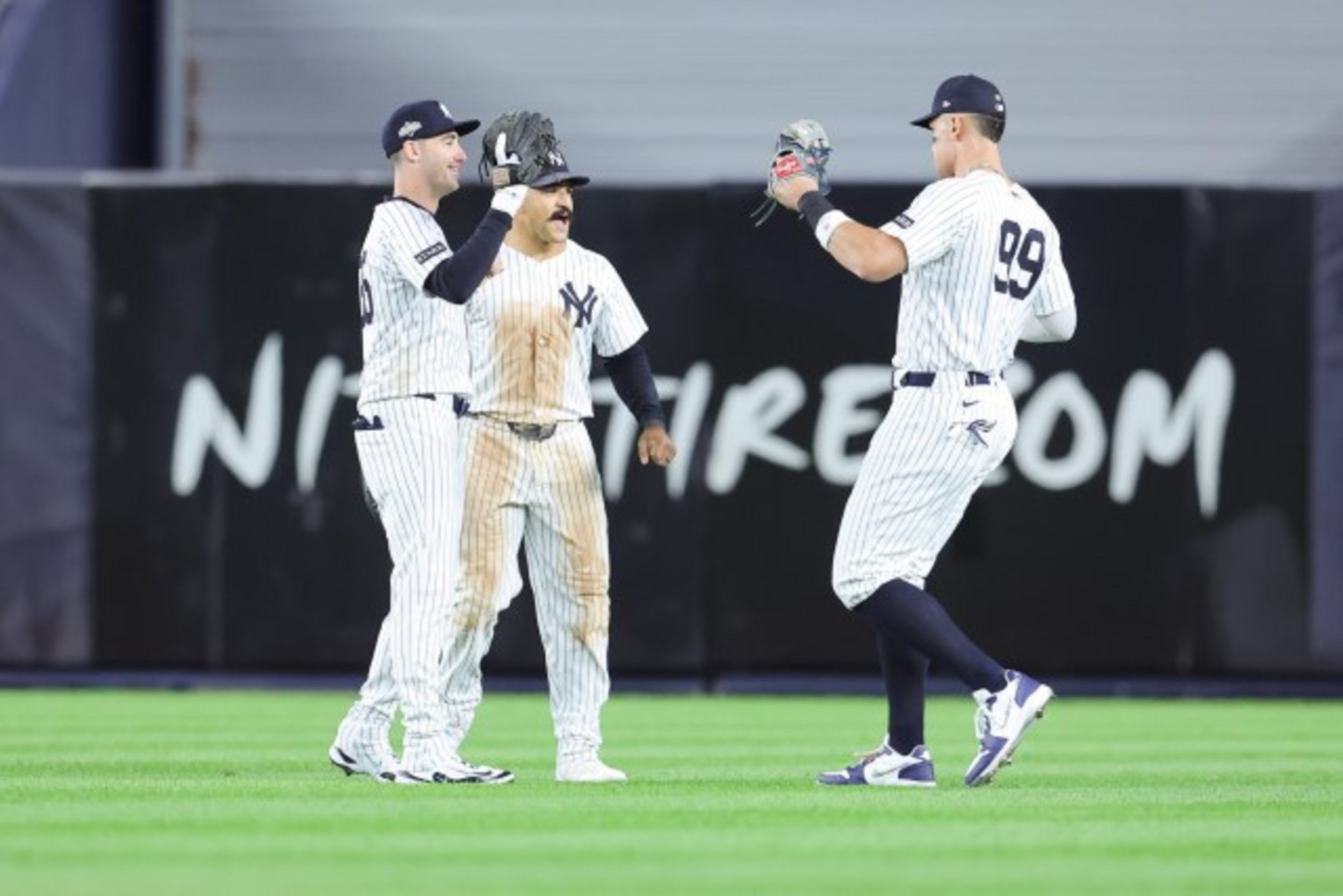
At the end of the day, this Bellinger move had to happen, even if at times it felt incredibly tiring and somewhat annoying to keep talking about the likely reunion between them. Bellinger and the Yankees need each other at the end of the day, and this was the perfect pairing.
In terms of the young nucleus of outfielders for New York, they have another year of fine-tuning their game before they wait until Trent Grisham’s center field job opens in 2027, and they can duke it out for that. God forbid someone gets injured in the outfield, either one of them can fill in there, or let’s say Stanton goes down as he does every single season.
Depth is a good problem to have. Jones is probably the backup center fielder on the team, so there’s a legit shot that he makes the Opening Day roster depending on the offseason and Spring Training. In Dominguez’s case, they have to trust him in center field eventually; he was abysmal in left field, and has the speed that center fielders need out there, anyway.
As the Los Angeles Dodgers President of Baseball Operations, Andrew Friedman once said, “If you’re always rational about every free agent, you will finish third on every free agent.” This is a prime example of that, as Bellinger is nowhere near a top-five outfielder in the sport, but is getting paid as such. The Yankees would much rather give a little extra than lose him, even with his concerns.
More must-reads:
- Red Sox finally answer Marcelo Mayer question ahead of Opening Day
- Aaron Judge makes decision on playing in next WBC, 2028 Olympics
- The 'MLB Rookies of the Year since 2000' quiz
Breaking News
Trending News





Customize Your Newsletter
 +
+




Get the latest news and rumors, customized to your favorite sports and teams. Emailed daily. Always free!
PRIVACY POLICY COOKIE POLICY CONTACT US
ABOUT YARDBARKER TERMS OF SERVICE


By using this site, you agree to our Terms of Service and Privacy Policy.
This site is for entertainment purposes only.
There is no gambling offered on this site.
Gambling Problem? Call 1-800-Gambler.
