
-

-


Follow Us
-

 On Facebook
 On Flipboard


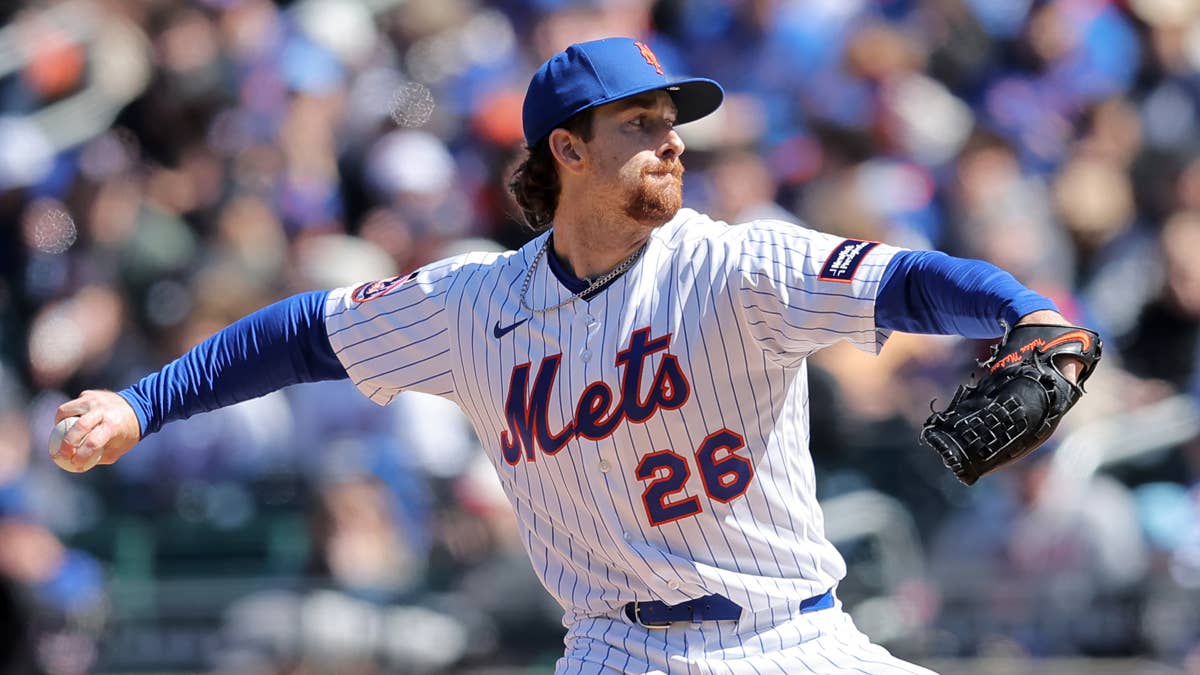
Nolan McLean throws pitches that do not exist in nature.
His sweeper breaks 22 inches horizontally. His curveball spins at 3,300 RPM and drops 58 inches from hand to plate. His sinker runs 18 inches arm-side at 95 miles per hour. The total horizontal separation between those two pitches is 40 inches. Home plate is 17 inches wide. By the laws of geometry, Nolan McLean should not be giving up runs to anyone.
He has given up runs in all 10 of his starts.
Tuesday night in Washington was the latest and loudest entry in that ledger: nine runs allowed, six earned, 5.2 innings, the kind of outing that turns a 2.92 ERA into a 3.57 ERA by the time you do the math on the drive home. The Nationals, a team that entered the game having lost three of five, treated the best pitching prospect in baseball like a middle reliever on a getaway day. James Wood hit an inside-the-park grand slam and the Mets threw the ball all around the park, but rarely to a glove.
Nolan McLean’s Elite Stuff vs Disappointing Results
The Numbers That Don’t Add Up
Let’s start with the sweeper, because that’s central to McLean’s 2026 story. That pitch is supposed to be a weapon. It has 22 inches of break, 3,083 RPM of spin, and it moves so far off the plate that opposing hitters look like they are swinging at a pitch they saw on a different channel. When it works, it is genuinely unfair. When it does not work, it is a batting practice fastball with a dramatic exit.
This year it is not working often enough. McLean's sweeper carries a .304 batting average against, against an expected batting average of .238. That 66-point gap is the fingerprint of a pitch getting too much of the plate. Left-handed power hitters, in particular, have identified it. They sit on the outer third, let the ones that run off the plate go by, and punish the ones that drift back into the zone. James Wood is not fooled by a sweeper he has watched break the same direction twice already in the same at-bat.
Which brings us to the deeper problem: hitters are taking pitches.
McLean's entire arsenal is built around movement and deception. The sinker runs one way, the sweeper goes the other, and the curveball disappears vertically. The math only works if hitters are swinging at pitches they cannot identify in time. When a lineup decides collectively to lay off anything close to the zone edges and make McLean prove he can throw strikes, the equation flips. McLean's walk rate has hovered above three per nine innings all season. That number does not sound catastrophic until you understand what it costs him.
Runners on base transform McLean's ground-ball advantage into a liability. He was a 61 percent ground ball pitcher in his 2025 debut. That rate has dropped to 48 percent this year, still above average but no longer the dominant force that made early hitters look helpless. Put a runner on first and a ground ball becomes a double play opportunity or a base hit in the hole. Put two runners on and a ground ball becomes a rally. McLean's strand rate has fallen from 84 percent last year to 68 percent this season, and that is where the runs are coming from: not from barrels, not from squared-up fastballs, but from walks followed by weak contact in bad situations.
The underlying numbers still describe a pitcher who should be better than his results. His xERA sat under 2.40 for most of the season before Tuesday's outing. His sinker and four-seam combination carries a run value in the 98th percentile. His curveball whiff rate remains elite against hitters who swing at it. The stuff is not broken. The delivery system needs work.

Paul Skenes is the uncomfortable comparison. Skenes has not issued a walk since April 13. His WHIP leads the major leagues. His barrel rate against is 4.5 percent. McLean's is 5.8. Those gaps are not enormous in isolation, but they compound over 200 innings into the difference between a Cy Young winner and a pitcher with a 3.57 ERA and a growing list of questions.
Here are the Stuff+ scores for both pitchers. A score of 100 is league average. A 119 would be 19 percent better than league average:
| Pitcher | Fastball | Curveball | Change up | Sinker | Cutter | Splitter | Stuff+ Grade | Location+ |
|---|---|---|---|---|---|---|---|---|
Skenes |
100 |
125 |
84 |
97 |
87 |
98 |
114 |
|
McLean |
109 |
126 |
103 |
113 |
99 |
108 |
102 |
Both pitchers own unworldly curveballs, but by the Stuff+ measure it’s Skenes' only pitch above average. Overall, Skenes actually grades slightly below average on Stuff+ but his location (and not walking hitters) is the lone factor that sets him apart. The truth is pure stuff is overrated if it is not used correctly. Just this week we told you that Stuff+ is lying to you in some cases, and McLean could be added to that list.
Another note on Skenes — his fastball is down about one mph this season and he’s raised his arm angle about two degrees. But he’s assumed to be the best pitcher in baseball. A reminder that we must look behind the nasty at the whole picture.
Actionable Adjustments and Fantasy Implications
McLean is 24 years old. He has thrown fewer than 115 major league innings. The growing pains are real and they are normal and none of this means the ceiling has changed. But fantasy managers who drafted him as a finished product need to sit with the reality that he is still assembling one.
The stuff is the best in baseball. McLean himself, not the hitters he faces, is still catching up to it.
Nolan McLean Questions, Answered
Why is Nolan McLean struggling in 2026 despite elite stuff?
Hitters are laying off his sweeper until it catches the zone, his walk rate is pushing three-plus per nine, and runs are scoring on weak contact in bad counts rather than hard contact off good pitches.
Is Nolan McLean's 3.57 ERA sustainable or due for positive regression?
His xERA spent most of the season under 2.40, so positive regression is coming, but a declining strand rate and ground ball rate will keep it from being the full correction his stuff deserves.
Should fantasy managers buy low, sell high, or hold Nolan McLean?
Hold in all formats and buy low from any manager who just watched the nine-run Washington outing and has not looked past the box score.
What specific adjustments does McLean need to make?
He needs to stop throwing the sweeper as a strike and start throwing it as a chase pitch, and he needs to get ahead in counts before hitters can work him into the walks that inflate everything else.
How concerned should managers be about left-handed hitters crushing his sweeper?
Concerned enough to manage his starts carefully against left-heavy lineups, not concerned enough to drop him.
What is Nolan McLean's realistic rest-of-season fantasy outlook?
A top-20 starter with a likely ERA in the low threes, elite strikeout volume, and enough upside that buying him at a discount right now is one of the better moves available in most leagues.
More must-reads:
- One prospect each MLB team needs to promote
- The six most disappointing MLB players this season
- The 'Active 40-HR MLB seasons' quiz
Breaking News
Trending News





Customize Your Newsletter
 +
+




Get the latest news and rumors, customized to your favorite sports and teams. Emailed daily. Always free!
PRIVACY POLICY COOKIE POLICY CONTACT US
ABOUT YARDBARKER TERMS OF SERVICE


By using this site, you agree to our Terms of Service and Privacy Policy.
This site is for entertainment purposes only.
There is no gambling offered on this site.
Gambling Problem? Call 1-800-Gambler.
