
-

-


Follow Us
-

 On Facebook
 On Flipboard

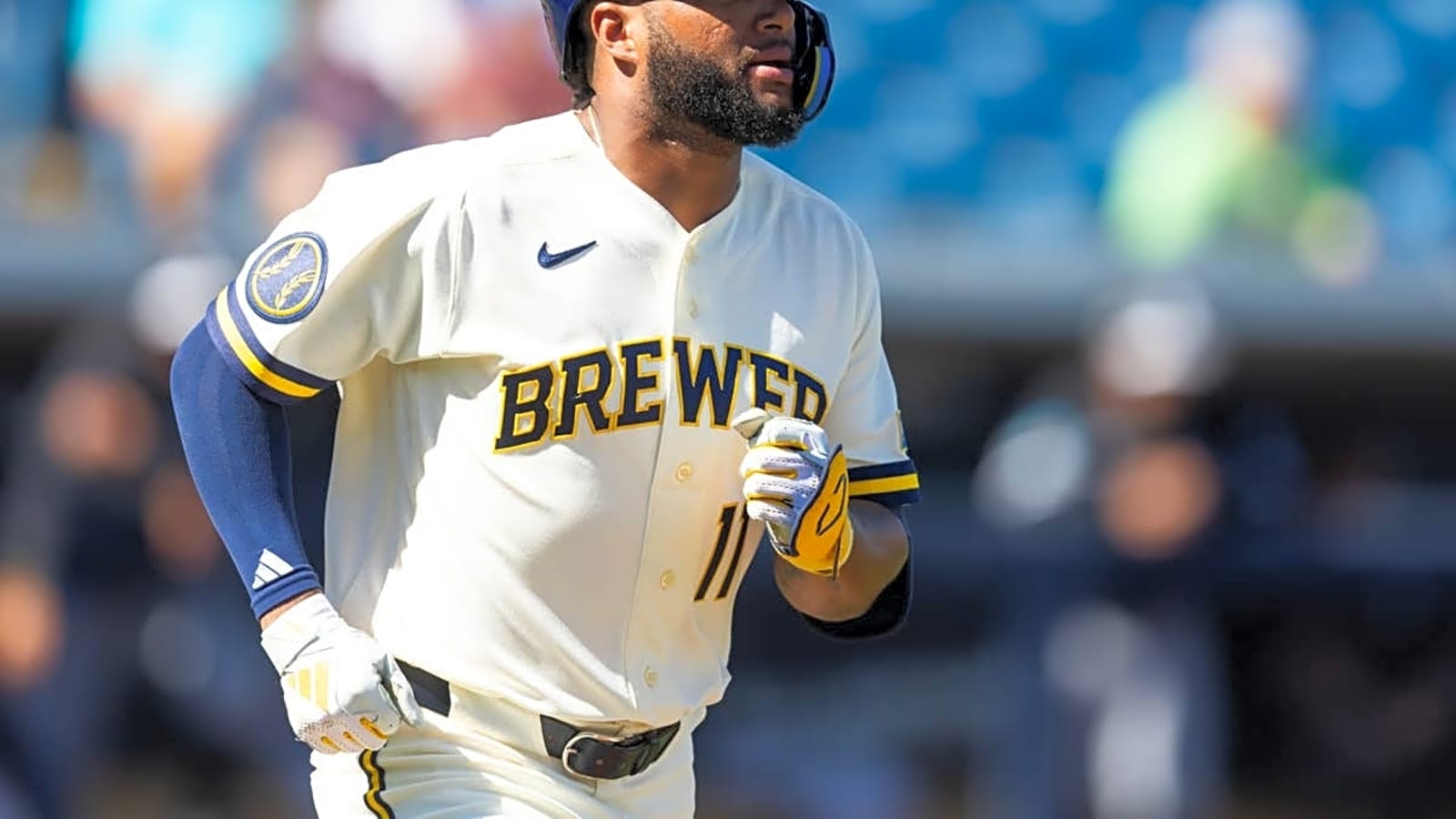
I’ve got to hand it to Jackson Chourio: He really launched when he returned from injury. That’s his 2026 fantasy baseball story in a nutshell—a hand injury and launch angles. But which will keep his power ceiling lower than most owners were envisioning?
Chourio came back from a fractured metacarpal injury on May 4 and his first four batted balls had exit velocities between 102 and 109 mph, reaching base all five times in that first game.
He is a young player, but he already has history. Chourio returned from his hamstring injury last August and hit .200/.262/.337 in September. That September will be the first thing skeptics mention all summer. They're not wrong to bring it up. They are wrong about what it means.
The Injury — and Why This One Is Different From What You're Thinking
First, let's get the injury straight, because there's a good chance you've been thinking about the wrong one.
Chourio fractured his third metacarpal — the long bone in the palm directly below the middle finger. He was hit by a pitch during the World Baseball Classic on March 4. Initial X-rays were negative, which is actually common with this type of fracture. It wasn't until he reported lingering discomfort weeks later that an MRI revealed a hairline crack at the base of the bone.
Here's the good news: the third metacarpal is the most stable bone in the hand due to its central position and the injury did not require surgery. That distinction matters more than you might think.
The hand fracture most associated with baseball players—the one that shows up in injury reports every spring and wrecks hitting timelines — is the hook of the hamate. That's the injury Chourio's teammate Andrew Vaughn suffered on Opening Day. Hamate fractures almost always require surgery because the broken bone rarely heals back together on its own, leaving jagged edges that can damage surrounding tendons if left alone. That's not what Chourio had.
The best comparison here is Mookie Betts, who broke his left hand on a 97.9 mph fastball in June 2024 — also no surgery required. Betts missed about eight weeks, came back, and hit .290 with four home runs and 16 RBI in 16 postseason games as the Dodgers won the World Series. Research on MLB players who sustain hand fractures from hit-by-pitches found no significant difference in offensive statistics in either the short or medium term after returning. Short-term metrics actually improved slightly. The instinct to worry about HBP hand fractures is understandable. The data says don't.
The 2025 Regression — It Was About His Legs, Not His Bat
Here's the thing about that ugly September: Chourio's contact quality held up after the hamstring injury. His exit velocity and hard-hit metrics didn't collapse. What collapsed was everything dependent on running.
He collected just one of his 16 infield hits and three of his 21 stolen bases after returning from the IL — and all three steals came in his final four games once the hamstring finally felt right. He was reluctant to test it, which makes complete sense, and it killed his counting stats. The hand has no such implication for his legs. His barrel rate and exit velocity since returning are not the numbers of a player protecting an injury.
What the Statcast Numbers Actually Say
The surface numbers since his May 4 return, despite only being seven games, are first-round caliber: a .381 wOBA, .393 xwOBA, 16.7 percent barrel rate, 91.5 mph average exit velocity, and 41.7 percent hard-hit rate— all well above the 2026 league averages of .315 wOBA, 8.3 percent barrel rate, 89.1 mph exit velocity, and 39.7 percent hard-hit rate. His exit velocity has actually ticked up from 89.7 mph as a rookie to 89.3 in 2025 to 91.5 mph now. The hand is fine. The bat speed is intact. The contact quality is the best of his career.
One number that looks misleading is the .333 batting average. His xBA of .264 says that's a BABIP-fueled mirage that will correct. But flip that logic around and apply it to his power: zero home runs in seven games is not a power concern. It's a launch angle story. His average launch angle of 8.8 degrees is hitting the ball hard and flat. The barrel rate and exit velocity are projecting a .618 xSLG, which is the data's way of saying the home runs are coming. He's hitting rockets into gaps right now instead of over fences. When the trajectory catches up to the contact quality, and it will, the power numbers will follow.
The Chase Rate Question
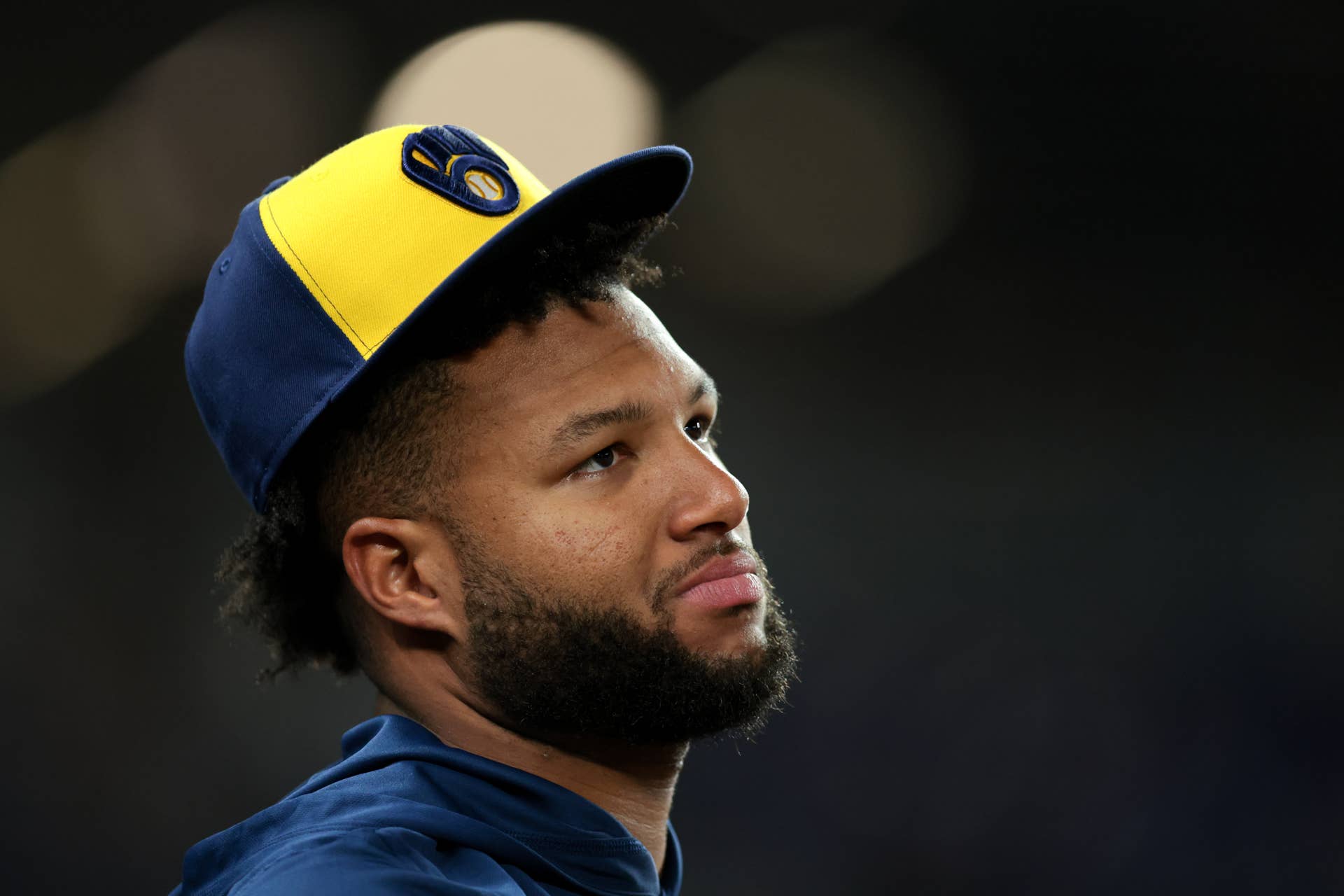
There is a legitimate concern in Chourio's profile, and it predates the injury. His chase rate—how often he swings at pitches outside the strike zone—climbed from 32.8 percent as a rookie to 36.8 percent in 2025. The 2026 MLB average sits at 32.3 percent. That's a real gap, and it grew year over year while the league baseline barely moved.
You may have heard that the ABS challenge system has inflated walk rates in 2026, and that is true—MLB's walk rate is pushing 10 percent, historically high. But here's what matters for Chourio specifically: that spike is coming from umpires calling a tighter zone, not from hitters suddenly laying off bad pitches. Overall swing rate is down 1.4 percentage points league-wide, but average chase rate is essentially flat at 32.3 percent. Disciplined hitters benefit enormously from ABS because borderline pitches they take are now getting called balls more consistently. Chourio swings at those pitches. The ABS environment doesn't help him the way it helps Juan Soto.
He's an aggressive hitter who has figured out how to punish the pitches he chases. Whether it fully covers a growing gap against league average is the question to monitor all season.
Buy, Hold, or Sell
Hold in every format. Two consecutive 20-20 seasons before his 23rd birthday, a .393 xwOBA since returning, and underlying contact metrics that look better right now than at any point in 2025.
One thing to price correctly, though: his barrel rate and exit velocity project elite power, but his career launch angle profile — he has never averaged above 10.6 degrees in a full season — suggests a 20-25 home run hitter, not the 30-35 HR upside that gets attached to his name in dynasty circles. He gets to those home run totals by hitting the ball harder than almost anyone, not by elevating it. The stolen bases are real. The batting average will regress from .333. The power ceiling is real but not as high as the raw contact quality implies. Price him as a near-lock for 20-20 with upside toward 25-25, not as a 30-HR corner bat.
In points leagues his per-plate-appearance upside is first-round caliber. In categories leagues the power-speed combination at this age is exactly the profile you're building around.
Sell high if he goes on a 10-game surge with three or four home runs. That's when his value peaks and when another manager's fear of missing out works in your favor. Otherwise, hold. The Statcast data, the injury research, and 27 games of ugly absence that had nothing to do with his ability all point the same direction: the real Chourio is the one you drafted. He just started a month late.
All Your Questions About Jackson Chourio, Answered
What specific hand injury did Chourio suffer and why does it matter?
Chourio fractured the third metacarpal — the palm bone below the middle finger — a more stable injury than the hook of the hamate fracture most associated with baseball players. It healed without surgery, which research shows leads to faster returns and no meaningful drop in offensive performance.
Is Jackson Chourio's early 2026 surge sustainable or another post-IL mirage?
The 2025 September regression after his hamstring injury was a speed story, not a contact story. A hand fracture carries no such implication for his legs. His exit velocity, barrel rate, and xwOBA since returning are the best of his career.
Should I buy, hold, or sell Jackson Chourio right now in fantasy?
Hold in every format. Buy if he was dropped in your league during the IL stint. Sell high if he goes on a 10-game power surge. Price him as a near-lock for 20-20 with upside toward 25-25, not a 30-HR bat.
What do Chourio's Statcast numbers actually project for power?
His xSLG of .618 projects significant home run production, but his career launch angle profile — never above 10.6 degrees in a full season — suggests a 20-25 home run ceiling, not the 30-35 HR upside attached to his name in dynasty circles.
What is the real concern in Chourio's underlying profile?
His chase rate climbed from 32.8 percent as a rookie to 36.8 percent in 2025, roughly five points above the 2026 league average of 32.3 percent. In an ABS era that rewards plate discipline more than ever, that gap suppresses his OBP ceiling and limits how much he benefits from the league-wide walk rate spike.
Is Chourio worth rostering in shallow 10- or 12-team leagues?
Yes, without hesitation. A near-lock for 20-20 with elite contact metrics and first-round per-plate-appearance upside belongs on every roster in every format. The batting average will settle closer to .265 than .333, but that is still a valuable five-category contributor.
More must-reads:
- 'In a zone': Dodgers' Shohei Ohtani early Cy Young favorite, but his bat lags
- Mariners’ Cal Raleigh heads to the IL for the first time in his career
- The 'Active 40-HR MLB seasons' quiz
Breaking News
Trending News






Customize Your Newsletter
 +
+




Get the latest news and rumors, customized to your favorite sports and teams. Emailed daily. Always free!
PRIVACY POLICY COOKIE POLICY CONTACT US
ABOUT YARDBARKER TERMS OF SERVICE


By using this site, you agree to our Terms of Service and Privacy Policy.
This site is for entertainment purposes only.
There is no gambling offered on this site.
Gambling Problem? Call 1-800-Gambler.
