-

-


Follow Us
-

 On Facebook
 On Flipboard


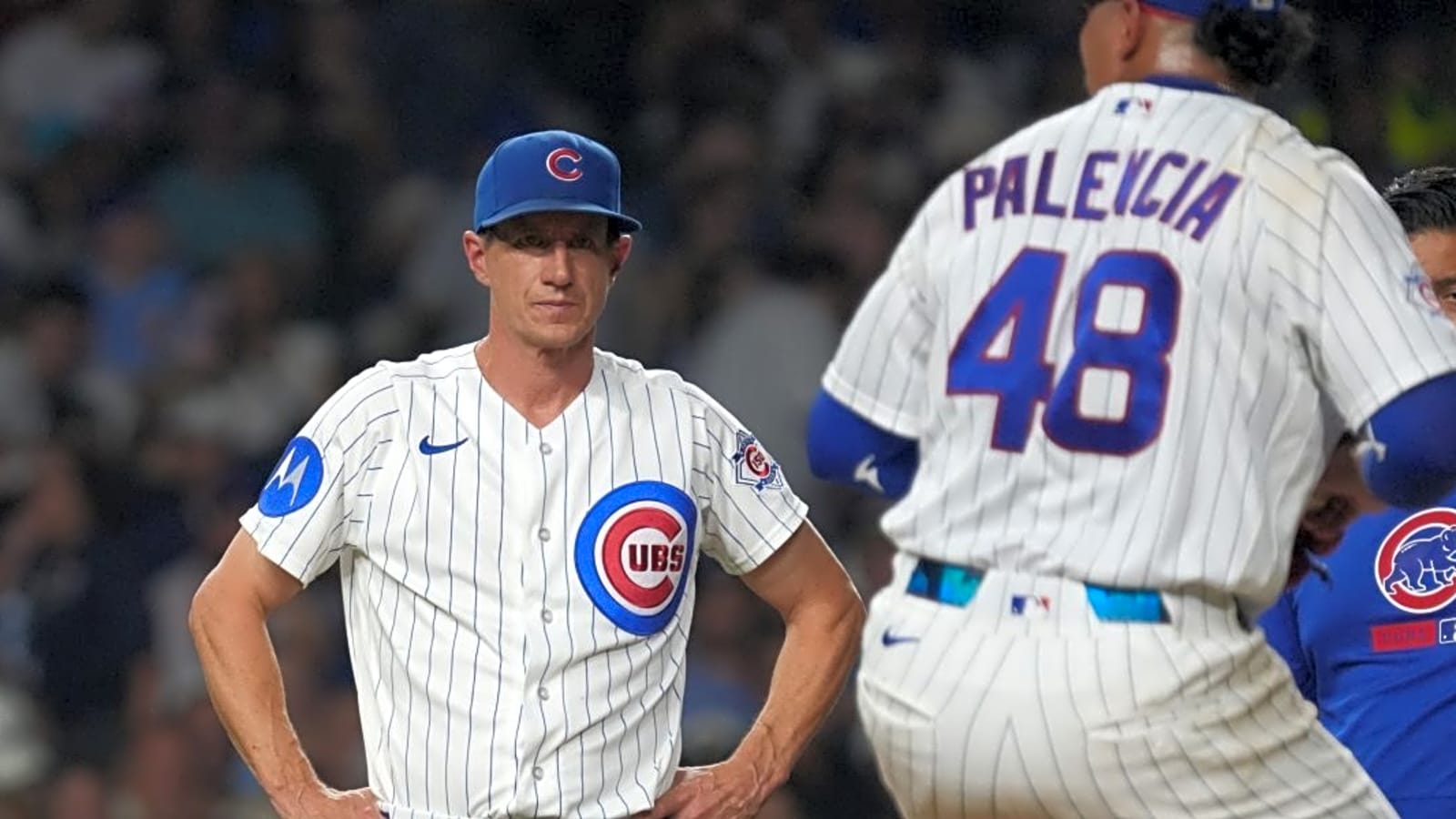
It feels like the same question gets asked every year: why don’t the Cubs consistently have power arms like most other teams? Figures the Cubs staff was dead last in average fastball velocity (93.6 MPH) in baseball last year. They have been a bottom-five average fastball velocity staff in five of the last six seasons, finishing last in 2022, 2024, and 2026. In 2025 they were 20th, but still in the bottom half.
What is frustrating is that the Cubs tried to add more heat last year. They already had Daniel Palencia, Ben Brown, and Cade Horton, but then acquired Edward Cabrera, Hunter Harvey, and Ryan Zeferjahn. Unfortunately, these moves didn’t translate to having a consistent collection of power arms in 2026.
Cubs’ high-powered arms had a rough go in 2026

Last year, five of the Cubs mentioned previously averaged a fastball above 96.0 MPH. That includes Palencia (99.2), Zeferjahn (97.6), Brown (96.3), Harvey (97.6), and Cabrera (96.3). Both Yacksel Ríos (98.1) and Antoine Kelly (96.2) did too, though they both pitched under 2.0 innings. Everyone but Harvey, Ríos, and Kelly qualified for Statcast fastball velocity percentile stats, and all were above the 80th percentile.
To review how those pitchers fared, it was a mix of injuries, poor pitching, or both. Harvey pitched in four games in April, then suffered right triceps inflammation, and never returned. Brown was the Cubs’ best pitcher (1.85 ERA, 2.50 FIP, 0.9 WHIP) until his neck issues returned in mid-June, and he was eventually shut down. Palencia missed two months mid-season with a flexor strain, and was a mixed bag (3.64 ERA, 4.04 FIP) when he did pitch. Cabrera was on and off the IL with a hamstring injury and blisters, and wasn’t good (5.96 ERA, 5.35 ERA, 1.5 WHIP) on the mound. Zeferjahn was acquired at the deadline and started poorly with a 7.20 ERA over his first 10 innings. To his credit, he finished strong with a 1.13 ERA and 2.35 FIP the rest of the way.
We have to mention Horton. Even though his average velocity wasn’t quite 96 MPH+ (95.5), he was developing into a special pitcher with some zip before the UCL injury. It’s also worth mentioning hard-throwing prospect Jaxon Wiggins, who was also hurt for much of last year.
Cubs fans scratch their heads

It’s no wonder the average fastball velocity was still down. All the players listed above who averaged above 96.0 MPH accounted for roughly 14% of innings pitched by the staff. While guys like Cabrera struggled, general availability was a huge issue.
The coaching and conditioning have come into question. Why so many injuries? There’ve also been plenty of questions about why the organization hasn’t successfully developed more high-powered arms internally. Not simple questions to answer, but ones the Cubs are actively working on. They went very heavy on pitching in the draft and are revamping the international scouting department to help restock the system with more young arms.
Time will tell how they develop, and hopefully next year the Cubs have a healthier and more efficient staff. A hard fastball does not automatically make a pitcher good, nor is it the only path to being a good pitcher. However, high-powered arms are so prevalent in modern baseball, and they’re a must-have on a staff to win meaningful games.
More must-reads:
- Rays vs. Brewers: Revisiting each game of the season series
- Yankees reporter reveals 'real reason' Hal Steinbrenner is running it back with Aaron Boone, Brian Cashman
- The 'ALCS MVPs' quiz
Breaking News
Trending News





Customize Your Newsletter
 +



Get the latest news and rumors, customized to your favorite sports and teams. Emailed daily. Always free!
PRIVACY POLICY COOKIE POLICY CONTACT US
ABOUT YARDBARKER TERMS OF SERVICE


By using this site, you agree to our Terms of Service and Privacy Policy.
This site is for entertainment purposes only.
There is no gambling offered on this site.
Gambling Problem? Call 1-800-Gambler.