
-

-


Follow Us
-

 On Facebook
 On Flipboard


On Wednesday, Echedry Vargas drove in four runs during the Hammerheads' 16–8 victory over the St. Lucie Mets. He homered twice, with his second blast giving Jupiter a 9–8 lead in the sixth inning and raising his team-leading season total to 18.
The performance was another high point in a season that began with Vargas taking what appeared to be a significant step backward. After struggling during his first year in the Marlins organization, the 21-year-old was sent from High-A Beloit to Single-A Jupiter to begin 2026. Vargas has used the demotion as an opportunity to rebuild some of the prospect momentum he lost.
Vargas entered his first season with the Miami Marlins organization carrying considerable upside after arriving alongside Maximo Acosta and Brayan Mendoza in the December 2024 trade that sent Jake Burger to the Texas Rangers. He had hit .276/.321/.454 with 14 home runs and 29 stolen bases as a 19-year-old in 2024.
That success turned into disappointment at High-A Beloit. Vargas hit just .201/.255/.322 with seven home runs across 82 games in 2025. He struck out 80 times while drawing only 17 walks, and Miami eventually responded by sending him down a level.
Vargas Has Taken Advantage of his Second Chance
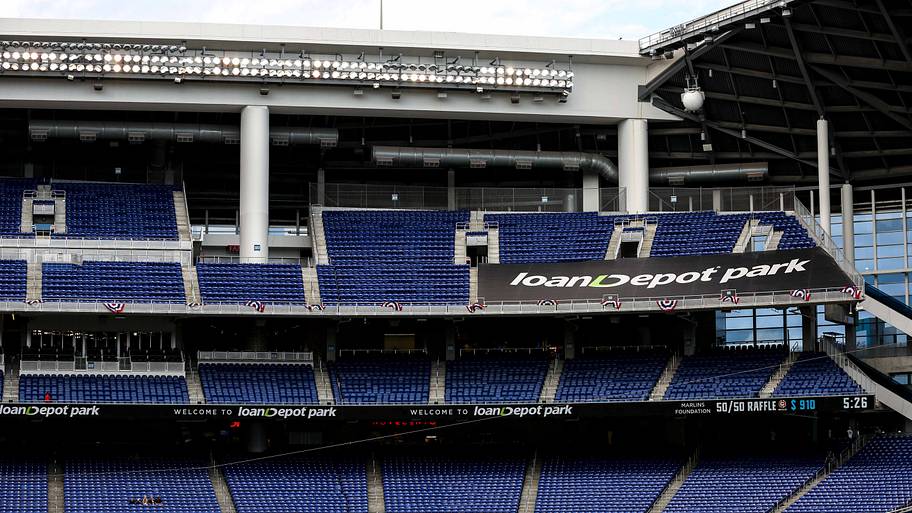
Vargas has bounced back with the best offensive season of his professional career. The 21-year-old is hitting .300 with a .349 on-base percentage and an .893 OPS through 307 at-bats, while his 18 home runs and 66 RBI both lead Jupiter.
The improvement hasn't necessarily come from Vargas becoming a completely different hitter. Plate discipline remains a concern after FanGraphs recorded a 44% chase rate during his breakout 2024 season, and that figure sits at 43.6% this year. His results, despite that aggressive approach, have improved, with his strikeout rate sitting at 21.9%, a slight decrease from his previous campaign.
One thing Vargas is doing more often is getting the ball in the air and doing damage when he does. His fly-ball rate has climbed from 34.9% to 40.3%, while his home run-to-fly ball rate has jumped from 9.5% to 19.1%. His ground-ball rate has also dipped, giving more of his contact a chance to do damage.
The statistical changes help explain why Vargas has been so much more productive, but the larger takeaway may be how he has responded to a difficult setback. Player development does not work like a franchise mode in a sports video game, where ratings simply climb year after year. Vargas' season has become an example of how quickly a prospect can regain momentum after taking a step backward.
Vargas still has plenty to prove, particularly once he gets another opportunity against more advanced pitching. If he can carry this improved power production with him as he moves through the Marlins' system, 2026 could become the season that put his development back on track.
More must-reads:
- Biggest question facing Dodgers, Brewers heading into NLCS
- Ex-Yankee Anthony Rizzo calls out team after latest playoff flop: 'It's insanity'
- The 'Most 3-HR MLB Playoffs' quiz
Breaking News
Trending News





Customize Your Newsletter
 +
+




Get the latest news and rumors, customized to your favorite sports and teams. Emailed daily. Always free!
PRIVACY POLICY COOKIE POLICY CONTACT US
ABOUT YARDBARKER TERMS OF SERVICE


By using this site, you agree to our Terms of Service and Privacy Policy.
This site is for entertainment purposes only.
There is no gambling offered on this site.
Gambling Problem? Call 1-800-Gambler.
