
-

-


Follow Us
-

 On Facebook
 On Flipboard

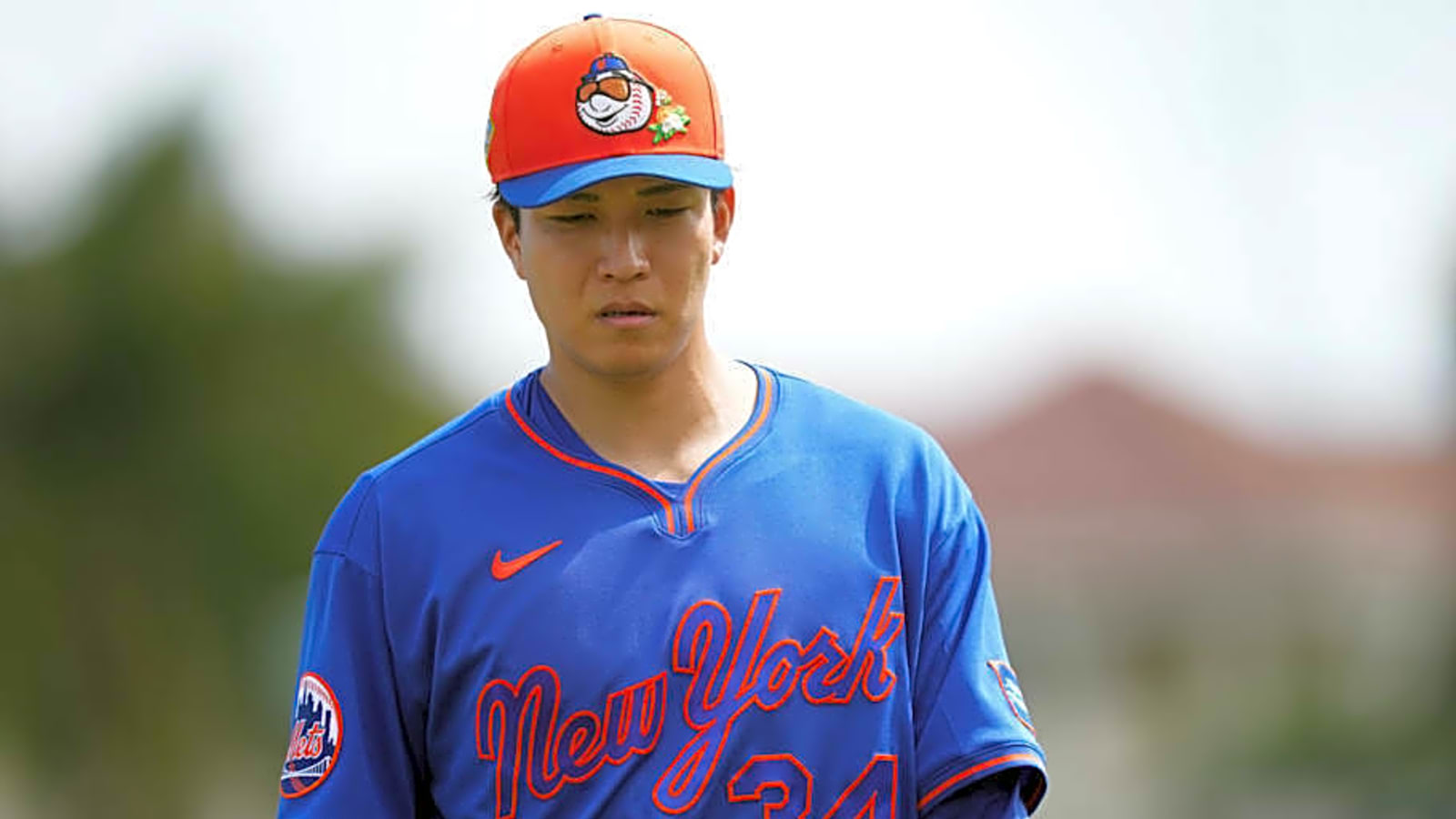
The New York Mets could really use a rebound from a number of starting pitchers this season.
But one arm in particular will play a key role in the rotation's success in 2026 and that's Kodai Senga.
The good news is that Senga has been quite impressive in his first two Grapefruit League starts. In his latest outing, Senga topped 99 mph on his fastball and was perfect through three innings against the Miami Marlins. Senga tossed 38 pitches in the process and notched five strikeouts.
Senga put up a 1.39 ERA in the first half of last season. However, a hamstring injury in June ultimately derailed his campaign. He was unable to recapture his dominant form upon returning from the IL.
Senga's second half struggles were so glaring that he had to accept a minor league assignment in September.
The Mets are hoping that Senga can bounce-back and be a frontline starter atop their rotation once more with Freddy Peralta and Nolan McLean. If he can stay on the mound, the Mets would have a three-headed monster in this trio. They'd also have Clay Holmes, David Peterson and Sean Manaea in the backend.
The key to Senga's rejuvenation is his health. As long as he's healthy, the right-hander should be closer to his 2023 form where he was runner-up for NL Rookie of the Year.
So far so good as Senga, 33, has made it this far through spring training without any injuries. His performance on the mound has been turning heads as well.
A Common Trend
The concern among scouts on Senga was that he was injury prone when he was coming out of Japan three years ago.
The Mets and then GM Billy Eppler still opted to sign him to a five-year, $75 million deal.
At first, it worked out. In 2023, Senga went 12-7 with a 2.98 ERA, 1.22 WHIP, 202 strikeouts and a 4.5 bWAR in 29 starts. He was also an NL All-Star as a rookie.
However, injuries have ruined his last two seasons in 2024 and 2025.
In 2024, Senga dealt with a shoulder capsule injury in spring training as well as triceps issues. This kept him out until late-July. Upon returning to the mound against the Atlanta Braves, Senga dominated but suffered a high-grade calf strain in the start. This was Senga's lone outing of the regular season.
Senga came back to pitch in the postseason, but was unable to recapture his effectiveness. The righty posted a 12.60 ERA in three appearances and two starts in the playoffs.
Last season, Senga got off to a hot start until his hamstring injury led to his September demotion.
The common trend has been that Senga's lower body injuries have thrown off his mechanics. The right-hander is very precise about his mechanics and hasn't been able to regain them after suffering an injury.
The Mets hope to keep Senga healthy through a full season in 2026.
If you like our content, choose Sports Illustrated as a preferred source on Google.
More must-reads:
- Shohei Ohtani's recent hot streak shows offensive concerns were overblown
- Yankees' Aaron Boone announces Gerrit Cole return date
- The 'Active 40-HR MLB seasons' quiz
Breaking News
Trending News







Customize Your Newsletter
 +
+




Get the latest news and rumors, customized to your favorite sports and teams. Emailed daily. Always free!
PRIVACY POLICY COOKIE POLICY CONTACT US
ABOUT YARDBARKER TERMS OF SERVICE


By using this site, you agree to our Terms of Service and Privacy Policy.
This site is for entertainment purposes only.
There is no gambling offered on this site.
Gambling Problem? Call 1-800-Gambler.
