
-

-


Follow Us
-

 On Facebook
 On Flipboard

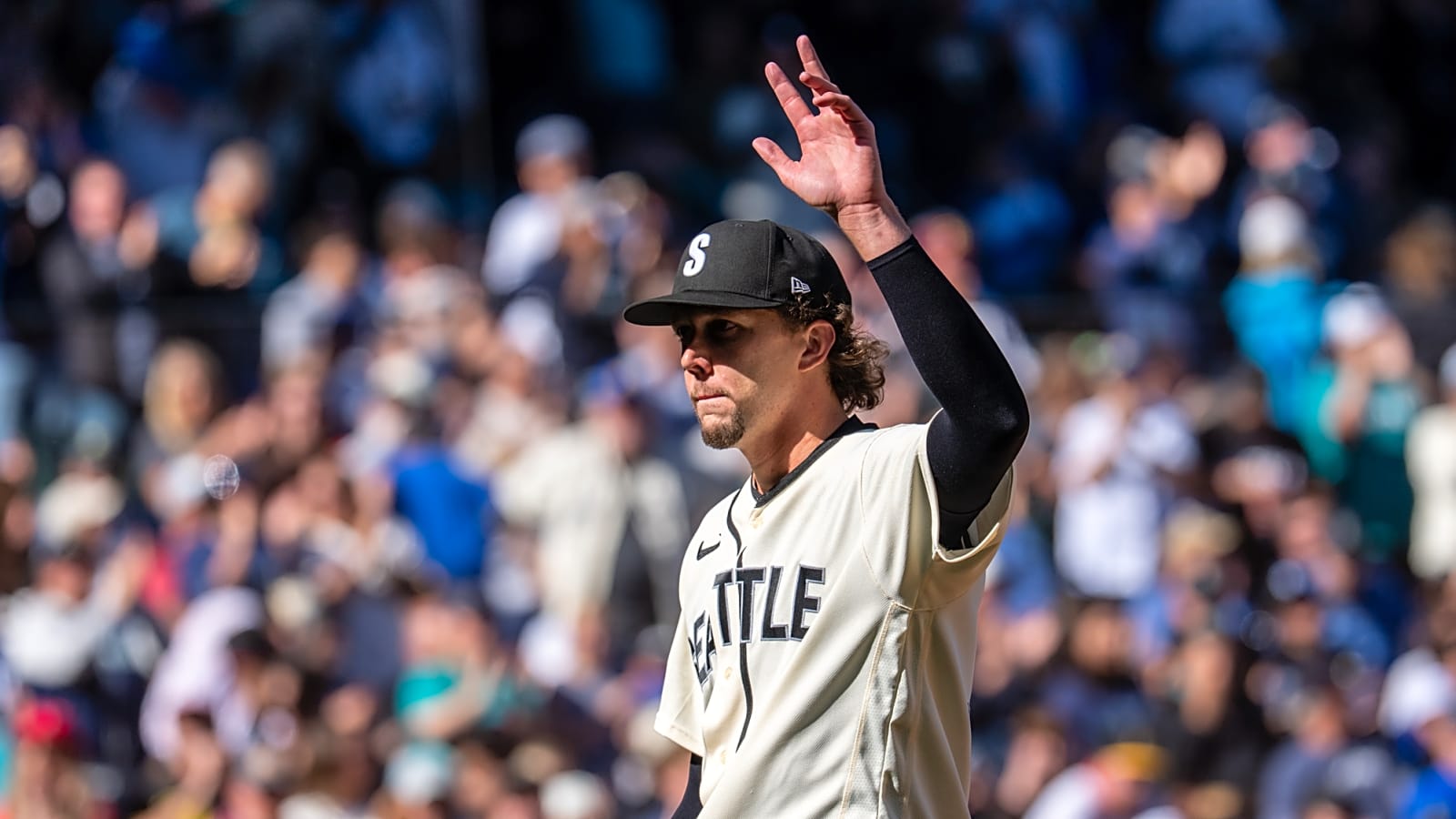
Once a team comes up with its projected salary for all of its arbitration-eligible players, it will begin a tender analysis to simply determine: “Are we comfortable guaranteeing Player X this much money?”
If the answer is yes, the player will be tendered a contract prior to the mid-November Tender Deadline. Tendering a contract means the team offers the player a contract for the following season while retaining his rights, with the player’s salary either agreed to later or determined through the arbitration process.
If the answer is no, the player will be DFA’d/non-tendered. Once a player is non-tendered, he is removed from the 40-man roster and becomes a free agent immediately.
The other option a team has is to pre-tender a player, which is a contract agreed to before the Tender Deadline that takes the player out of the arbitration process. This is typically done when a team wants to keep a player, but only at a slightly discounted rate, or when it is a very obvious, typically small raise case that teams like to get out of the way.
This article dives into the market analysis of each case, showing the reasoning behind my leaguewide salary projections, before predicting the tender decision for each player.
All opinions in this article are my own, there was no non-public information used in my analysis.
Seattle Mariners Roster Outlook
40-MAN + 60-DAY IL (NON-FA): 42
PENDING FA + MUTUAL OPTIONS: 4
OPTIONS: Robles (Club, $9.0M), Munoz (Club, $8.0M)
R5 PROJECTED ADDITIONS: 1; Joe Whitman
LOGAN GILBERT (5.144): $15,302,000 ($4.375M raise)
The Case: Gilbert had another workhorse-type season, making 32 starts (14 quality) and throwing 186 IP with a 3.73 ERA.
Brady Singer (2025, $4M raise) provides a floor for Gilbert’s raise with Singer, coming from a lower starting salary, threw 169.2 IP to a 4.03 ERA in 32 starts (15 quality). Gilbert should comfortably clear this raise.
His closest statistical comparison comes from lower in the salary structure in Jesús Luzardo (2025, $4.375M raise). Luzardo PY included 32 starts (18 quality) spanning 183.2 IP to 3.92 ERA. Luzardo also received down-ballot Cy Young votes, finishing seventh, but Gilbert holds some slight statistical advantages and comes from a much higher starting salary. For those reasons, I project Gilbert to recieve the same $4.375M raise and getting to a total salaty of $15.302M.
Tender Prediction: Gilbert will be tendered a contract, and the case should settle without needing to go to a hearing. Tender.
BRENDAN DONOVAN (5.000): $6,100,000 ($300k raise)
The Case: Donovan totaled 177 PA with 3 HR and 18 RBI in his PY.
Luis Urías (2023, $300K raise) is the best comparison after totaling 159 PA with 3 HR and 15 RBI. The nearly identical platform production supports the same $300K raise, bringing Donovan to $6.1M.
Tender Prediction: Donovan will be tendered a contract, and the case should settle without needing to go to a hearing. Tender.
GABE SPEIER (5.000): $3,725,000 ($1.6M raise)
The Case: Speier finished with 52 games, 44 IP, 21 HLD and 1 SV with a 3.07 ERA and 4.03 FIP while finishing the season healthy.
José Alvarado (2022, $1.55M raise), Ryne Stanek (2022, $1.5M raise), Tim Mayza (2023, $1.49M raise) and Tyler Duffey (2021, $1.6M raise) provide the historical range.
Speier’s gmLI is the closer to Duffey than the lower comparisons. Furthermore, Dylan Lee (2026, $1.7M proj. raise) provides a useful current-class comparison who should stay slightly ahead pitching to a similar ERA in 67 IP with more HLD. I project Speier at a $1.6M raise, resulting in a $3.725M total salary.
Tender Prediction: Speier will be tendered a contract, and the case should settle without needing to go to a hearing. Tender.
GEORGE KIRBY (4.151): $10,000,000 ($3.45M raise)
The Case: Kirby had the weakest quality season of his career but continued to provide significant bulk, making 30 starts and throwing 174.2 IP with a 4.33 ERA and 9-11 record.
Robbie Ray (2019, $3.38M raise) is an extremely close statistical comparison after throwing 174.1 IP with a 4.34 ERA, while Tanner Roark (2018, $3.525M raise) threw 180.1 IP with a 4.34 ERA. Kirby’s starting salary was close to Roark with Kirby coming from $6.55M and Roark coming from $6.475M.
MacKenzie Gore (2026, $3.3M proj. raise) provides a useful current-class comparison after essentially the same bulk but a worse ERA and lower previous salary. I project Kirby between Ray and Roark at a $3.45M raise for a $10M total salary.
Tender Prediction: Kirby will be tendered a contract, and the case should settle without needing to go to a hearing. Tender.
PATRICK WISDOM (4.134): $1,000,000 ($0 raise)
The Case: Wisdom signed a minor league deal with a reported $1M Major League rate and totaled only 50 PA with a -7 wRC+ before finishing the season on optional assignment. I project no raise, keeping him at the same $1M salary.
Tender Prediction: Wisdom is a very strong DFA/non-tender candidate. Non-Tender.
MATT BRASH (4.121): $1,765,000 ($215k raise)
The Case: Brash pitched an incredible 20 games before missing the rest of the season with injury.
Andrew Kittredge (2022, $225k raise) and Sam Hentges (2024, $215k raise) both pitched well in a similar sample size. Brash’s quality by ERA was better than both, but Kittredge tallied 5 saves to Brash’s 0 while Brash recorded 6 holds to Hentges’ 9. Brash’s quality advantage puts him right in this group but below Kittredge. I project a $215k raise resulting in a $1.765M total salary.
Tender Prediction: Brash will be tendered a contract, and the case should settle without needing to go to a hearing. Tender.
LUKE RALEY (4.106): $3,000,000 ($950k raise)
The Case: Raley totaled 287 PA with 15 HR and a 106 wRC+ before ending the season on the IL.
Luke Voit (2021, $750K raise) provides the historical floor after also ending his platform season on the IL. Voit finished with 241 PA, 11 HR, 35 RBI and a 113 wRC+. Raley’s bulk and power give him enough separation to move clearly above Voit’s $750K raise.
Ramón Laureano (2022, $1.1M raise) provides the historical ceiling and was the comparison Raley was viewed as being more comparable to. Laureano also ended his platform season on the IL and finished with 383 PA, 13 HR and a 94 wRC+. Raley holds the power and rate-stat advantages with 15 HR and a 106 wRC+, but Laureano’s 96-PA bulk advantage is significant enough to keep Raley below the full $1.1M raise.
Kerry Carpenter (2026, $750K proj. raise) is a current-class floor that Raley must recieve a higher raise then. Carpenter also ended the season on the IL after 259 PA, 13 HR, 36 RBI and a 90 wRC+. I project a $950K raise, bringing Raley from $2.05M to a $3.0M total salary.
Tender Prediction: Raley will be tendered a contract, and the case should settle without needing to go to a hearing. Tender.
BRYCE MILLER (3.153): $4,377,500 ($1,925,000 raise)
The Case: Miller made 21 starts and threw 118.2 IP with a 4.17 ERA and 3 Quality Starts while spending time on the IL.
Aaron Civale (2023, $2.3M raise) provides a clear ceiling with similar starts and IL time but superior quality with 3.46 ERA, while Ranger Suarez (2023, $2.1M raise) and Carlos Rodon (2018, $1.9M raise) provide the closer range with both posting nearly identical ERA within 10 IP of each other. Miller’s 118.2 IP is closer to Rodon’s 120.2 IP than Suarez’s 125 IP. I project Miller’s raise to be just above Rodon’s and earn a $1.925M raise for a total salary of $4.3775M.
Seattle is expected to decline his $6.075M club option, triggering a $15k buyout, so his starting compensation becomes $2.4525M and the same $1.925M raise results in a $4.3775M projected salary.
Tender Prediction: Mariners should decline their club option, placing Miller back into the arbitration system where they will tender him a contract. Declined Club Option and Tender.
BRYAN WOO (3.121): $4,400,000
The Case: Woo enters arbitration with 568.2 career IP across 100 games, all starts, with 51 quality starts. He was named an All-Star and finished fifth in Cy Young voting in his PY-1, before suffering a slight regression in his platform year.
George Kirby (2024, $4.3M salary) is the cleanest historical comparison after entering arbitration with the same All-Star recognition in his PY-1, an eighth-place Cy Young finish, 511.2 career IP across 89 games, all starts, and 51 quality starts. Woo’s stronger Cy Young finish gives him the awards advantage and his career bulk is also slightly stronger, which should push him above Kirby.
Andrew Abbott (2026, $4.285M proj. salary) is the best current-class comparison after also earning an All-Star selection and an eighth-place Cy Young finish in his PY-1, while entering arbitration with 579.2 career IP across 107 starts and 41 quality starts. Abbott has a slight career-bulk advantage by innings and starts, but Woo’s 10 additional quality starts and better Cy Young finish give him the stronger overall case.
Woo projects at the top of this group because of the higher Cy Young finish, but his slight platform-year regression keeps him from getting too far away from Kirby. I project Woo at a $4.4M total salary.
Tender Prediction: Woo will be tendered a contract. He also seems like the most likely extension candidate out of Seattle’s starting-pitcher group, as Gilbert and Kirby have gotten too close to free agency for the Mariners to hold the same amount of extension leverage. Tender.
EDUARD BAZARDO (3.118): $1,300,000
The Case: Bazardo enters arbitration with 209 career IP across 195 appearances with a 3.44 ERA and 38 career HLD before getting heavy leverage usage in his platform season, making 73 appearances and throwing 67.1 IP with 26 HLD, 1 SV and a 4.01 ERA.
Justin Topa (2023, $1.25M salary) is the best comparison after throwing almost the exact same amount of innings with 23 HLD and 3 SV. Topa had the clear quality advantage with a 2.61 ERA and the slight saves advantage, but Bazardo enters arbitration with significantly more career bulk and slightly more platform-year holds.
Tim Mayza (2021, $1.25M salary) also fits with 18 HLD and 1 SV across 53 IP in his platform season, while Cionel Perez (2023, $1.2M salary) entered arbitration with almost identical career leverage production to Bazardo with 37 HLD and 4 SV. Bazardo has enough platform-year bulk and holds to separate from both, but the 4.01 ERA and only 1 career save make it difficult to push him too far above the $1.25M group. I project a $1.3M total salary.
Tender Prediction: Bazardo should be tendered a contract, and the case should settle without needing to go to a hearing. Tender.
JOSE A. FERRER (3.094): $1,550,000
The Case: Ferrer enters his first arbitration trip with 15 career SV and 45 HLD across 207 IP. He made 73 appearances in his platform season, throwing 64.2 IP with 13 HLD, 3 SV and a 4.18 ERA.
Tyler Rogers (2022, $1.675M salary) is the best historical comparison with almost identical career bulk and saves, entering arbitration with 202.1 IP and 16 SV, but Rogers had 60 career holds and followed that up with 15 HLD across 75.2 IP in his platform season. Paul Sewald (2021, $1.735M salary) had nearly identical career bulk and saves as well, entering arbitration with 212 IP, 14 SV and 31 HLD, but his 11 SV and 16 HLD in the platform year gives him a trajectory advantage over Ferrer.
Victor Vodnik (2026, $1.5M proj. salary) provides a current-class comparison. Vodnik enters arbitration with 191.2 career IP, 23 SV and 19 HLD, while his platform season was 58.2 IP with 4 SV and a 4.91 ERA. Vodnik owns the career-save advantage, but Ferrer has more career bulk, a massive advantage in holds and the better platform-year quality which should all keep him above Vodnik.
Ferrer belongs below the lookback group due to Rogers and Sewald having better PY, but his similarities in career SV+HLD and bulk IP should keep him close. I project a $1.55M total salary.
Tender Prediction: Ferrer will be tendered a contract, and the case should settle without needing to go to a hearing. Tender.
MICHAEL RUCKER (3.069): $825,000
The Case: Rucker enters arbitration after throwing 40.1 IP with a 6.02 ERA in his platform season and has a 5.22 career ERA across more than 160 career innings with only 6 combined career SV+HLD.
Rafael Montero (2019, $785k salary) is the primary historical comparison because of the similar 5.00 career ERA. Yohan Ramírez (2025, $825k salary) provides the more recent market marker with 33.1 PY IP and a 4.71 career ERA entering arbitration. Rucker’s lack of leverage production and poor career quality keep him at the very bottom of the Arb-1 relief market despite the career bulk. I project an $825K total salary.
Tender Prediction: With no options remaining, Rucker is a very strong DFA/non-tender candidate. Non-Tender.
DOMINIC CANZONE (3.014): $2,700,000
The Case: Canzone enters arbitration coming off his lone qualifying season, finishing his platform year with 533 PA, 23 HR, 77 RBI and a 135 wRC+, bringing his career totals to 1,171 PA, 48 HR, 147 RBI and a 120 wRC+.
Lars Nootbaar (2024, $2.95M salary) provides the historical ceiling after entering arbitration with 1,379 career PA, 66 HR, 227 RBI and a 116 wRC+. Nootbaar holds significant career bulk, power and run production advantages that should keep him ahead. Josh Lowe (2025, $2.6M salary) provides the historical floor after entering arbitration with 1,523 PA, 43 HR, 170 RBI and a 101 wRC+. Canzone’s career HR and wRC+ advantage paired with Canzone qualifying in his platform season (unlike Lowe) gives him Canzone the edge over Lowe.
Kyle Stowers (2026, $2.95M proj. salary) provides the best current-class ceiling after entering arbitration with 1,309 career PA, 52 HR, 173 RBI and a 115 wRC+, with his lone qualifying season also coming in his platform year. Canzone has less career bulk but trails by only 4 HR and holds the career-quality advantage, keeping him relatively close to Stowers despite the PA disadvantage. Colton Cowser (2026, $2.6M proj. salary) provides the current-class floor with 1,390 career PA, 53 HR, 153 RBI and a 102 wRC+, but his lone qualifying season came earlier in his career and his platform season was non-qualifying with a 98 wRC+. Canzone’s qualifying platform season and significant offensive-quality advantage allow him to clearly separate from Cowser.
Canzone fits cleanly between the $2.6M Lowe/Cowser group and the $2.95M Nootbaar/Stowers group. His qualifying platform season pushes him above the lower tier, but his career bulk keeps him from reaching the top of the market. I project a $2.7M total salary.
Tender Prediction: Canzone will be tendered a contract, and the case should settle without needing to go to a hearing. Tender.
COOPER CRISWELL (2.143): $1,300,000
The Case: Criswell enters his first arbitration trip with 195.1 career IP across 82 games and 21 starts with a 4.24 ERA. His platform season came exclusively out of the bullpen, making 37 appearances and throwing 40.2 IP with 3 HLD, 1 SV and a 3.32 ERA.
Michael King (2022, $1.3M salary) provides one of the best comparisons after entering arbitration with 143 career IP and 10 starts before throwing 51 IP entirely out of the bullpen in his platform season with a 2.29 ERA. Criswell holds the clear career bulk and starting-experience advantages, while King has the significant platform-year quality advantage.
Dinelson Lamet (2019, $1.3M salary) provides another strong comparison as a fellow Super Two after entering arbitration with 187.1 career IP and 35 starts with a 4.37 ERA. Lamet threw 73 IP across 14 starts in his platform season, giving him a large platform bulk and starting advantage, while Criswell has the slight career-quality advantage and pitched to better quality in his platform season.
Daniel Norris (2018, $1.275M salary) also fits into this range with 215.1 career IP and 39 starts. Norris had significantly more starting experience, but pitched to a 5.68 ERA across only 44.1 platform-year IP. All three comparisons point to essentially the same range.
Criswell does not have enough platform-year bulk or traditional relief production to get much above the $1.3M group, but his career bulk and 21 starts keep him above the lower first-time reliever market. I project a $1.3M total salary.
Tender Prediction: I expect the Mariners to use the unspoken threat of a non-tender to get a pre-tender deal done with Criswell, keeping him with the club while avoiding the arbitration process. Pre-Tender.
CARLOS VARGAS (2.140): $1,000,000
The Case: Vargas enters arbitration after a light platform season, appearing in 14 games and throwing 16.1 IP with 1 HLD, 0 SV and a 5.51 ERA. He has accumulated more career bulk with 98 IP across 89 appearances, but has only 15 HLD and 1 SV with a 4.32 career ERA, keeping him firmly in the low-leverage relief market.
Bennett Sousa (2025, $910k salary) and Brennan Bernardino (2025, $925k salary) provide the lower end of the market, while Dylan Lee (2024, $1.025M salary) provides the upper boundary. Vargas’ career bulk advantage over Sousa and Bernardino keep him from the absolute bottom of the market, but his limited platform season and SV+HLD disadvantage compared to Lee keep him close to the lower group. I project Vargas at a $1.0M total salary.
Tender Prediction: With no options remaining and coming off an injury-shortened season, it would be difficult to guarantee Vargas this salary. I anticipate the Mariners looking to pre-tender Vargas on a split deal. Vargas could also be a candidate to “over-tender,” a strategy in which a team guarantees a player more than his projected arbitration salary and then uses the higher salary to help pass him through waivers. If Vargas clears, Seattle could remove him from the 40-man roster while retaining the relief depth he provides. Pre-Tender.
More must-reads:
- Alex Cora reportedly has made his managerial decision for 2027
- Max Fried addresses ALDS Game 3 plans with his baby on the way
- The 'Most HRs by an MLB first baseman' quiz
Breaking News
Trending News



Customize Your Newsletter
 +
+




Get the latest news and rumors, customized to your favorite sports and teams. Emailed daily. Always free!
PRIVACY POLICY COOKIE POLICY CONTACT US
ABOUT YARDBARKER TERMS OF SERVICE


By using this site, you agree to our Terms of Service and Privacy Policy.
This site is for entertainment purposes only.
There is no gambling offered on this site.
Gambling Problem? Call 1-800-Gambler.
