
-

-


Follow Us
-

 On Facebook
 On Flipboard

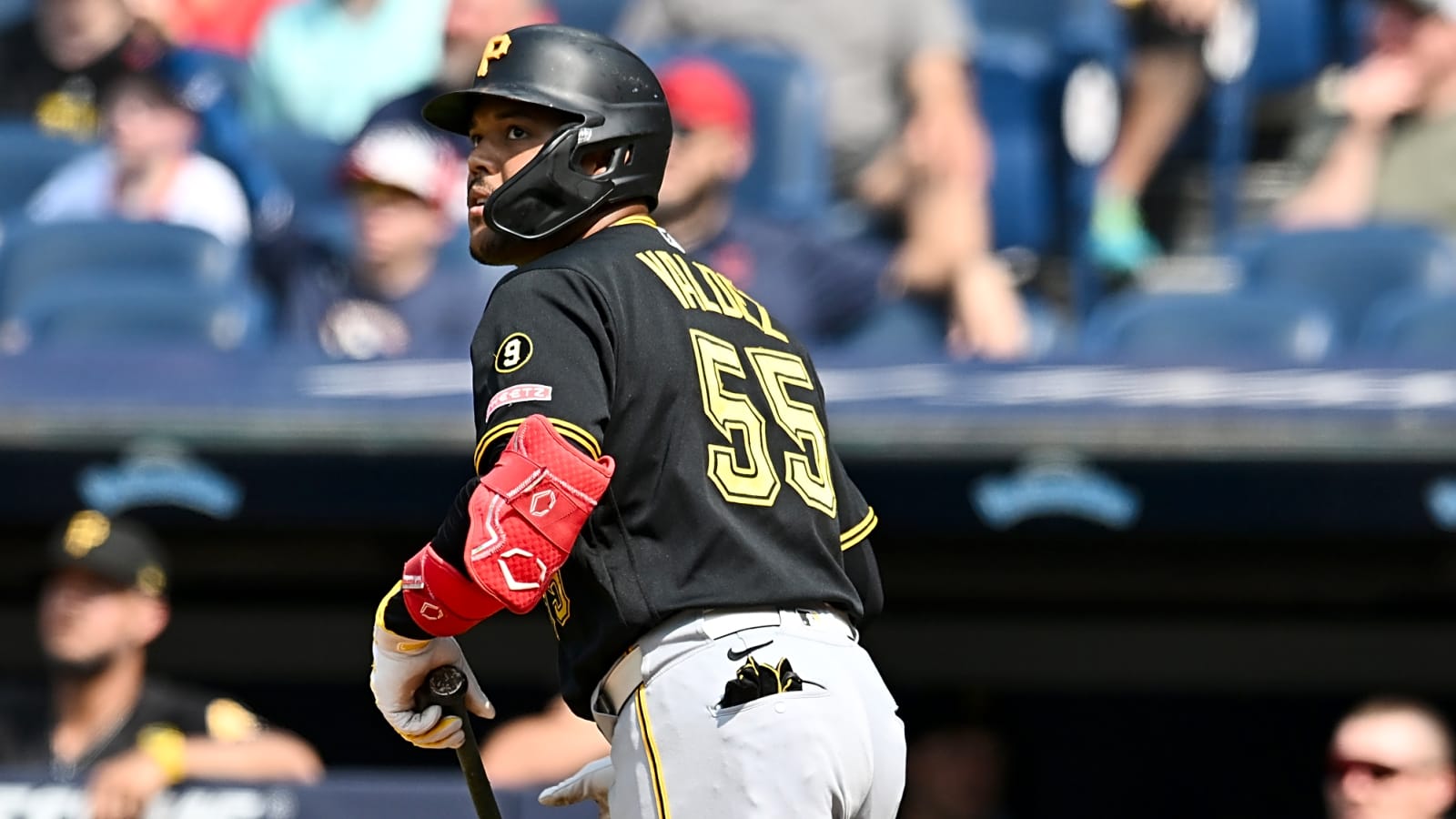
It’s Tuesday, July 21, and the Pittsburgh Pirates sit at 52-49, in a three-way tie for the last NL Wild Card spot. Winners in 13 of their last 22, the Bucs have a new cleanup hitter to thank for their recent surge.
On May 22, the Pirates called up 22-year-old outfield prospect Esmerlyn Valdez, their No. 5 prospect according to Just Baseball. Pittsburgh fans who have watched O’Neil Cruz for the last several years know the archetype: an elite power hitter who struggles to consistently make contact. Since his debut, it’s been on full display.
Across two major league stints and a total of 32 career games, Valdez is slashing .306/.377/.750 with 13 home runs. Over this time, he leads hitters (min. 100 PA) in slugging, ranks third in wRC+ (196) and leads in barrel rate (28.6%). But on the flip side, his 37.7% strikeout rate is the third highest in MLB.
Nevertheless, Valdez has been planted fourth in the Pirates lineup since the start of July, and he has made the most of his opportunity.
While it would be unfair to continue expecting a 1.127 OPS from him going forward, the question revolves around what to expect from the rookie as the Pirates push for their first playoff appearance in over a decade. While his strengths have been out in full force, the red flags have been right there too.
Stats below updated prior to games on July 20.
Esmerlyn Valdez’s Batted Ball Profile
As you might expect, Valdez hits the ball hard. Really, really hard. With an average bat speed touching 75 mph, an average exit velo just short of 93 mph, and a hard hit rate north of 50%, he has all the tools necessary to be one of the game’s most electric hitters. The key to unlocking that lies in where you put the ball, and Valdez is passing that test.
With that kind of power, it’s essential to put the ball in the air as much as possible. Since his debut, Valdez leads the majors with a 45.2% fly ball rate. This has helped show off his power to all fields, with five of his home runs going to the pull side, four to the opposite field, and two straightaway.
Despite that astronomically high fly ball rate, Valdez has still converted 42.9% of his fly balls into home runs thanks to his unearthly power. It’s the sixth highest HR/FB% among the 367 hitters with at least 10 fly balls since May 22.
One reason why Valdez has done this is because of where those fly balls go. 39.3% of his fly balls have been hit to the pull side, nearly 10% above the major league average. This is important because fly balls hit to the pull side are 30% more likely to result in home runs compared to those hit straightaway or to the opposite field. Even with his power, this is something Valdez benefits from.
Oddly enough, fly balls seem to be the only thing he can hit to the left side. Valdez has only pulled 17.6% of all other batted balls, the lowest rate among the 463 hitters with at least 25 ground balls, line drives and popups.
A league-leading 64.7% of Valdez’s pulled batted balls have been fly balls. It’s not necessarily a bad thing, but it’s practically impossible to sustain. As that number declines in the coming weeks, it will be essential for Valdez to balance the impact by raising his 14.8% line drive rate.
Performance by Pitch Type
Since Valdez was called up, 58.9% of pitches he’s seen have been some variant of a fastball. That’s nearly 5% above the MLB average. This, evidently, has been a bad approach for opposing pitchers.
Valdez vs. Fastballs
| fastball Type | Pitch % | AVG | SLG | RV/100 | WHIFF % |
| Four-Seamer | 26.7% | .313 | .813 | 4.0 | 41.8% |
| Sinker | 24.3% | .455 | .864 | 2.5 | 24.6% |
| Cutter | 7.9% | .286 | .857 | 4.4 | 29.4% |
Against all fastballs, Valdez is hitting .361 and slugging .836. Among the 225 hitters to face at least 250 fastballs since his debut day, he ranks 10th in AVG and first in slugging. He also ranks in the top five in RV/100 (3.449) and average exit velocity (95.6 mph). The natural counter to this would be to blitz Valdez with breaking balls. Unfortunately for pitchers, he has those covered too.
Valdez has faced 61 sliders and has had 15 plate appearances end against them. He’s hitting .429 and slugging 1.143 against them. His 7.3 RV/100 against sliders is the third highest among the 264 hitters with at least hitters to face at least 50 of them since May 22.
With the three most commonly thrown pitches all off the table, the only pitches Valdez has seemed to struggle against (albeit in small samples) have been sweepers and changeups.
The benefit of being a new face in the big leagues is a relative lack of an opposing scouting report. To this point, teams have yet to find an answer to Valdez’s premier power. While they seek a strategy, Valdez has taken advantage, and he is crushing everything in sight. At least, he is when he makes contact.
The Whiffs
Like many breakout players with show-stopping power, it’s the swings and misses that do Valdez in. His 38.7% whiff rate is the second highest among qualifying hitters since his debut. This isn’t unusual, but the pitches he’s missing are cause for concern.
This year, Valdez has a 33.5% whiff rate on pitches in the strike zone, trailing only Munetaka Murakami for the highest rate in the league. Although he makes the most of his contact, he has a hard time hitting the pitches that are supposed to be hittable.
This issue is somewhat alleviated by Valdez’s below-league-average 24.4% chase rate, limiting his swing-and-miss on the harder-to-hit pitches. But that can only take you so far when you’re whiffing at one-third of your swings in-zone.
For Valdez to continue serving as a vital bat in Pittsburgh’s lineup, more consistent in-zone contact is the most essential improvement for him to make. The slug numbers will inevitably go down, and the best way to balance that out is making more contact.
From Rhys Hoskins to Aristides Aquino, we’ve seen elite power bats burst out onto the scene out of nowhere before. Some go on to have lengthy careers while others flame out shortly thereafter. So, where does Valdez fall on the spectrum? The recent precedent reveals his future could be promising.

Since the start of the Statcast era, there have been 13 players that have hit 10 home runs in the first 30 games of their career. The list includes household names like Yordan Alvarez and Austin Riley, but it also includes guys who didn’t pan out like Michael Chavis and Christian Villanueva.
Valdez is the third youngest player to have accomplished this feat in the last 11 years, trailing only Alvarez and Riley. Over the first 30 games for everyone on this list, no one had a higher barrel/PA rate than the Pirates rookie. In fact, no one is within 4% of him. He’s also tied for the third highest barrel rate (barrels per batted ball) on the list.
Given his age and barrel rate, this chart seems encouraging for Valdez. It also helps that Riley and Trey Mancini, who also had exceedingly high whiff rates in their first months, went on to have several successful years in the big leagues.
Valdez was 11 years old the last time the Pirates made it to the playoffs. For him to continue putting the Pirates in a position to make it back, he will need to keep maximizing his fly balls while finding his way into more consistent in-zone contact. Regardless, his talent can clearly set him up for success down the road.
More must-reads:
- Athletics, Orioles hired their future and here's what each new boss must do first
- Rays' bats come alive as they even ALCS against Guardians
- The 'Most 3-HR MLB Playoffs' quiz
Breaking News
Trending News




Customize Your Newsletter
 +
+




Get the latest news and rumors, customized to your favorite sports and teams. Emailed daily. Always free!
PRIVACY POLICY COOKIE POLICY CONTACT US
ABOUT YARDBARKER TERMS OF SERVICE


By using this site, you agree to our Terms of Service and Privacy Policy.
This site is for entertainment purposes only.
There is no gambling offered on this site.
Gambling Problem? Call 1-800-Gambler.
