
-

-


Follow Us
-

 On Facebook
 On Flipboard

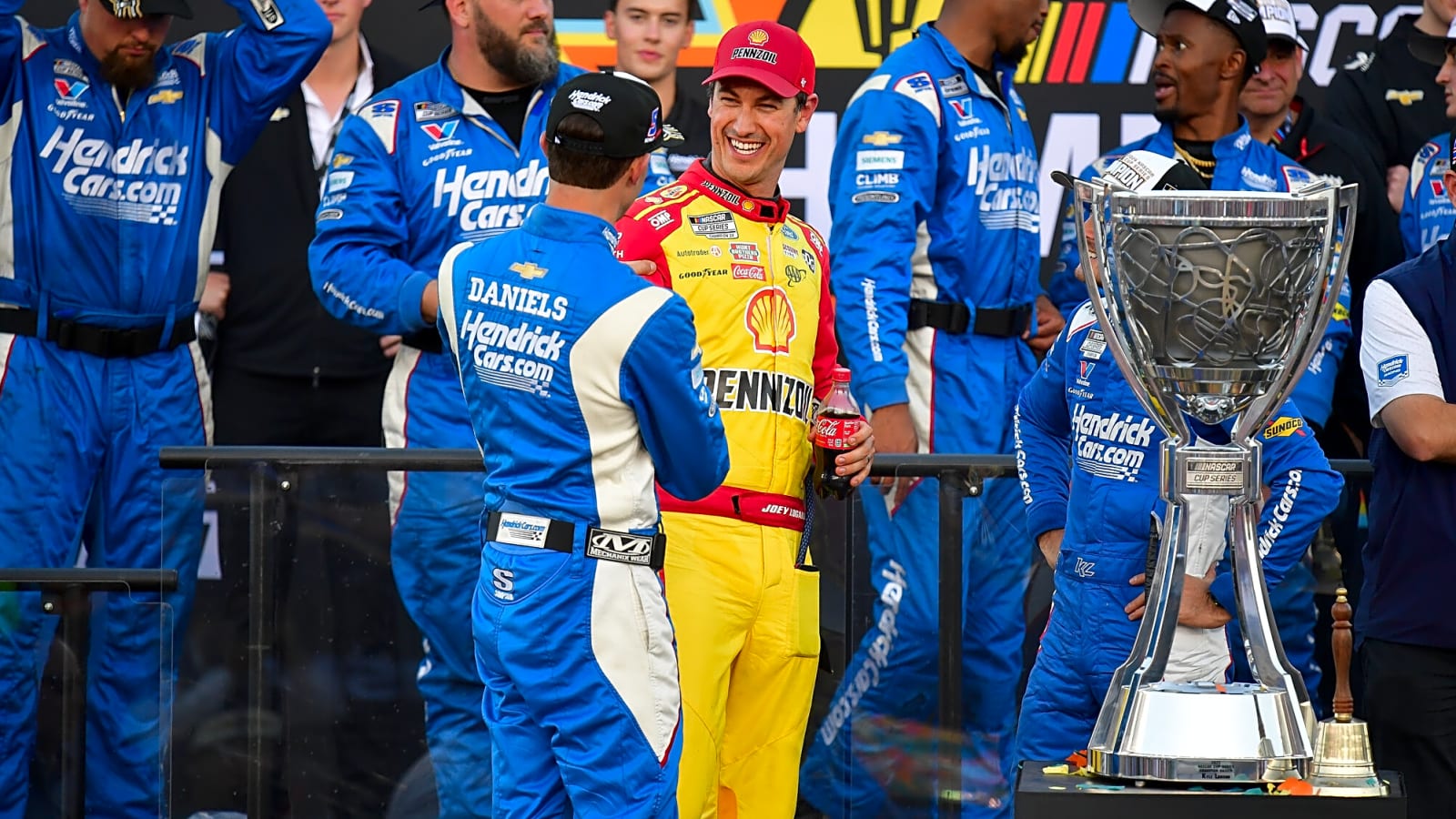
Joey Logano’s comments on how The Chase will influence driver etiquette are drawing attention after his recent appearance on Inside the Race, where he broke down the mental gymnastics required to survive the playoffs.
Here’s what happened, why it matters, and what comes next. The conversation is particularly relevant right now as heavy hitters like Kyle Larson prepare to navigate the thin line between aggressive moves and long-term survival in the championship hunt.
The development comes as the NASCAR garage continues to adapt to the high-stakes environment of the elimination format, adding urgency and public interest. Fans and insiders are tuning in because the “unwritten rules” of stock car racing tend to evaporate when a championship is on the line.
Logano, a two-time Cup Series champion who has never shied away from contact, brings a veteran’s weight to the topic. His perspective lands at a crucial time when the sport is seeing a clash between old-school respect and the “win at all costs” mentality demanded by the modern playoff structure.
What Happened
Joey Logano sat down with the crew at Inside the Race to dissect how the Chase format fundamentally alters the way drivers treat one another on the asphalt. The segment aired on January 13, 2026, and focused heavily on the psychological shift that occurs when points reset.
The Event
Logano didn’t sugarcoat the reality of the situation. He explained that as the postseason approaches, drivers subconsciously and sometimes consciouslyadjust their risk tolerance and their manners.
The goal shifts from simply passing a car to ensuring you don’t create a vendetta that could come back to bite you three weeks later in an elimination race. He emphasized that etiquette stops being about being “nice” and starts being a calculated strategic tool.
Key People Involved
- Joey Logano: The Team Penske driver and former champion, providing the insider analysis.
- Inside the Race Hosts: The media team facilitating the deep dive into driver psychology.
- The Playoff Field: Every driver currently fighting for a spot on the grid is indirectly involved, as they are the ones Logano is referring to.
Timeline of Events
- January 13, 2026: Logano appears on Inside the Race to air his views.
- During the Interview: Logano outlines the specific ways pressure changes split-second decision-making.
- Following The Segment: The racing community begins debating the merits of “situational ethics” in racing.
Background
The Chase: NASCAR’s playoff evolution has completely rewired the sport’s DNA since its introduction. Originally designed to prevent a driver from clinching the title weeks early, it has created a pressure cooker where consistency is good, but timing is everything. Drivers must constantly weigh the immediate gratification of a position against the long-term risk of a wrecked car.
Recent History
We have seen a surge in parity across the garage area in recent years. With the Next Gen car leveling the mechanical playing field, passing is more difficult, and track position is king. This tighter competition means that “etiquette” is often the first casualty when drivers are fighting for the same piece of real estate.
Earlier Developments
History is littered with playoff runs that ended because of a grudge from earlier in the season. Drivers have long memories. A fender rub in the regular season might be forgiven, but that same move in the Round of 8 is often viewed as an act of war. Logano’s comments are rooted in years of seeing championships won or lost based on these interpersonal dynamics.
Official Statements & Responses
Expert Insights
Racing analysts have been quick to validate Logano’s take. Many have noted that what Logano describes is the driver’s professional evolution. You cannot race in a vacuum anymore. Every move has a consequence that ripples through the standings.
Public Reaction
The fan base has been vocal and divided. One faction believes that racing should be a contact sport regardless of the month on the calendar. The other side argues that without a code of conduct, the playoffs devolve into chaos rather than a test of driving skill.
Impact & What It Means
Immediate Impact
Logano’s remarks shine a spotlight on the garage area. Expect drivers on the “bubble” to race with their heads on a swivel, perhaps giving a little more room to the veterans they know they can’t afford to anger.
Broader Implications
This acknowledgment of “strategic etiquette” changes how we view team orders and manufacturer alliances. It suggests that organizations might be coaching their drivers to prioritize relationship management just as much as fuel mileage.
What Happens Next
As the schedule moves deeper into the season, every on-track incident involving a contender will be scrutinized through Logano’s lens. Was it an accident, or was it a message?
Related Developments
- NASCAR is constantly evaluating its officiating to ensure that aggressive driving doesn’t cross the line into dangerous driving.
- Drivers are increasingly using sports psychologists to manage the mental burden of high-pressure interpersonal conflicts.
- Teams are using data to predict which competitors are most likely to retaliate, adding a statistical layer to the etiquette conversation.
What Happens Next
The focus now shifts to the upcoming stretch of regular-season races. We will see if the drivers heed Logano’s warning and race with caution, or if the pressure of making The Chase causes tempers to flare early.
Related News
[NASCAR Playoff Format Debates Heat Up]
[The History of Rivalries in The Chase Era]
[Team Penske’s Strategy for the Upcoming Season]
FAQ SECTION
Q: What happened in the Logano interview?
A: Joey Logano explained that driver etiquette changes from a courtesy to a survival strategy once the playoffs begin.
Q: Who is involved?
A: Joey Logano, the Inside the Race crew, and the entire field of playoff-eligible drivers.
Q: Why is this news important?
A: It reveals the hidden psychological layer of the sport, showing that winning isn’t just about speed. It’s about managing relationships.
Q: What are the next steps?
A: Fans and analysts will be watching to see how drivers behave toward one another as the playoff cut-off line gets closer.
What This Means
Joey Logano has provided a fascinating glimpse into the mindset of a champion. His candid thoughts on Inside the Race serve as a reminder that behind the helmets and the horsepower, stock car racing is an intensely human sport driven by memory, emotion, and strategy.
Logano’s remarks serve as a reminder that The Chase is more than a playoff format. It’s a psychological battleground. Drivers must navigate relationships, rivalries, and reputations while chasing a championship. As the season unfolds, expect etiquette to become a storyline of its own, shaping how contenders approach every lap and every decision.
More must-reads:
- Three big questions ahead of Enjoy Illinois 300 at World Wide Technology Raceway
- NASCAR Cook Out Southern 500 takeaways: Christopher Bell breaks through for first 2026 win at Darlington
- The 'Last 1st-round QB by NFL team' quiz
Breaking News
Trending News





Customize Your Newsletter
 +
+




Get the latest news and rumors, customized to your favorite sports and teams. Emailed daily. Always free!
PRIVACY POLICY COOKIE POLICY CONTACT US
ABOUT YARDBARKER TERMS OF SERVICE


By using this site, you agree to our Terms of Service and Privacy Policy.
This site is for entertainment purposes only.
There is no gambling offered on this site.
Gambling Problem? Call 1-800-Gambler.
